
Does Sauna Help With Bloating? The Honest Heat Therapy Answer
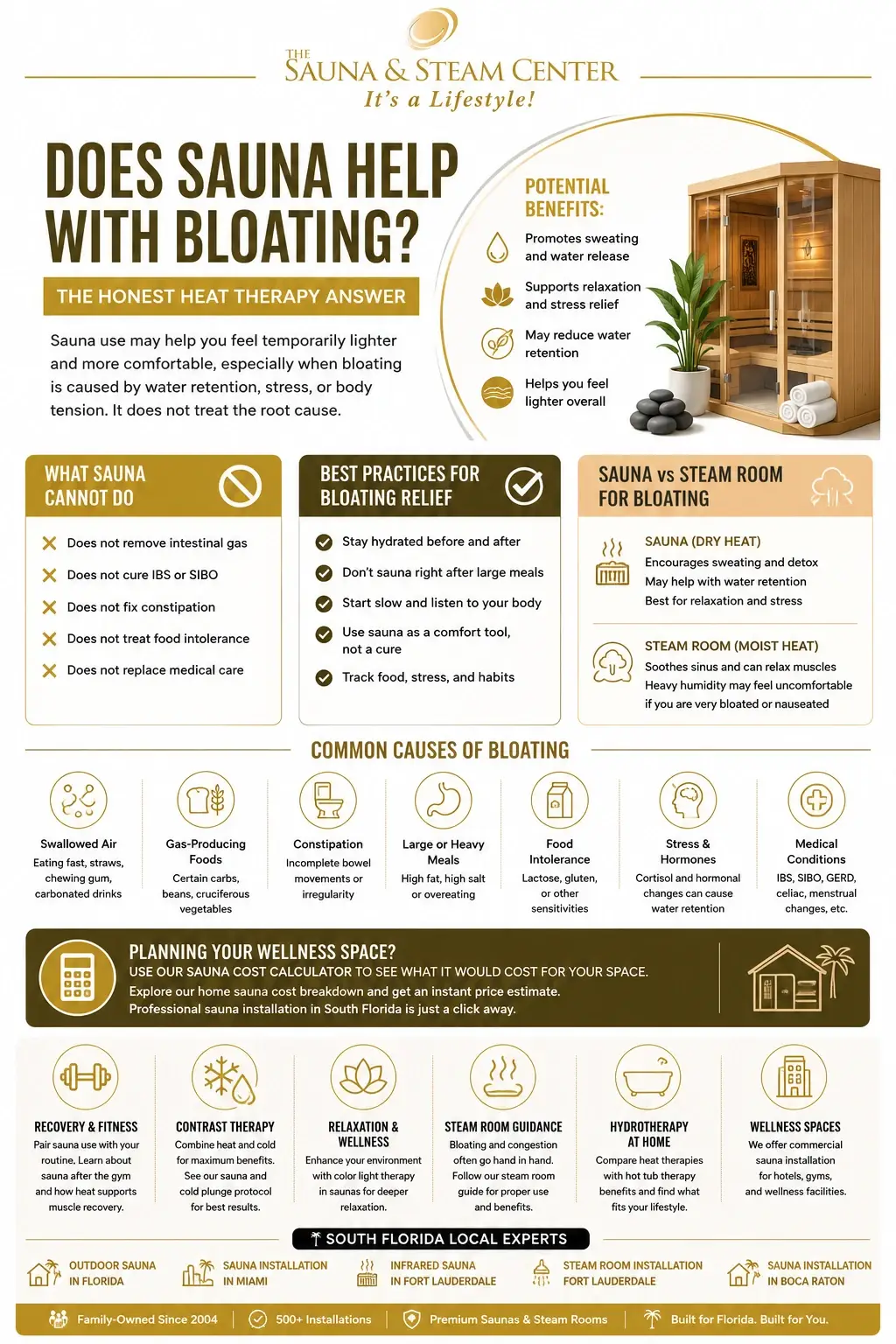
Does sauna help with bloating is a common question, and the honest answer is: sometimes it may help you feel temporarily lighter or more comfortable, but it does not directly remove intestinal gas, cure IBS, fix constipation, or treat the root cause of bloating. A sauna may be useful when bloating is tied to water retention, stress, muscle tension, or feeling heavy after a salty meal. It is less useful when bloating comes from trapped gas, food intolerance, slow digestion, constipation, or a medical condition.
This guide explains what sauna heat can realistically do, what it cannot do, when it may make bloating worse, and how to use a sauna safely if digestive comfort is part of your wellness routine. At Sauna & Steam Center, we prefer clear guidance over exaggerated wellness claims because the right sauna experience should be safe, useful, and easy to repeat. As Florida’s #1 sauna and steam room builder since 2004, our family-owned team has completed 500+ installations across South Florida, including home projects and wellness amenities for commercial spaces such as the Seminole Hard Rock Casino, Ritz-Carlton, and Acqualina Resort.
Quick Answer
A sauna may temporarily help some people feel less bloated by promoting sweating, relaxation, and a lighter overall feeling. This is most likely when bloating is related to water retention, stress, or body tension. However, sauna use does not directly release intestinal gas, speed digestion in a guaranteed way, cure IBS, fix constipation, or replace medical care for recurring bloating.
Best practical answer: Use sauna as a comfort and relaxation tool, not as a digestive treatment. If bloating is painful, severe, frequent, or paired with symptoms like vomiting, fever, blood in stool, unexplained weight loss, or trouble passing gas, skip the sauna and speak with a healthcare professional.
Key Takeaways
- Sauna may help the feeling of bloating, not always the cause. Sweating and relaxation can make some people feel lighter, but trapped gas and constipation usually need different solutions.
- Timing matters. Going into a sauna right after a large meal can make nausea, reflux, dizziness, or abdominal pressure feel worse.
- Infrared and traditional saunas are both comfort tools. Neither one is proven to treat IBS, SIBO, constipation, or food intolerance.
- Steam rooms feel different from saunas. Moist heat can feel soothing to some people, but heavy humidity can feel uncomfortable if you are bloated or nauseated.
- Hydration is nonnegotiable. Sauna heat increases sweating, and dehydration can worsen headaches, dizziness, and constipation-related discomfort.
- Frequent bloating needs pattern tracking. Food triggers, carbonated drinks, stress, eating speed, bowel habits, and medical conditions often matter more than heat exposure.
What Actually Causes Bloating?
Bloating is the feeling of fullness, pressure, tightness, swelling, or visible expansion in the abdomen. Sometimes it is caused by gas. Sometimes it is caused by stool buildup, fluid retention, digestion speed, hormones, stress, or a medical condition. This matters because the best solution depends on the cause.
When customers ask us whether sauna use can help with bloating, the first thing we want them to understand is that “bloated” can mean different things. A person who feels puffy after a salty dinner is not dealing with the same issue as someone with IBS, constipation, food intolerance, or sudden severe abdominal pain. If you are planning a home wellness upgrade while researching symptoms, you can also use our sauna cost calculator to understand the budget side before choosing a model.
Common causes of bloating
- Swallowed air from eating quickly, drinking through a straw, chewing gum, or carbonated drinks
- Gas produced during digestion, especially after certain carbohydrates or high-FODMAP foods
- Constipation or incomplete bowel movements
- Large meals, high-fat meals, or very salty meals
- Food intolerance, such as lactose sensitivity
- IBS or other digestive conditions
- Hormonal fluid retention
- Stress, anxiety, and gut-brain sensitivity
- Low movement after meals
- Dehydration, especially when constipation is involved
Bottom line: Sauna may help some comfort-related symptoms around bloating, but it does not address every bloating cause. Knowing the likely trigger helps you decide whether heat makes sense or whether another step is smarter.
Can Sauna Help With Bloating?
Yes, but only in a limited and temporary way for some people. Sauna heat may help you feel more relaxed, promote sweating, reduce a puffy feeling from water retention, and create a calming routine that lowers stress-related body tension. That can make the abdomen feel less tight for certain users.
Where people get confused is the word “help.” If help means “I feel lighter and more comfortable after a short sauna session,” then yes, some people may experience that. If help means “the sauna removed my intestinal gas or cured my digestive problem,” that is not a safe or accurate claim.
When sauna is most likely to feel helpful
- You feel puffy after salty food or travel
- You are stressed and physically tense
- You feel heavy but do not have severe abdominal pain
- You are hydrated and not nauseated
- You can use a short, gentle session instead of pushing through heat
- You combine sauna with walking, hydration, and better meal timing
For a wider breakdown of realistic wellness benefits, our guide to sauna benefits explains what sauna use may support and where many claims are overstated. If you are comparing wellness claims around fitness, metabolism, and body composition, our article on sauna and weight loss research gives a more careful explanation.
Featured answer: Sauna may help some people feel temporarily less bloated by encouraging sweating and relaxation, especially when bloating is tied to water retention or stress. It does not directly remove intestinal gas, cure IBS, treat constipation, or fix the root cause of bloating.
What Sauna Cannot Do for Bloating
A sauna becomes most useful when expectations are realistic. It becomes risky when someone uses it as a replacement for hydration, movement, food changes, medical evaluation, or digestive care.
A sauna does not directly remove intestinal gas
If your bloating is caused by trapped gas, sweating will not move that gas out of your intestines. Gentle walking, time, bowel movement, and identifying food triggers are usually more relevant.
A sauna does not cure IBS
IBS bloating is usually tied to gut sensitivity, bowel patterns, food triggers, stress, and the gut-brain connection. Sauna may support relaxation for some people, but it should not be described as an IBS treatment.
A sauna does not fix constipation
Constipation-related bloating usually needs hydration, movement, fiber strategy, regular bathroom habits, and sometimes medical guidance. Long sauna sessions without enough fluids can make constipation feel worse because sweating reduces body fluid levels.
A sauna does not detox bloating
Sweating is real. Using sweat as a broad explanation for “detoxing bloating” is where the claim becomes weak. Your digestive system, liver, kidneys, bowel habits, hydration status, and food choices matter more than sweat alone. This is also why broad claims about detox, fat loss, and instant health changes should be checked against practical evidence instead of marketing language.
Bottom line: Sauna can be part of a wellness routine, but it should not be treated as a digestive cure.
How Heat May Affect Digestion and Gut Comfort
Sauna heat affects the body by increasing skin temperature, sweating, circulation demand, heart rate, and heat stress response. For many healthy adults, short sauna sessions can feel relaxing. For someone who is bloated, the result depends on hydration, meal timing, heat tolerance, and the reason for the bloating.
Why heat may feel good
Warmth can help the body relax. Many people breathe slower, feel less tense, and mentally slow down inside a sauna. If your bloating feels worse during stress, that calming effect may reduce how intense the pressure feels.
Why heat may feel bad
Heat can also make nausea, reflux, dizziness, or heaviness feel worse, especially after a large meal. If you are dehydrated, overheated, constipated, or already feeling weak, sauna use may add stress instead of comfort.
What to do instead when digestion is the main issue
If the bloating feels like gas, pressure, or constipation, gentle walking after a meal is often more practical than sitting longer in heat. If the pattern keeps repeating, tracking foods, meal size, carbonated drinks, stress, and bowel habits can be more useful than trying to sweat the problem away.
Bottom line: Heat may change how bloating feels, but it does not reliably solve the digestive process causing it.
Infrared vs Traditional Sauna for Bloating
Neither infrared nor traditional sauna is proven to treat bloating. The better question is which heat experience feels safer and more comfortable for your body. This is especially important for beginners, heat-sensitive users, and people who feel bloated after meals.
| Sauna Type | How It Feels | Potential Comfort Benefit | Important Caution |
|---|---|---|---|
| Infrared sauna | Usually lower air temperature with radiant heat | May feel gentler for beginners or people who dislike very hot air | Still causes sweating, so hydration and session length matter |
| Traditional dry sauna | Hotter room air with the classic sauna experience | Can feel deeply relaxing for people who enjoy stronger heat | May feel too intense if you are full, nauseated, dehydrated, or heat sensitive |
If you are comparing both styles for your home, our infrared vs traditional sauna guide explains the comfort differences, installation requirements, and ownership expectations in more detail. For budget planning beyond comfort, review our full pricing guide before deciding between infrared, traditional, indoor, or outdoor options.
Best fit if bloating is tied to stress
An infrared sauna may be easier to start with because the air often feels less intense. A traditional sauna may still be a great fit if you enjoy stronger heat and want a classic sauna ritual.
Best fit if you are sensitive to heat
Start with lower heat and shorter sessions. If heat makes you feel nauseated, dizzy, or more uncomfortable, stop. Comfort should guide the routine, not the clock.
Bottom line: Pick infrared or traditional sauna based on comfort, space, heat preference, electrical needs, and long-term use. Do not choose one because of a promise that it will treat bloating.
Sauna and IBS Bloating: Helpful or Risky?
IBS bloating can be frustrating because it may involve gut sensitivity, bowel changes, food triggers, stress, and unpredictable flare-ups. Sauna use may feel helpful when stress is a major trigger, but it can feel risky or uncomfortable during an active flare, especially if diarrhea, dehydration, constipation, nausea, or pain is present.
When sauna may feel helpful with IBS bloating
- You are not in severe pain
- You are hydrated
- You are not in the middle of diarrhea or vomiting
- You have waited after eating
- You use a short, gentle session
- You treat the sauna as relaxation, not treatment
- You stop immediately if symptoms increase
When sauna may be a bad idea with IBS bloating
- You have diarrhea and may already be losing fluids
- You are constipated and not drinking enough water
- You feel nauseated, weak, or lightheaded
- You have abdominal pain that feels unusual or severe
- You are using heat to avoid getting medical advice
Bottom line: With IBS, sauna should be gentle, optional, and symptom-led. If your body says no, listen.

Can Sauna Make Bloating Worse?
Yes, sauna use can make bloating feel worse in certain situations. Heat is a controlled stressor on the body. When used well, it can feel relaxing. When used at the wrong time or for too long, it can increase discomfort.
Sauna may make bloating worse right after a large meal
After a large meal, your body is already working on digestion. Sitting in strong heat too soon can make some people feel nauseated, flushed, sleepy, dizzy, or heavier. Waiting 60 to 90 minutes after a large meal is usually more comfortable. If your routine includes training, recovery, and meals close together, our guide to post-workout sauna benefits can help you time heat more carefully.
Sauna may make bloating worse if you are dehydrated
Dehydration can contribute to headaches, dizziness, sluggishness, and constipation-related bloating. Since sauna increases sweating, starting dehydrated is one of the easiest ways to feel worse.
Sauna may make bloating worse if you overstay
Longer sessions are not automatically better. For many beginners, 5 to 10 minutes is enough. Experienced users may tolerate more, but the right duration is the one that lets you leave feeling calm, not drained.
For safer session timing, read our guide on how long to stay in a sauna.
Bottom line: If sauna makes your bloating, nausea, reflux, headache, or dizziness worse, stop. More heat is not the answer.
How to Use a Sauna for Bloating Relief Safely
The safest sauna routine for bloating is conservative. The goal is comfort, not endurance. A short session at the right time is better than a long session that leaves you overheated or dehydrated. If you are building this into a larger recovery plan, read our guide to contrast therapy benefits before combining heat with cold exposure.
A safer sauna protocol when you feel bloated
- Wait after eating. Give your body time to digest, especially after a large, fatty, or salty meal.
- Hydrate first. Drink water before entering the sauna, but do not chug a large amount immediately before sitting down.
- Start low and short. Try 5 to 10 minutes if you are new to heat.
- Sit upright. This may feel better if you have reflux, nausea, or abdominal pressure.
- Breathe calmly. Slow breathing can help the session feel relaxing instead of intense.
- Exit before discomfort builds. Leave while you still feel good.
- Cool down gradually. Sit, breathe, and rehydrate.
- Take a light walk afterward. Gentle movement may help digestion and gas more than extra heat.
What happens if you do it anyway and push too hard?
Pushing through heat while bloated can lead to dizziness, nausea, headache, dehydration, weakness, or overheating. It can also make you ignore symptoms that deserve attention. A sauna should make your wellness routine feel calmer, not more stressful.
Bottom line: For bloating comfort, think gentle heat, short duration, hydration, and easy recovery.
What to Do Before and After a Sauna if You Feel Bloated
The habits around your sauna session often matter more than the sauna itself. A better pre-sauna and post-sauna routine can reduce discomfort and make the experience safer.
Before the sauna
- Drink water earlier in the day.
- Avoid alcohol before using the sauna.
- Do not enter immediately after a heavy meal.
- Skip the session if you feel nauseated, dizzy, or weak.
- Use the bathroom first if constipation or gas pressure is part of the issue.
- Take a slow walk if gas is the main discomfort.
After the sauna
- Rehydrate gradually.
- Replace electrolytes if you sweat heavily.
- Cool down before taking a very cold shower.
- Eat lightly if you are hungry.
- Notice whether the sauna helped, did nothing, or made symptoms worse.
Bottom line: Sauna works best as part of a broader comfort routine. Hydration, timing, and gentle movement make a big difference.
Foods, Drinks, and Habits That Cause Bloating More Than Sauna Can Fix
If bloating keeps coming back, the cause is often outside the sauna. Many people searching for heat-based relief are really trying to solve a pattern that starts with food, drink, stress, or bowel habits.
Common triggers to review
- Carbonated drinks
- Very salty meals
- Large portions eaten quickly
- Dairy if lactose sensitive
- Beans, onions, garlic, wheat, and certain high-FODMAP foods for sensitive people
- Sugar alcohols, such as sorbitol or xylitol
- Chewing gum and frequent straw use
- Low activity after meals
- Not drinking enough water
- Irregular bathroom habits
What to use instead when gas is the main issue
Gentle walking, slower eating, food tracking, hydration, and identifying specific triggers are usually more useful than more heat. Some people also discuss peppermint oil, fiber strategy, or digestive symptoms with a healthcare professional.
Bottom line: If the bloating trigger keeps happening, sauna may only give temporary comfort. The root pattern still needs attention.
Sauna vs Steam Room for Bloating: Is One Better?
Saunas and steam rooms both use heat, but they feel very different. A traditional sauna uses dry heat. A steam room uses moist heat and high humidity. For bloating, neither is proven to treat the cause, but one may feel more comfortable depending on your body.
| Option | Best For | May Feel Worse If |
|---|---|---|
| Dry sauna | People who prefer lighter air, dry heat, sweating, and a classic recovery ritual | You overheat easily, are dehydrated, or use it too soon after eating |
| Infrared sauna | Beginners who want a gentler heat experience and lower air temperature | You stay in too long or treat it as a digestive cure |
| Steam room | People who enjoy moist heat, spa-like humidity, and a softer breathing environment | Humidity makes you feel heavy, nauseated, or short of breath |
For readers comparing both options for home use, our guide on sauna or steam room explains comfort differences, installation realities, and ownership expectations. You can also read more about steam room benefits if moist heat is part of your wellness plan, or review our steam room guide for practical use tips.
Bottom line: For bloating, choose the heat environment that feels easiest on your body. Dry heat may feel lighter to some people. Steam may feel soothing to others. Neither should be used to ignore digestive symptoms.
Who Should Avoid Sauna Use for Bloating Relief?
Some people should avoid sauna use or get medical clearance before using heat, especially when bloating is not the only symptom. Heat exposure affects sweating, heart rate, blood pressure, and hydration.
Avoid sauna use if you are currently:
- Dehydrated
- Dizzy, faint, weak, or nauseated
- Experiencing severe abdominal pain
- Unable to pass stool or gas
- Vomiting or having diarrhea
- Running a fever
- Recovering from heat illness
- Under the influence of alcohol or recreational drugs
- Using medications that affect sweating, hydration, or blood pressure without medical guidance
Get medical guidance first if you:
- Are pregnant or trying to become pregnant
- Have uncontrolled high or low blood pressure
- Have heart disease or a recent cardiac event
- Have kidney disease
- Have a seizure disorder
- Have a condition that affects heat tolerance
- Have chronic digestive symptoms that are not diagnosed
Bottom line: Sauna is not for every situation. When bloating comes with warning signs, skip the sauna and get proper care.

When Bloating Needs a Doctor, Not a Sauna
Most occasional bloating is not an emergency, but some symptoms should not be managed with heat. If bloating is new, severe, persistent, or paired with other concerning signs, medical advice is the safer next step.
Do not use sauna as the solution if bloating comes with:
- Severe or worsening abdominal pain
- Vomiting
- Fever
- Blood in stool
- Unexplained weight loss
- Persistent diarrhea or constipation
- A hard or swollen abdomen
- Trouble passing stool or gas
- Bloating that lasts more than a week or keeps returning
- Symptoms that interfere with normal daily activity
Bottom line: Heat can support comfort. It should not delay diagnosis when symptoms are persistent, severe, or unusual.
Sauna for Bloating: Best Routine for Beginners
If you are new to sauna and want to test whether it helps you feel more comfortable, start small. A beginner routine should be simple, short, hydrated, calm, and repeatable.
Beginner routine
- Choose a time when you are not overly full.
- Drink water 30 to 60 minutes before your session.
- Start with 5 to 8 minutes.
- Use moderate heat instead of the hottest setting.
- Leave immediately if you feel nausea, dizziness, headache, weakness, or pressure.
- Cool down for at least 10 minutes.
- Rehydrate and take a short walk.
- Track how you feel for the next few hours.
How often should you use it?
For general wellness, many people prefer sauna a few times per week. For bloating comfort specifically, frequency should be based on tolerance and results. If it helps you relax without side effects, it may become part of your routine. If it makes symptoms worse, it is not the right tool for that issue.
Bottom line: The best beginner routine is short enough that you leave feeling better, not depleted.
Common Myths About Sauna and Bloating
Myth 1: Sauna removes bloating through sweat
Sweat comes from fluid loss and temperature regulation. Intestinal gas does not leave through sweat. A lighter feeling after sauna may come from relaxation or temporary fluid loss, not removal of digestive gas.
Myth 2: More heat means faster relief
More heat can backfire. Longer sessions increase the risk of dehydration, dizziness, nausea, and feeling worse afterward.
Myth 3: Infrared sauna cures gut problems
Infrared sauna can be a comfortable heat option, but it is not a cure for IBS, SIBO, constipation, food intolerance, or chronic bloating.
Myth 4: Sauna detoxes the digestive system
The body has built-in systems for processing and eliminating waste. Sauna use can support sweating and relaxation, but broad detox claims are often stronger than the evidence.
Myth 5: If sauna helps once, it is safe every time
Your hydration, meal timing, sleep, medications, illness status, and stress level change from day to day. A session that felt good last week may not feel good today.
Bottom line: Sauna is most useful when treated as a wellness support tool, not a digestive shortcut.
Choosing a Home Sauna if Comfort Is Your Priority
If your interest in bloating relief is part of a bigger wellness goal, the right home sauna should be chosen around comfort, consistency, available space, electrical requirements, and how you actually plan to use it. A sauna that feels too intense, too inconvenient, or too difficult to maintain will not become a healthy routine. Planning also becomes easier when you understand what a home sauna costs in 2026 and how installation affects the final price.
Best fit for gentle wellness routines
An infrared sauna can be a strong fit for people who want a lower air temperature, easy routine, and a calmer heat experience. This can be especially appealing for beginners or customers who want heat without the intensity of a traditional sauna.
For a deeper look at this category, our infrared sauna benefits guide explains realistic expectations, comfort differences, and common buyer questions.
Best fit for classic sauna users
A traditional sauna is a better fit for people who love the classic hot-room experience, want stronger heat, and enjoy the ritual of a true sauna session. This is often the preferred choice for homeowners building a dedicated wellness space.
Best fit for a full home wellness plan
If you are thinking beyond bloating and looking at recovery, relaxation, home value, and long-term use, the planning conversation should include space, ventilation, heater type, electrical needs, seating layout, and maintenance expectations. Our home sauna guide can help you compare options before making a decision. If you also want spa-style features, the chromotherapy color chart explains how color lighting is commonly used in sauna and steam room environments, while our guide to hydrotherapy at home can help when comparing a sauna with a hot tub.
Ownership insight from our team
The customers who enjoy their sauna most are usually not the ones chasing one specific claim. They are the ones who build a simple routine they can repeat: hydrate, warm up, relax, cool down, and use the sauna consistently without overdoing it. For South Florida homeowners, that routine may start with an outdoor sauna in Florida, sauna installation in Miami, an infrared sauna in Fort Lauderdale, steam room installation Fort Lauderdale, or sauna installation in Boca Raton, depending on the property, available space, and preferred heat experience.
Bottom line: Choose a sauna for the full wellness experience, not just one symptom. Comfort, safety, and consistency are what make the investment worthwhile.
Frequently Asked Questions
Does sauna help with stomach bloating?
A sauna may help some people feel temporarily less bloated if the issue is tied to water retention, stress, or body tension. It does not directly remove intestinal gas or treat the root cause of digestive bloating.
Can sauna help with gas?
Not directly. Gas usually needs time, movement, bowel activity, and trigger management. Gentle walking after a meal is usually more relevant than sitting in heat.
Can sauna help with water retention?
Sauna use can cause sweating, which may temporarily reduce a puffy or water-heavy feeling. That fluid needs to be replaced safely. It is not a long-term fix for recurring water retention.
Is infrared sauna better for bloating?
Infrared sauna may feel gentler because the air temperature is often lower than a traditional sauna. However, it is not proven to treat bloating, IBS, constipation, or food intolerance.
Should I use a sauna after eating?
It is usually better to wait after a large meal. Using a sauna too soon after eating can make some people feel nauseated, heavy, dizzy, or uncomfortable.
Can sauna make constipation worse?
It can if you become dehydrated. Since sauna use increases sweating, hydration is important, especially if constipation is already part of your bloating pattern.
Is sauna safe during an IBS flare?
It depends on your symptoms. If you have diarrhea, dehydration, severe pain, nausea, weakness, or unusual symptoms, skip the sauna and follow medical guidance.
Is a steam room better than a sauna for bloating?
Neither is proven to treat bloating. Some people prefer dry heat because it feels lighter. Others enjoy moist heat. Choose based on comfort and stop if symptoms worsen.
How long should I stay in a sauna if I feel bloated?
Beginners should consider 5 to 10 minutes with moderate heat. Leave earlier if you feel dizzy, nauseated, weak, or more uncomfortable.
When should I worry about bloating?
Seek medical advice if bloating is severe, persistent, painful, or paired with vomiting, fever, blood in stool, unexplained weight loss, constipation, diarrhea, or trouble passing gas.
Conclusion
So, does sauna help with bloating? It may help some people feel temporarily more comfortable, especially when bloating is connected to water retention, stress, or body tension. But a sauna does not directly remove intestinal gas, cure IBS, fix constipation, or treat food intolerance.
The smartest approach is to use sauna gently, hydrate well, avoid heavy meals beforehand, and pay attention to your body’s response. If bloating is frequent, painful, sudden, or paired with warning signs, medical guidance matters more than heat. When you are ready to plan the space itself, Sauna & Steam Center can help with professional sauna installation for indoor, outdoor, infrared, traditional, and steam-based wellness projects.
If you are considering a home sauna for relaxation, recovery, and a more consistent wellness routine, our team can help you compare infrared, traditional, indoor, outdoor, and steam options with clear expectations and no exaggerated promises.
References
- Cleveland Clinic: Bloated Stomach, Causes and When To Be Concerned
- Cleveland Clinic: Bloating Remedies and Longer-Term Strategies
- NHS: Bloating Symptoms and When To Get Help
- CDC NIOSH: Heat-Related Illnesses
- NIH: Clinical Effects of Regular Dry Sauna Bathing
- Mayo Clinic Proceedings: Cardiovascular and Other Health Benefits of Sauna Bathing