
Sauna or Steam Room: Which Is Better for Your Home Wellness Routine?
Sauna or steam room is a common question for homeowners who want a relaxing heat experience at home but are not sure whether dry heat or humid heat is the better fit. A sauna uses dry heat, usually from a traditional sauna heater, hot stones, or infrared panels. A steam room uses moist heat created by a steam generator. Both can support relaxation and a consistent wellness routine, but they feel different, install differently, and require different levels of maintenance. If you are comparing a sauna or steam room before buying, the real answer depends on comfort, space, moisture control, budget, and how you plan to use it. A sauna is usually easier to place in more areas of the home and often requires less moisture management. A steam room can feel more like a luxury spa, but it needs careful planning for waterproofing, ventilation, drainage, and long-term cleaning. At Sauna & Steam Center, we help homeowners and commercial clients compare these options in a practical way. This guide explains the difference between a sauna and a steam room, which one feels better for different users, what to expect with installation, what maintenance looks like, and how to choose the best option for your home wellness routine.Quick Answer
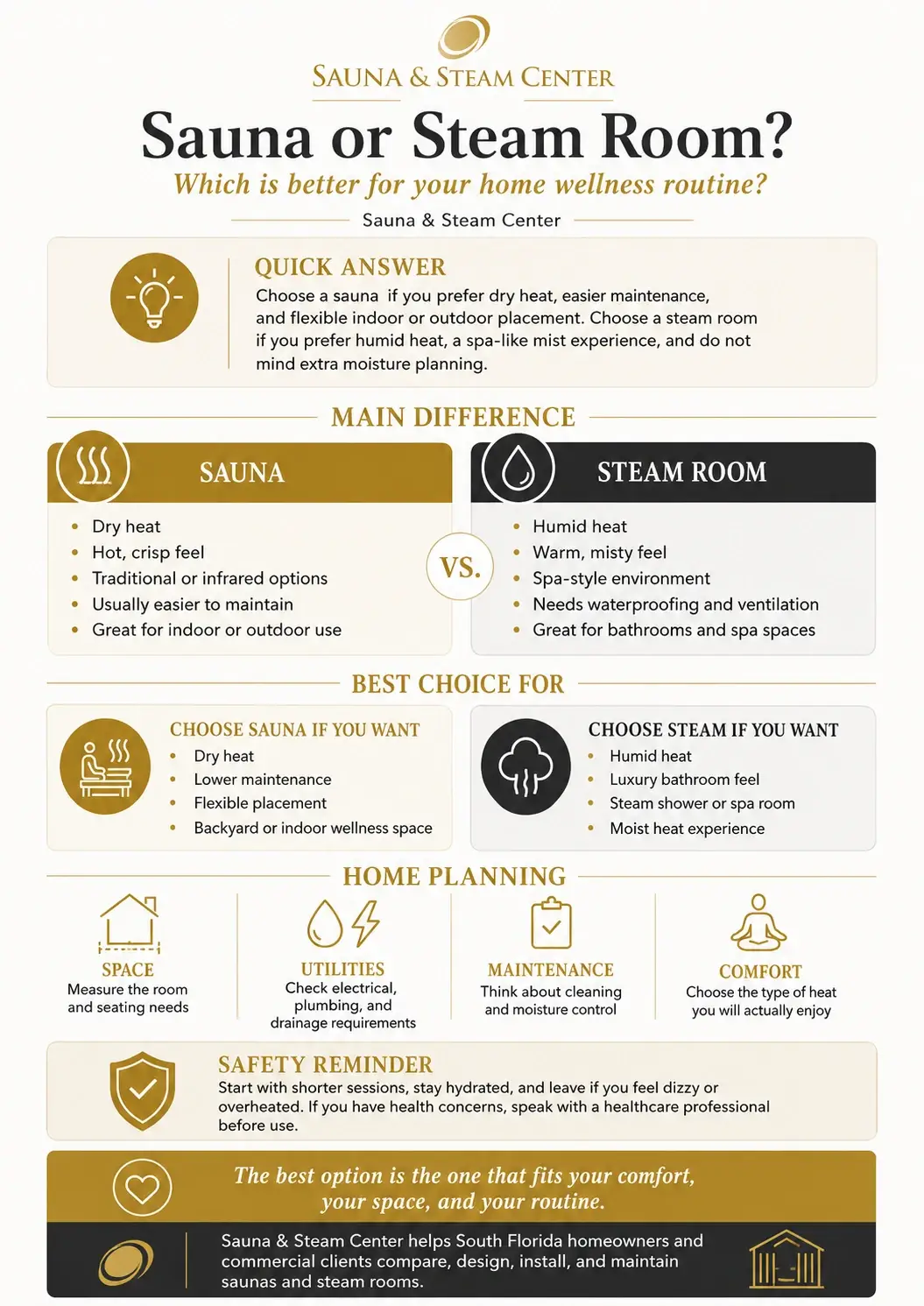
A sauna is usually better if you prefer dry heat, simpler maintenance, flexible indoor or outdoor placement, and more product options. A steam room is usually better if you love humid heat, want a misty spa-like experience, and are comfortable planning for waterproofing, drainage, ventilation, and steam generator access. Technically, neither is better for everyone. Practically, the better choice is the one that fits your body, your home, your maintenance expectations, and your routine. If you want easier ownership, lean sauna. If you want a humid luxury bathroom or spa experience, lean steam room.Key Takeaways
- A sauna uses dry heat, while a steam room uses moist, humid heat.
- A sauna usually gives you more flexibility for indoor, outdoor, traditional, and infrared options.
- A steam room can feel more spa-like, but it needs stronger moisture planning.
- A sauna is usually easier to maintain because it does not create constant humidity.
- A steam room may be a better fit for bathroom remodels, spa areas, gyms, hotels, and luxury wellness spaces.
- The best choice depends on heat preference, available space, installation conditions, budget, and safe use.
What Is the Difference Between a Sauna and a Steam Room?
The biggest difference between a sauna and a steam room is dry heat versus humid heat. A sauna warms the space with dry heat. A steam room fills a sealed room with warm moisture. This difference changes how each one feels, where it can be installed, how it is cleaned, and what the owner needs to plan for. A traditional sauna usually uses an electric heater, wood-burning heater, or heated stones. Some users add small amounts of water to hot stones to create a short burst of steam, but the room is still mostly a dry heat environment. An infrared sauna works differently because infrared panels warm the body more directly at lower air temperatures. If you want to compare infrared options in more detail, our far infrared sauna guide explains how that category fits into home wellness planning. A steam room uses a steam generator that boils water and sends vapor into a sealed enclosure. The humidity is the main feature. Because the air is saturated with moisture, sweat does not evaporate as easily. That is why a steam room can feel very intense even when the air temperature is lower than a traditional sauna.| Feature | Sauna | Steam Room |
|---|---|---|
| Heat type | Dry heat | Moist, humid heat |
| Typical feel | Hot, dry, crisp, and steady | Warm, dense, misty, and humid |
| Common options | Traditional sauna, infrared sauna, indoor sauna, outdoor sauna, custom sauna | Steam shower, custom steam room, commercial steam room |
| Installation flexibility | Usually more flexible | Usually needs more construction planning |
| Moisture concerns | Lower moisture concerns | High moisture control required |
| Maintenance level | Usually simpler | Usually more involved |
| Best fit | People who prefer dry heat and flexible placement | People who prefer humidity and a spa-style mist experience |
Dry Heat vs. Humid Heat
Dry heat usually feels clean, intense, and lighter in the air. Humid heat feels heavier, softer, and more enveloping. This is why two people can use both and prefer different options. One person may love the wood-lined dry heat of a sauna. Another may prefer the dense mist of a steam room. In South Florida, this distinction matters even more. The outdoor climate is already humid, so many homeowners like the contrast of a dry sauna. Others want the resort-style feeling of steam because it reminds them of a luxury spa, hotel, or wellness club.Traditional Sauna, Infrared Sauna, and Steam Room Are Not the Same
When people search for sauna or steam room, they often compare only two choices. In real home planning, there are usually three categories to understand:- Traditional sauna: Best for classic high heat, wood interiors, hot stones, and the traditional sauna experience.
- Infrared sauna: Best for people who want dry heat at lower air temperatures and a gentler-feeling session.
- Steam room: Best for humid heat, warm mist, bathroom spa designs, and commercial spa environments.
Which Feels Better: Sauna or Steam Room?
The better feeling option depends on your heat preference. A sauna feels hotter, drier, and more direct. A steam room feels warmer, wetter, and more humid. Neither is automatically better. The best choice is the one your body enjoys enough to use consistently. Choose a sauna if you like dry warmth, quiet surroundings, wood interiors, and a more breathable heat experience. Many homeowners prefer saunas because the air feels less heavy than steam. A sauna can feel especially comfortable after exercise, during an evening routine, or as part of a backyard wellness setup with a cold plunge, pool, or hot tub. Choose a steam room if you enjoy humidity and a misty spa environment. Steam can feel soothing for people who like moisture with heat. Some users enjoy how steam feels on the skin and breathing passages, but it should not be treated as a medical treatment.A Simple Comfort Test
Ask yourself this: would you rather sit in dry desert-like heat or warm tropical mist? If dry heat sounds more comfortable, choose a sauna. If humid mist sounds more relaxing, choose a steam room. If very high heat makes you uncomfortable but you still want dry heat, consider an infrared sauna.Which One Feels More Intense?
A traditional sauna often has hotter air, but a steam room can feel intense because humidity slows sweat evaporation. In a sauna, sweat can evaporate more easily and the air may feel lighter. In a steam room, the moisture stays on your skin and makes the room feel dense. This is why temperature alone does not tell the full story. Comfort depends on humidity, session length, personal tolerance, ventilation, and how your body responds to heat.Which One Is Better for Relaxation?
Both can be relaxing. A sauna often feels calming because of the dry heat, wood environment, and quiet atmosphere. A steam room often feels relaxing because the warm mist creates a soft spa-like enclosure. If your goal is relaxation, choose the environment that makes you want to slow down, breathe comfortably, and return again.Which Is Better for Home Use?
For many homeowners, a sauna is usually better for home use because it is more flexible and often easier to maintain. You can install many sauna models indoors or outdoors, depending on the space, electrical requirements, and product type. A steam room can be excellent at home too, especially in a bathroom or spa-style remodel, but it requires more planning because moisture affects every surface.Why a Sauna Is Often Easier at Home
A sauna is usually easier to plan because it does not create constant room-wide humidity. Dry heat is easier to contain than steam, and sauna materials are built for repeated heat exposure. Homeowners can choose from indoor saunas, outdoor saunas, traditional saunas, infrared saunas, and custom sauna designs. A sauna may be the better choice if you want:- A dry heat experience
- Indoor or outdoor placement options
- A wellness feature near a pool, patio, gym, or backyard retreat
- Lower moisture concerns
- Simpler cleaning and ownership
- A traditional or infrared option
Why a Steam Room Needs More Planning
A steam room needs more planning because moisture touches everything. Walls, ceilings, doors, benches, tile, grout, drains, glass, seals, and ventilation all matter. The steam generator also needs to be sized correctly and placed where it can be serviced in the future. A steam room may be the better choice if you want:- A humid heat experience
- A luxury bathroom upgrade
- A steam shower or dedicated steam enclosure
- A resort-style spa feeling
- A tiled wellness environment
- A commercial spa, gym, hotel, or condominium amenity
Bottom Line for Homeowners
If you want the easiest path to a home wellness space, a sauna is usually the more practical choice. If you want a humid spa feature and are ready to plan the enclosure correctly, a steam room can be a beautiful long-term upgrade.Installation, Space, and Cost Considerations
Installation is one of the biggest differences between a sauna and a steam room. The visible finished product may look simple, but the planning behind it is important. Before choosing either option, think about space, electrical requirements, moisture, ventilation, access, and long-term service.Sauna Installation Considerations
A sauna needs proper space, safe heater clearances, ventilation, electrical planning, seating layout, and access for installation. Outdoor saunas also need planning for weather exposure, foundation, placement, and the surrounding outdoor environment. Common sauna installation questions include:- Will the sauna be indoors or outdoors?
- How many people should it seat?
- Will it use a traditional heater or infrared panels?
- Does the home have the correct electrical capacity?
- Is there enough clearance for the heater and door?
- Can the unit be delivered through the available access path?
- Does the location support comfortable ventilation and safe use?
Steam Room Installation Considerations
A steam room needs waterproof construction. The ceiling, walls, floor, door, seating, and steam outlet must be planned as a complete system. The enclosure needs to hold steam properly while allowing safe operation and future service access. Common steam room installation questions include:- Will it be a steam shower conversion or a dedicated steam room?
- Are the walls, ceiling, and floor properly waterproofed?
- Is drainage needed?
- Where will the steam generator be installed?
- Can the generator be accessed later for service?
- Is the door sealed correctly?
- Is ventilation planned to manage moisture after use?
Cost Drivers for a Sauna or Steam Room
Cost depends on size, materials, equipment, electrical work, construction requirements, customization, and site conditions. A simple prebuilt sauna is usually more predictable than a custom steam room. A fully custom sauna or steam room can require more design, trade coordination, and finish work. Sauna cost drivers often include:- Indoor or outdoor placement
- Traditional heater or infrared system
- Wood type and finish quality
- Glass doors or glass walls
- Lighting, controls, and accessories
- Electrical work
- Custom sizing or layout
- Delivery and installation access
- Steam generator size
- Waterproofing system
- Tile, stone, or surface materials
- Plumbing and drainage
- Ventilation and moisture control
- Glass enclosure and sealed door
- Generator access and controls
- Custom bench and ceiling design
Maintenance and Long-Term Ownership
Maintenance is where many homeowners start to see the biggest practical difference between a sauna and a steam room. Both need care, but steam rooms usually require more moisture management.Sauna Maintenance
A sauna usually needs regular cleaning, airflow, and care for benches, flooring, heater components, controls, and glass. The routine is usually manageable. Use towels on benches, wipe surfaces when needed, allow the room to air out, and follow the manufacturer’s recommendations for the heater and controls. Outdoor saunas may need additional exterior care depending on sun, rain, salt air, and exposure. In South Florida, exterior material selection and placement matter because weather and humidity can affect long-term performance.Steam Room Maintenance
A steam room usually needs more frequent attention because humidity can create buildup on surfaces, glass, grout, drains, and seals. The steam generator may also need periodic service, especially when water quality contributes to scale buildup. Good steam room ownership means cleaning surfaces, drying the space properly, keeping ventilation working, checking seals, and maintaining the generator. A well-built steam room can be a great feature, but it should not be treated like a regular shower with extra steam added casually.What Happens If You Ignore Maintenance?
If a sauna is neglected, wood surfaces can become stained, odors can build, and heater components may not perform as expected. If a steam room is neglected, moisture-related issues can become more serious. Poor drying, weak ventilation, or failed seals may lead to buildup, surface damage, unpleasant odors, or moisture problems outside the enclosure. This does not mean steam rooms are bad. It means they need the right owner and the right plan. If you want the lowest-maintenance heat experience, a sauna is usually the easier choice. If you are willing to manage moisture properly, a steam room can deliver a premium spa experience.Benefits, Safety, and What the Evidence Really Says
Many people compare a sauna or steam room because they want to know which one has better benefits. The responsible answer is that both can support relaxation and comfort, but the claims should stay realistic. Heat exposure can feel good and may support a wellness routine, but it should not be presented as a cure, detox shortcut, or replacement for medical care.What Is Well Supported
Saunas and steam rooms can support relaxation, comfort, and a consistent self-care routine. Heat can help people slow down after work, after exercise, or before bed. Many users also value the quiet time, reduced distractions, and ritual of stepping away from screens and daily stress. Sauna bathing has been studied more than steam room use in some areas, especially around cardiovascular and general wellness research. However, personal response, session length, frequency, hydration, temperature, and health status all matter.What Is Mixed or Conditional
Claims around recovery, sleep, circulation, skin, breathing comfort, and stress can vary from person to person. Some people feel better after heat exposure. Others may feel lightheaded, overheated, or uncomfortable. Steam may feel pleasant for people who enjoy humidity, but it should not be described as a treatment for respiratory or skin conditions. The practical takeaway is simple: use sauna or steam as part of a balanced routine, not as a magic solution.What Is Overstated or Unproven
A sauna or steam room should not be promoted as a detox cure, disease treatment, fat-loss shortcut, immunity booster, or replacement for exercise. Sweating may temporarily reduce water weight, but that is not the same as losing body fat. Heat exposure should not replace medical care, medication, movement, sleep, nutrition, or hydration.Safety Considerations
Heat exposure can create risks if used carelessly. Dehydration, dizziness, overheating, fainting, and blood pressure changes are possible. People who are pregnant, have heart concerns, have very low blood pressure, have uncontrolled high blood pressure, take medications that affect sweating or blood pressure, or feel unwell with heat should speak with a healthcare professional before using a sauna or steam room.- Start with shorter sessions.
- Drink water before and after use.
- Leave if you feel dizzy, weak, nauseous, or uncomfortable.
- Avoid alcohol before and during heat exposure.
- Do not use a sauna or steam room as medical treatment.
- Follow the manufacturer’s safety instructions.
How to Choose the Right Option for Your Lifestyle
The best sauna or steam room choice becomes clearer when you match the feature to your lifestyle. A homeowner building a backyard retreat may choose differently than someone remodeling a bathroom or planning a commercial spa area.Best for Dry Heat Lovers
Choose a sauna. A traditional sauna is ideal if you want classic high heat, wood surroundings, and a strong sauna experience. An infrared sauna may be better if you want dry heat that feels gentler and operates at lower air temperatures.Best for Humid Spa Comfort
Choose a steam room. If you love warm mist, tiled rooms, and the feeling of a resort spa, steam may be the better match. Just remember that steam requires more planning and maintenance.Best for Backyard Wellness
A sauna is usually the better fit for a backyard wellness area. Outdoor saunas pair well with pools, patios, cold plunges, hot tubs, swim spas, and lounge areas. They can also create a visual centerpiece in the yard.Best for Bathroom Remodeling
A steam room may be the better fit if you want to upgrade a shower area into a steam shower or create a tiled spa enclosure. A sauna may still work near a bathroom, gym, or wellness room, but steam usually fits more naturally into wet-room design.Best for Lower Maintenance
A sauna is usually better if you want lower maintenance. It still needs cleaning and care, but it does not create the same constant moisture load as a steam room.Best for Commercial Spaces
Both can work in commercial settings. Gyms, hotels, condominiums, wellness centers, and spas often compare both options. A sauna may be easier to manage in some facilities. A steam room can create a premium spa feeling when the building is designed to manage moisture and maintenance properly.What to Do Before You Buy
Before buying a sauna or steam room, avoid choosing based only on photos, online pricing, or a single feature list. The best projects begin with the space, the user, and the installation conditions.Step 1: Decide How You Want the Heat to Feel
Start with comfort. Dry heat points toward sauna. Humid heat points toward steam. Gentler dry heat may point toward infrared sauna. If you dislike humidity, do not force a steam room because it looks luxurious. If you dislike dry heat, do not choose a sauna only because it seems easier to install.Step 2: Choose the Location
Think about where the feature will actually be used. A sauna may work indoors, outdoors, near a pool, in a gym room, or in a backyard wellness area. A steam room usually works best where waterproofing, drainage, plumbing, and ventilation can be planned correctly.Step 3: Confirm the Technical Requirements
Before ordering, confirm electrical needs, ventilation, clearances, access path, plumbing requirements, drainage, and service access. These details can affect cost, installation schedule, and long-term performance.Step 4: Think About Ownership
Ask yourself how much cleaning and maintenance you are willing to handle. If you want a simple routine, a sauna may be better. If you are comfortable caring for tile, grout, glass, seals, drains, and a steam generator, a steam room may still be a great fit.Step 5: Talk to a Specialist
A professional review can help you compare models, avoid installation problems, and choose the right solution for your space. At Sauna & Steam Center, we design, sell, install, maintain, and repair saunas, steam rooms, hot tubs, swim spas, and cold plunges across South Florida. If you are ready to review your options, you can contact our team for guidance.Frequently Asked Questions
Is a sauna better than a steam room?
A sauna is better if you prefer dry heat, easier maintenance, and more flexible placement. A steam room is better if you love humid heat and want a misty spa-style experience. Neither is better for everyone. The right choice depends on comfort, space, budget, and maintenance expectations.Is a steam room the same as a sauna?
No. A sauna usually uses dry heat. A steam room uses humid heat from steam. They are both heat-based wellness spaces, but they feel different and require different installation planning.Which is easier to maintain, a sauna or steam room?
A sauna is usually easier to maintain because it creates less moisture. A steam room usually needs more cleaning and moisture management because of humidity, grout, drains, seals, glass, and the steam generator.Which is better for a home?
A sauna is often better for a home if you want flexible placement and simpler ownership. A steam room can be better if you are remodeling a bathroom or building a dedicated spa space with proper waterproofing and ventilation.Which is better for outdoors?
A sauna is usually better for outdoor use. Outdoor saunas can be designed for patios, pool areas, backyards, and wellness retreats. Steam rooms are usually more common indoors because they need waterproof construction, plumbing, drainage, and generator access.Is a sauna or steam room better after a workout?
Both can feel good after a workout, but the better choice depends on your comfort. A sauna offers dry heat that many people enjoy after exercise. A steam room offers humid heat that can feel soothing for some users. Hydration and session length are important with either option.Can a sauna or steam room help with weight loss?
A sauna or steam room can make you sweat, and sweating may temporarily reduce water weight. That is not the same as losing body fat. Heat exposure should not be used as a replacement for exercise, nutrition, sleep, or medical guidance.How long should you stay in a sauna or steam room?
Many people start with shorter sessions and adjust based on comfort. Harvard Health recommends limiting sauna sessions to about 15 to 20 minutes, cooling down gradually, and drinking water afterward. Steam room users should also avoid overheating and leave if they feel dizzy, weak, or uncomfortable.Should I choose infrared sauna, traditional sauna, or steam room?
Choose infrared sauna if you want gentler dry heat at lower air temperatures. Choose a traditional sauna if you want a hotter classic sauna feel. Choose a steam room if you want humid heat and a misty spa-style experience.What is the safest choice?
The safest choice is the one you can use comfortably and responsibly. Avoid overheating, stay hydrated, leave if you feel unwell, and speak with a healthcare professional first if you have heart concerns, blood pressure issues, pregnancy, medications, or other health conditions affected by heat.Conclusion
Choosing between a sauna or steam room comes down to heat preference, installation conditions, maintenance expectations, and how you want to use the space. A sauna is usually the better fit if you want dry heat, flexible placement, and easier ownership. A steam room is usually the better fit if you want humidity, warm mist, and a luxury spa-style environment. The smartest decision is the one that feels comfortable, works with your home, and supports a routine you will actually use. When the space, system, and installation plan are right, either option can become a valuable part of your wellness lifestyle.If you are comparing a sauna or steam room for your South Florida home, condo, gym, hotel, spa, or commercial property, Sauna & Steam Center can help you review the space, compare options, and choose the right solution. Call 954-744-5395 or contact our team to start planning your project.Back to top
References