
Steam Room Benefits: What Steam Can and Cannot Do
Editorial disclosure: Sauna & Steam Center sells, designs, installs, and services sauna and steam systems. Product and installation guidance reflects our first-hand industry experience. Wellness information in this article is educational and does not replace medical advice, diagnosis, or treatment.
Quick answer:
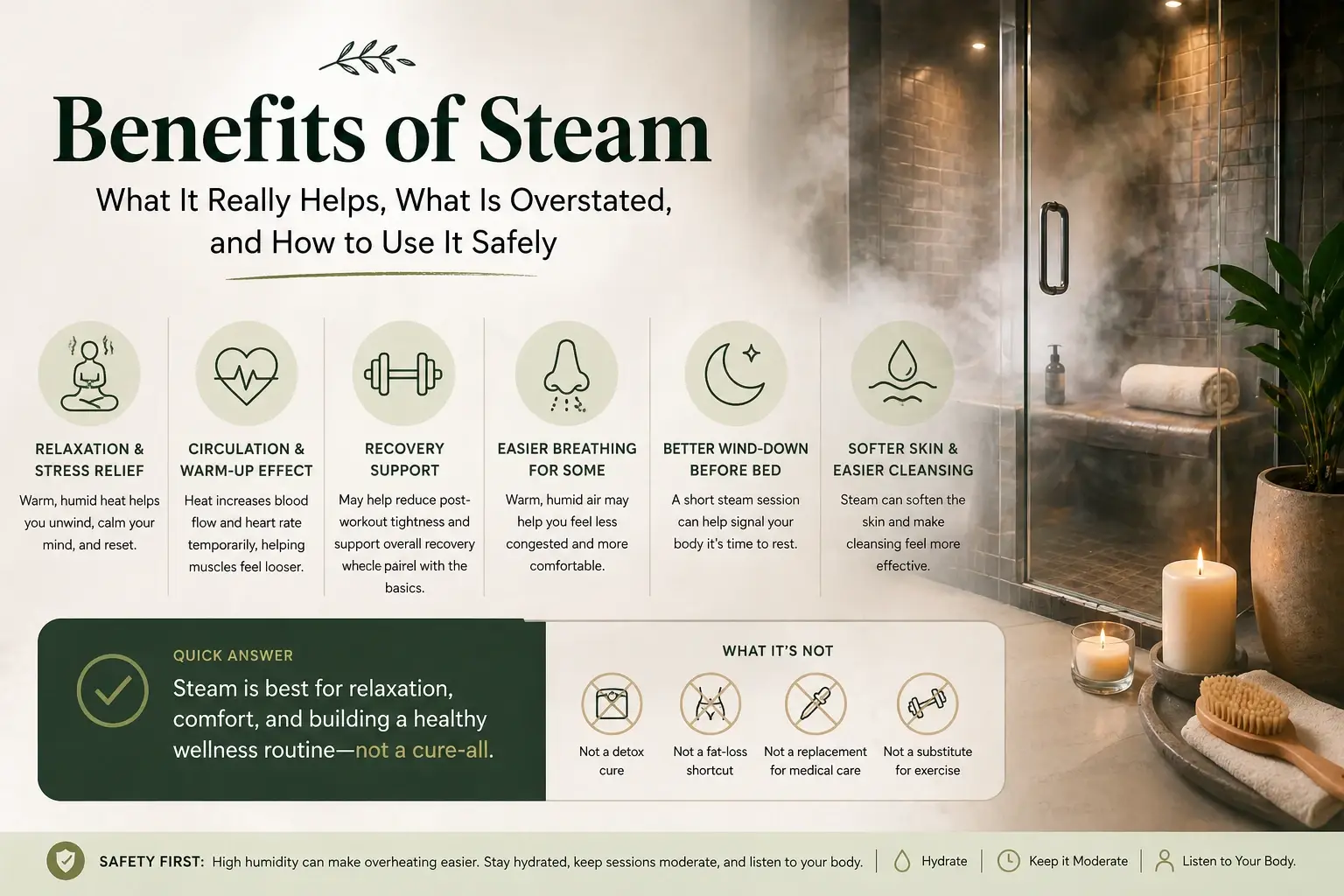
The most realistic steam room benefits are relaxation, warm humid comfort, sweating, temporary relief from feeling stiff, and short-term comfort when the nose or throat feels dry or congested. Steam can also fit well into an evening or post-workout routine. It is not a proven detox treatment, fat-loss tool, hormone booster, or cure for colds and other illnesses.
A sauna and steam room installer will tell you something that glossy wellness ads sometimes forget: steam is excellent, but it is not magic wearing a bathrobe. It can turn an ordinary bathroom into the place where your shoulders finally drop, your phone stays outside, and the day stops asking questions for ten peaceful minutes. That is already a strong benefit. It does not need a superhero story.
This guide explains what steam may realistically help with, which claims deserve skepticism, how a residential steam system works, and what homeowners should consider before buying. You will also learn how steam compares with dry sauna heat and when a professional steam shower installation in South Florida makes sense. If your main question is whether sweating in humid heat changes body fat or only scale weight, read our guide on whether a steam room helps you lose weight. If your goal is relaxation and aromatherapy, see our guide to eucalyptus steam room benefits and relaxation.
Important note:Heat and humidity can contribute to dehydration, dizziness, overheating, or discomfort. People who are pregnant or who have heart, blood pressure, kidney, medication, heat-sensitivity, or other medical concerns should ask a healthcare professional before using a steam room.
Steam Room Benefits: Quick Answers
| Search Question | Best Practical Answer |
|---|---|
| What are the benefits of a steam room? | Relaxation, humid-heat comfort, sweating, temporary muscle comfort, and short-term relief from dryness or congestion. |
| What are steam rooms for? | Mainly relaxation, comfort, heat exposure, and wellness routines. They are not medical treatment devices. |
| What are steam bath benefits? | Steam baths offer the same core humid-heat benefits as steam rooms. |
| What are steam sauna benefits? | People often use “steam sauna” to mean steam room. The benefits come from warm, highly humid air rather than traditional dry-sauna heat. |
| What are steam room benefits for men? | The core benefits are the same for men and women. A higher sweat rate does not mean greater detox or fat loss. |
| What are the benefits of sauna and steam room? | Both provide passive heat and relaxation, but steam is humid while traditional sauna is hotter and drier. |
| Is a steam bath in the gym useful? | It can be a relaxing post-workout option after cooling down and hydrating, but it is not required for recovery. |
Steam Room Benefits: What the Research Shows
Research supports a careful, practical view of steam room benefits. Warm, humid heat reliably raises skin temperature, encourages sweating, and creates short-term cardiovascular responses such as a higher heart rate and changes in blood flow. Many people also use steam because the quiet, enclosed experience supports relaxation and makes it easier to build a repeatable recovery or evening routine. The strongest evidence is for passive heat exposure in general, including sauna bathing, warm-water immersion, warm baths, and heated environments. Steam rooms belong to that broader category, but they have not been studied as extensively as traditional Finnish saunas or hot-water immersion. For that reason, benefits found in sauna or warm-bath studies should be treated as relevant context, not as proof that every residential steam shower produces the same outcome.Potential benefits supported by broader heat research
- Relaxation and stress reduction: A short, comfortable steam session can create a calming break from stimulation and may support a regular wind-down routine.
- Temporary muscle and joint comfort: Heat can increase local blood flow and help the body feel less stiff, although it does not replace rehabilitation, sleep, hydration, or medical treatment.
- Possible sleep-routine support: Research on warm showers and baths suggests that passive body heating before bed may help some people fall asleep more easily when enough time is allowed to cool down afterward.
- Temporary congestion comfort: Warm humid air may feel soothing when the nose or throat feels dry or stuffy, but research does not support treating steam as a cure for colds, infections, allergies, or respiratory disease.
- Short-term cardiovascular responses: Passive heating can temporarily change heart rate, blood pressure, circulation, and autonomic activity. These responses are not the same as exercise and may not be appropriate for everyone.
Research limitation:
Most published health research evaluates dry sauna bathing, warm-water immersion, or other passive-heating methods rather than residential steam rooms specifically. The realistic takeaway is that steam can be useful for comfort, relaxation, and routine-building, while medical, detoxification, weight-loss, and disease-prevention claims require much more caution.
Key Takeaways
- Steam is most dependable as a relaxation, comfort, and routine-building tool.
- Warm humid air may temporarily help some people feel less congested or physically tight.
- Sweating is real, but detox, dramatic fat loss, anti-aging, and hormone claims are often overstated.
- A steam system needs more than a generator. Waterproofing, slope, drainage, sealing, controls, and service access all matter.
- The right sauna and steam room installer should explain both the wellness experience and the technical requirements before recommending equipment.
- A home steam shower is usually worth it when you enjoy humid heat and expect to use it consistently.
What Benefits Can Steam Realistically Provide?
Steam can provide a calming humid-heat experience that encourages relaxation, sweating, temporary circulation changes, and a break from everyday stimulation. Some users also report temporary comfort for congestion, muscle tightness, post-workout winding down, or evening relaxation. These are useful benefits because they can improve how a routine feels, even when they do not qualify as medical treatment. The important word is realistically. Steam may help you feel better for a while, but it does not directly burn meaningful body fat, remove mysterious toxins, reverse aging, or replace cardiovascular exercise. A good session should leave you calmer and refreshed. If it leaves you dizzy, nauseated, weak, or feeling like you just negotiated with the sun, it was too long or too intense.
Simple summary:Steam is valuable because it can make relaxation and recovery easier to repeat. Its strongest benefits are comfort, consistency, and the experience itself, not miracle outcomes.
What Are Steam Rooms For?
A steam room is a humid-heat wellness environment designed for relaxation, sweating, warm comfort, and a spa-style routine. People also use steam after exercise or before bed because the warm humidity can feel soothing.- Relaxation after work or exercise
- Temporary muscle and joint comfort
- Evening wind-down routines
- Temporary comfort for dry-feeling nasal passages or throat
- Home, gym, hotel, and spa wellness use
Simple answer: Steam rooms are for relaxation and humid-heat comfort, not medical treatment.
What Does a Sauna and Steam Room Installer Actually Build?
A sauna and steam room installer plans and installs heated wellness spaces, but sauna and steam projects are not the same job with different weather. A sauna generally uses dry heat, while a steam room uses a generator to fill a sealed, waterproof enclosure with warm humid vapor. That difference changes the materials, construction details, maintenance needs, and installation process. A steam installation may involve a steam generator, control, steam head, waterproofed enclosure, sloped ceiling, sealed penetrations, nonporous finishes, drainage, plumbing, electrical coordination, seating, lighting, and access for future service. The generator also needs to be sized for the room volume and adjusted for construction materials, exterior walls, ceiling height, and other heat-loss factors. For a deeper look at the construction side, read our steam room design and installation guide for South Florida.How a Home Steam System Works
A residential steam system begins with water entering a steam generator. The generator heats the water until it produces vapor, then sends that vapor through a line to the steam head inside the enclosure. A control lets the user start the system and manage temperature or session settings, depending on the model.The generator creates the steam
The generator is usually installed outside the steam enclosure in an accessible, protected location. It should not be treated like a mysterious metal box that can disappear behind a wall forever. It will eventually need inspection, cleaning, service, or replacement, so access matters.The enclosure keeps steam where it belongs
The room or shower must contain heat and humidity without allowing moisture to migrate into surrounding construction. This is why waterproofing, sealing, ceiling design, door selection, and material choices are central to the project. Beautiful tile cannot rescue poor moisture planning.- The steam generator must be properly sized for the enclosure.
- The steam head should be positioned to reduce direct contact risk.
- The enclosure should use steam-appropriate waterproofing and finishes.
- The generator needs practical access for maintenance and repair.
- Electrical and plumbing work should be coordinated with qualified professionals.
Steam Room Benefits for Men and Women: Are They Different?
The main steam room benefits are similar for men and women: relaxation, warm humid comfort, sweating, temporary relief from feeling stiff, and a convenient way to create a recovery or evening routine. Current research does not establish a separate list of guaranteed steam-room benefits for one sex. Individual response is influenced more by health, hydration, body size, fitness, medications, heat tolerance, session intensity, and personal preference.What men may notice
Men often have a higher average sweat rate during heat exposure, partly because of differences in body size, metabolism, and sweating responses. That does not mean a heavier sweat produces a better session, more detoxification, or more fat loss. Men should still begin conservatively, replace fluids, and leave immediately if they feel dizzy, weak, nauseated, confused, or overheated.What women may notice
Women can receive the same practical relaxation and comfort benefits, but heat perception and temperature regulation may vary with body composition, fitness, age, hormonal changes, menstrual-cycle phase, pregnancy, and menopause. Research on sex differences in heat regulation remains limited and does not support one universal steam-session formula for all women.Pregnancy, menopause, and individual health conditions
Pregnancy changes circulation and temperature regulation, so a pregnant person should ask a healthcare professional before using a steam room or other high-heat environment. People experiencing menopause may also find heat less comfortable during hot flashes or periods of greater temperature sensitivity. Anyone with heart, blood pressure, kidney, fainting, respiratory, medication, or heat-sensitivity concerns should get individualized medical guidance before use.Practical takeaway:
Men and women can enjoy the same core steam room benefits, but session length and temperature should be based on individual comfort and health rather than gender-based marketing claims.
6 Realistic Steam Room Benefits
1. Steam can create a strong relaxation ritual
This is the benefit that needs the least salesmanship. Warm vapor, a quiet enclosure, and ten minutes without notifications can help many people shift from work mode into recovery mode. The value comes from repetition. A steam shower located steps from your bedroom is easier to use consistently than a spa reservation that requires traffic, parking, and heroic planning. Homeowners who enjoy scent as part of that routine may also be interested in using eucalyptus in a steam room for relaxation, including what it may realistically add to the experience and which health claims should be treated cautiously.2. Humid heat may temporarily ease congestion discomfort
Warm humid air can make breathing feel more comfortable for some users when the nose or throat feels dry or stuffy. That does not mean steam cures a cold, infection, allergy, or respiratory condition. Think of it as temporary comfort, not treatment. People with breathing conditions should use caution and follow medical guidance.3. Heat may help the body feel looser after activity
Heat exposure can increase blood flow and create a temporary warm-up effect that makes muscles and connective tissues feel less stiff. Many people enjoy steam after exercise, travel, yard work, or a long day at a desk. It should complement hydration, sleep, nutrition, and sensible training, not replace them.4. Steam can support an evening wind-down routine
A short session earlier in the evening may help some users create a transition between a busy day and bedtime. The routine itself matters. Dim lights, a consistent schedule, and allowing time to cool down afterward may be more important than trying to achieve the longest possible session.5. Skin may feel softer and easier to cleanse
Steam can soften surface oils and buildup, which may make cleansing feel easier and leave skin feeling smoother temporarily. It does not literally open and close pores like tiny windows. Long or frequent exposure can irritate reactive skin, so more steam is not automatically more glamorous.6. Home access can make wellness routines easier to repeat
Convenience is an underrated benefit. When a wellness feature is easy to access, comfortable to use, and designed around your home, you are more likely to use it. This is where installation quality and wellness value meet. A well-designed room that heats evenly and is simple to maintain has a better chance of becoming part of real life.Steam Bath in the Gym: Is It Worth Using After a Workout?
A steam bath in the gym can be a pleasant post-workout routine once you have cooled down and begun replacing fluids. The main benefit is relaxation and temporary comfort, not a guaranteed increase in recovery speed.- Finish your workout and allow breathing and heart rate to settle.
- Start replacing fluids.
- Shower first if required by the facility.
- Begin with a short session if you are new to humid heat.
- Leave immediately for dizziness, nausea, weakness, faintness, shortness of breath, or overheating.
- Follow the gym’s posted rules.
Steam Shower Benefits at Home
The most valuable steam shower benefits at home are convenience, privacy, control, and consistency. A well-designed system lets you use warm humid heat without driving to a gym or spa, sharing a public enclosure, or working around somebody else’s schedule. Because the experience is close and easy to start, it has a better chance of becoming part of your real routine.Convenient relaxation without leaving home
A home steam shower can turn an existing daily activity into a short wellness ritual. You can choose the lighting, temperature, session timing, seating, fragrance options, and overall atmosphere. This control can be especially valuable for people who want a quiet transition after work, exercise, travel, or a demanding day. If fragrance is part of the experience you want, our eucalyptus steam room relaxation guide explains aromatherapy considerations, realistic benefits, and why essential oils should be used only with steam equipment and delivery methods designed for them.More privacy and control over cleanliness
Homeowners control who uses the enclosure, how often it is cleaned, which products are used, and whether the room is allowed to dry properly between sessions. A home system still requires routine cleaning and maintenance, but it avoids many of the uncertainties associated with shared facilities.A repeatable recovery and evening routine
Steam may help the body feel warmer and less stiff for a short period, while the routine itself can encourage relaxation. Some people also use a brief evening session as part of a wind-down routine. These are comfort and lifestyle benefits, not promises of medical treatment, detoxification, or direct fat loss.Potential bathroom and lifestyle value
A professionally planned steam shower can combine a daily shower with a spa-style feature without requiring a separate wellness room. The practical value depends on how often the household will use it, the quality of the enclosure, maintenance expectations, and whether the installation fits the home’s plumbing, electrical, waterproofing, and ventilation conditions. Before choosing a generator or control package, review our steam shower kits buying guide to compare system components, sizing considerations, installation requirements, and the difference between purchasing equipment and completing a reliable steam enclosure.Steam Bath Benefits vs. Sauna: The Short Version
Steam baths and saunas both use heat to create a relaxing wellness experience, but they feel different and require different construction. A steam bath uses warm, highly humid air inside a sealed and waterproof enclosure. A traditional sauna uses much hotter, drier air inside a ventilated wood-lined room. Neither option is universally better. The right choice depends on heat preference, humidity tolerance, available space, maintenance expectations, and how consistently you expect to use it.Benefits of a steam bath
- Warm humid heat that can feel gentler to people who dislike very hot, dry air
- Temporary comfort when the nose, throat, or skin feels dry
- A spa-style experience that can often be integrated into a bathroom or shower
- Relaxation, sweating, and temporary muscle-loosening comfort
Benefits of a sauna
- Hotter, drier heat with a classic wood-room experience
- A larger body of published research, especially for traditional Finnish sauna bathing
- Less humidity inside the room, although ventilation and heater clearances remain essential
- Traditional heater, stone, and wood options that appeal to people who enjoy intense dry heat
| Option | How It Works or Feels | Best For | Important Consideration |
|---|---|---|---|
| Steam room or steam shower | Warm, humid, enveloping heat | Humidity lovers, relaxation, recovery routines, and spa-style bathrooms | Requires strong waterproofing, moisture planning, generator access, and regular cleaning |
| Traditional sauna | Hotter, drier heat with a more intense room temperature | People who prefer classic sauna heat, wood interiors, and shorter high-heat sessions | Requires heater sizing, ventilation, electrical planning, and proper clearances |
| Infrared sauna | Lower air temperature with radiant heat | People who prefer gentler-feeling heat and simpler indoor placement | Experience varies by heater design, cabin quality, and electrical requirements |
| Hot tub | Warm water, buoyancy, and optional jets | Full-body water comfort, social use, and outdoor relaxation | Requires water care, cleaning, power, and cover management |
When steam is the better choice
Steam is usually the better fit when you enjoy humidity, want the experience integrated into a bathroom, and prefer a short spa-style ritual. It also makes sense when the enclosure can be built correctly and the generator can remain accessible.When a sauna may be the better choice
A sauna may be better when you prefer dry heat, natural wood, a hotter room environment, or a dedicated wellness cabin. Homeowners comparing dry-heat options can review our South Florida sauna installation guide, the home sauna cost breakdown, and our sauna cost calculator.
How to Plan a Steam Room You Will Actually Use
Start with your routine, not the equipment catalog. A generator can produce steam, but it cannot decide whether the room is comfortable, easy to clean, properly lit, or located where you will use it. Good planning connects the technical project to the way you live.- Decide whether you want a steam shower conversion or a dedicated steam room.
- Measure the enclosure, ceiling height, exterior surfaces, glass, and construction materials.
- Confirm waterproofing, drainage, door, ceiling, bench, plumbing, and electrical requirements.
- Select a correctly sized generator, control package, steam head, and optional features.
- Plan generator access before walls and finishes make access difficult.
- Review cleaning, water quality, maintenance, and future service expectations.
Important:Never choose a steam generator by room dimensions alone without considering the manufacturer sizing method and the room materials. Stone, glass, exterior walls, high ceilings, and other factors can increase the required capacity.
Evidence at a Glance
This table separates practical benefits from claims that deserve more caution. It is designed to help buyers keep expectations useful and grounded.| Claim, Feature, or Factor | Strength or Importance | Best Way to Understand It |
|---|---|---|
| Relaxation and comfort | Strong practical value | Warm humid heat and a quiet routine can help many users slow down and feel more relaxed. |
| Temporary congestion comfort | Moderate and conditional | Humid air may feel soothing, but it does not cure the underlying illness or condition. |
| Post-workout comfort | Moderate practical value | Heat may help users feel looser, but recovery still depends on hydration, rest, nutrition, and training. |
| Sleep routine support | Promising but individual | A consistent evening warming and cooling routine may help some people wind down. |
| Detoxification | Weak as commonly marketed | Sweating occurs, but major detox claims go beyond what a steam session can honestly promise. |
| Fat loss | Not supported as a direct benefit | Short-term scale changes mainly reflect fluid loss, not meaningful fat loss. For a deeper explanation, see our guide on steam room weight loss, water weight, calories, and body fat. |
Steam Claims That Are Overstated
What is well supported
Steam produces heat, humidity, sweating, and a relaxing sensory experience. Many people also find it useful as part of a recovery or evening routine. These are reasonable benefits that do not require exaggerated promises.What is mixed or conditional
Claims involving circulation, sleep, muscle recovery, congestion comfort, and skin feel may be useful for some people, but results vary. Much of the broader evidence comes from passive heat research that is not limited to residential steam rooms.What is overstated or unproven
Steam should not be marketed as a cure for disease, a major detox method, a direct fat-loss system, an anti-aging treatment, or a reliable way to optimize hormones. Temporary water loss is not fat loss, and feeling intensely hot is not proof that a session was more effective. If weight change is your main concern, our dedicated guide on whether steam rooms help with weight loss or calorie burning separates temporary dehydration from lasting fat loss.
Bottom line:Buy steam for comfort, consistency, and the experience. Those benefits are valuable enough without adding promises the equipment cannot guarantee.
When Professional Guidance Matters
Medical guidance and installation guidance solve different problems, and both can matter. A healthcare professional can help determine whether heat exposure is appropriate for your health. A qualified contractor, electrician, plumber, waterproofing professional, or sauna and steam room installer can help determine whether the space can support the system safely and reliably.- Ask a healthcare professional if you are pregnant or have heart, blood pressure, kidney, fainting, heat-sensitivity, or medication concerns.
- Use qualified electrical and plumbing professionals where required.
- Get professional waterproofing and enclosure guidance for steam construction.
- Request manufacturer-based generator sizing instead of guessing from square footage.
- Plan service access before the generator is enclosed or the project is finished.
What Our Experience Since 2004 Has Taught Us
After working with residential and commercial sauna and steam projects since 2004, we have learned that the happiest owners are rarely the ones who bought the longest feature list. They are the ones whose system fits the room, the routine, and the maintenance expectations. Comfort comes from the entire installation, not just the generator label.The generator is only one part of the experience
Buyers naturally focus on generator power and controls, but room construction determines how that equipment performs. A poorly sealed or incorrectly sized enclosure can heat slowly, produce uneven comfort, waste energy, or create moisture problems. The best equipment cannot negotiate with bad construction.Service access becomes important later
Every system will eventually need inspection, cleaning, repair, or replacement. A generator installed in an inaccessible location can turn a manageable service visit into a construction project. Planning access early is one of the least glamorous and most valuable decisions in the installation.South Florida humidity raises the stakes
South Florida already brings heat and humidity to the conversation. Indoor steam projects need thoughtful waterproofing, drying, ventilation, sealing, and material selection so the surrounding space can handle repeated use. Coastal properties may also require additional attention to equipment location and environmental exposure.How to Choose the Right Steam Solution
The best solution depends on the room, the desired experience, the number of users, construction conditions, maintenance expectations, budget, and whether the project is a renovation or new construction. Begin with the experience you want, then verify what the space can support.- Do you enjoy humid heat enough to use it several times per week?
- Will the project be a shower conversion or a dedicated steam room?
- Can the enclosure be properly waterproofed, sealed, sloped, and drained?
- Where will the generator be installed, and how will it be serviced?
- What control, lighting, aromatherapy, seating, and automation features matter?
- Are the electrical, plumbing, ventilation, and construction responsibilities clearly defined?
| Your Main Goal | What to Prioritize | Recommended Next Step |
|---|---|---|
| Add steam to an existing bathroom | Enclosure suitability, waterproofing, ceiling, door, drainage, and generator location | Schedule a site review before purchasing equipment |
| Create a luxury home wellness room | Custom layout, finishes, seating, lighting, controls, comfort, and long-term service access | Begin with design and equipment planning together |
| Compare steam with sauna | Heat preference, humidity, available space, construction scope, maintenance, and routine | Experience both heat styles and compare complete installed requirements |
| Build a commercial steam room | Capacity, controls, duty cycle, drainage, ventilation, code requirements, maintenance, and serviceability | Use a commercial design and installation process from the beginning |
Plan It Right the First Time
Talk With a Sauna and Steam Room Installer
Sauna & Steam Center helps homeowners, contractors, designers, developers, and commercial properties compare steam generators, sauna systems, controls, layouts, materials, and installation requirements. We can review your space, explain the tradeoffs, and help you choose a system that fits the way you plan to use it.Frequently Asked Questions
What are the benefits of a steam room?
The most realistic benefits are relaxation, humid-heat comfort, sweating, temporary muscle comfort, and possible short-term relief from dryness or congestion.What are steam rooms for?
Steam rooms are mainly used for relaxation, warm humid comfort, sweating, and wellness routines.What are steam bath benefits?
A steam bath can provide warm humidity, relaxation, sweating, and temporary comfort for stiffness or dryness.What are steam sauna benefits?
“Steam sauna” commonly refers to a steam room. Its experience comes from moist heat, unlike a traditional dry sauna.What are steam room benefits for men?
Men can experience the same core benefits as women. More sweating does not mean more detoxification or better results.What are the benefits of sauna and steam room?
Both can support relaxation and passive heat exposure. Steam rooms use high humidity, while traditional saunas use hotter, drier air.Is a steam bath in the gym good after a workout?
It can be a relaxing option if you are cooled down and hydrated, but it should complement normal recovery rather than replace it.What does a sauna and steam room installer do?
A sauna and steam room installer helps plan equipment, layout, power, plumbing, ventilation, waterproofing, controls, materials, access, and installation coordination for sauna and steam projects. The exact scope depends on whether the project is residential, commercial, prefabricated, or custom.Are the benefits of steam real?
Yes, but the most realistic benefits are relaxation, humid-heat comfort, sweating, routine-building, and possible temporary support for muscle tightness, congestion comfort, or winding down. Steam should not be treated as a cure or miracle wellness treatment.How long should you stay in a steam room?
Many healthy adults begin with about 5 to 10 minutes and may work toward roughly 10 to 15 minutes based on comfort and professional guidance. Leave immediately if you feel dizzy, nauseated, faint, weak, short of breath, confused, or overheated.Is steam better than a sauna?
Steam is better for people who prefer warm humid heat and a spa-style bathroom experience. A sauna may be better for people who prefer drier heat, natural wood, and a dedicated heat room. The better option is the one that fits your heat preference, space, construction requirements, and routine.Does steam detox your body or cause fat loss?
Steam causes sweating and temporary fluid loss, but that is not the same as major detoxification or meaningful fat loss. Your body already relies on organs such as the liver and kidneys for waste processing, and long-term fat loss depends mainly on nutrition, activity, sleep, and overall health.Is a home steam shower worth it?
A home steam shower can be worth it for people who enjoy humid heat, want a repeatable relaxation routine, and are willing to invest in proper enclosure construction and maintenance. It is less likely to feel worthwhile when the purchase is based mainly on exaggerated health or weight-loss expectations.Conclusion: Steam Is Valuable When the Experience and Installation Are Both Right
The benefits of steam are most convincing when they stay realistic. Steam can create a relaxing, soothing, and repeatable home wellness experience. It may temporarily help some users feel looser, calmer, less dry, or more ready to wind down, but it should not be sold as a medical cure, detox system, or fat-loss shortcut. The room itself matters as much as the wellness claims. Generator sizing, waterproofing, sealing, drainage, ceiling design, controls, electrical work, plumbing, and future service access all affect performance and ownership. A knowledgeable sauna and steam room installer can connect the experience you want with the technical plan your space needs. That is how a nice idea becomes a system you can comfortably use for years.References
- Cleveland Clinic: Sauna Benefits and Safety Considerations
- Cleveland Clinic: Facial Steam and Skin Considerations
- Cleveland Clinic: Why the Body Sweats
- Haghayegh S, et al.: Before-Bedtime Passive Body Heating and Sleep
- Yutan W, et al.: Heat and Cold Therapies for Delayed Onset Muscle Soreness
- Cochrane Review: Heated, Humidified Air for the Common Cold
- NHS: Heat Exhaustion and Heatstroke
- Royal Devon NHS and British Burn Association: Steam Inhalation Burn Warning
- Price BS, et al.: Heat Thermotherapy and Cardiovascular Function, Systematic Review and Meta-Analysis
- Hamaya R, et al.: Non-Acute Passive Heating and Cardiometabolic Health
- Ouazaa Y, et al.: Sex-Related Differences in Temperature Regulation During Heat Stress
- Sex Differences in Thermal Sensitivity and Perception