
Sauna and Cold Plunge Benefits: Best Routine, Real Benefits & Safety
Editorial and medical disclosure:
This guide is educational and is not medical advice. Sauna & Steam Center sells sauna, cold-plunge, and wellness products, so commercial considerations are clearly separated from health claims. Research on contrast therapy varies by protocol and outcome, and the evidence for sauna alone or cold water immersion alone is often stronger than the evidence for the combined routine.
What are the real sauna and cold plunge benefits? The strongest practical reasons people combine heat and cold are relaxation, temporary relief from perceived muscle soreness, alertness after cold exposure, and a repeatable recovery or wellness routine. The combination is commonly called contrast therapy, hot and cold therapy, or the sauna and cold plunge method. It can feel powerful, but extreme heat and near-freezing water are not required to get value.

Sauna and Cold Plunge Benefits: Quick Answer
Sauna provides heat, relaxation, sweating, and temporary cardiovascular changes. Cold water immersion can increase alertness and may reduce perceived muscle soreness after strenuous exercise. Used together, they create a strong contrast that many people find restorative and easy to build into a wellness routine. The main tradeoff is safety: both heat and cold add physiological stress, so moderation, hydration, gradual exposure, and attention to medical conditions matter.
Start with 10 to 15 minutes of sauna, then 30 seconds to 2 minutes of cold exposure. Rest, reassess, and repeat only if you still feel good. A cold shower after sauna is a valid alternative to a plunge tub.
Sauna and Cold Plunge: Quick Answers to Common Searches
| Search Question | Direct Answer |
|---|---|
| Sauna and cold plunge benefits | Most realistic benefits include relaxation, temporary soreness relief, alertness after cold exposure, and a consistent recovery routine. |
| Benefit of cold plunge after sauna | The cold phase adds a sharp cooling response, may reduce perceived soreness, and often creates a strong feeling of alertness after heat. |
| Cold shower after sauna | Yes, it works as a practical contrast-therapy option and is often easier for beginners than full immersion. |
| Sauna to cold plunge benefits | Heat first then cold is the most common order because it preserves the relaxing sauna experience and ends with a strong cooling response. |
| Cold plunge to sauna benefits | Cold first then heat can still be enjoyable, especially if you prefer finishing warm, but there is no universal evidence that it is superior. |
| Sauna and cold water therapy | This is another name for contrast therapy using heat followed by cold water exposure. |
| The plunge and sauna method | A practical version is sauna, cold exposure, rest, then repeat for one to three total rounds depending on tolerance. |
| Cold sauna benefits | This phrase usually refers to alternating sauna and cold exposure rather than a distinct sauna type. |
Key Takeaways
- Sauna and cold plunge is best understood as a contrast-therapy routine, not a miracle treatment.
- The clearest sauna-side benefits are heat exposure, relaxation, sweating, and temporary cardiovascular changes.
- The clearest cold-side use is temporary reduction in perceived soreness and a strong alerting effect.
- A cold shower after sauna is a valid alternative to a dedicated plunge.
- Heat first then cold is the most common routine, but finishing warm can also make sense when relaxation or sleep is the goal.
- More extreme heat or colder water does not automatically create more benefit.
- People with cardiovascular disease, arrhythmias, uncontrolled blood pressure, pregnancy, Raynaud’s phenomenon, or heat/cold intolerance should get individualized medical guidance first.
What Is Sauna and Cold Plunge Therapy?
Sauna and cold plunge therapy means alternating deliberate heat exposure with deliberate cold exposure. The sauna phase raises skin temperature, increases sweating, and typically raises heart rate. The cold phase rapidly cools the skin and creates a strong alerting response.
People use several names for essentially the same idea:
- Sauna and cold plunge
- Contrast therapy
- Hot and cold therapy
- Sauna and cold water therapy
- The plunge and sauna method
- Hot and cold plunge routine
The key point is that these terms describe a routine, not one standardized medical protocol. Temperatures, session length, order, and number of rounds vary widely.
If you are newer to sauna itself, start with our sauna benefits guide before adding cold exposure.
Benefits of Sauna and Cold Plunge: What Is Most Realistic?
| Potential Benefit | What Likely Drives It | How Strong Is the Claim? |
|---|---|---|
| Relaxation | Heat, quiet, and a repeatable wellness ritual | Strong practical benefit |
| Alertness | Rapid cold exposure and acute stress response | Strong short-term effect |
| Reduced perceived soreness | Cold water immersion after strenuous exercise | Reasonably supported |
| Temporary circulation changes | Different vascular responses to heat and cold | Clear physiological effect |
| Recovery routine | Structured cooldown, hydration, rest, and deliberate recovery | Strong practical value |
| Stress tolerance | Repeated controlled exposure to uncomfortable but manageable conditions | Plausible, less standardized |
| Major fat loss | Often confused with water loss and short-term metabolic changes | Overstated |
| Hormone optimization | Acute physiological changes are often overinterpreted | Not established as a major lasting benefit |
The strongest reason to combine sauna and cold plunge is not a dramatic health promise. It is the combination of relaxation, alertness, temporary soreness relief, and a ritual that many people genuinely enjoy repeating.
What Are the Benefits of Cold Plunge After Sauna?
This is one of the clearest search intents in your GSC data. Cold plunge after sauna is popular because the temperature contrast feels dramatic and creates a very different sensation than sauna alone.
1. A Strong Cooling Response
After the body is warm, cold water rapidly cools the skin. Many people experience this as refreshing, energizing, and mentally clarifying.
2. Temporary Reduction in Perceived Muscle Soreness
Cold water immersion has been studied more extensively for post-exercise soreness than sauna-plus-cold as one combined protocol. Meta-analyses suggest cold water immersion can reduce perceived delayed-onset muscle soreness after strenuous exercise.
3. A Clear End Point to the Sauna Session
Many people like cold after heat because it creates a strong finish. The contrast is immediate, which can make the overall routine feel more satisfying and easier to repeat.
4. Alertness
Cold exposure tends to feel stimulating. If you use sauna earlier in the day and want to leave feeling awake rather than sleepy, finishing cold may make sense.
Cold after sauna is not automatically better for every goal. If the session is late at night and cold leaves you overstimulated, finishing warm may be more comfortable.
Sauna First or Cold Plunge First: Which Order Is Better?
There is no universal winner, but sauna first and cold second is the most common contrast-therapy pattern and the easiest answer for most users.
| Goal | Sauna Then Cold | Cold Then Sauna |
|---|---|---|
| Classic contrast experience | Best fit | Less common |
| Finish alert | Best fit | Not ideal |
| Finish relaxed and warm | Less ideal | Best fit |
| Post-workout soreness | Common sequence | Possible, but less typical |
| Evening wind-down | May be stimulating if cold is intense | Can make sense if you want to end warm |
Sauna to Cold Plunge Benefits
Heat first allows you to enjoy the relaxing sauna phase, then the cold creates the sharpest contrast and often the strongest sense of alertness.
Cold Plunge to Sauna Benefits
Cold first can work well if you prefer to finish warm or if cold exposure is the main challenge you want to complete first. There is no strong evidence that this order is inherently superior for general wellness.
Cold Shower After Sauna: Does It Count?
Yes. A cold shower after sauna is a perfectly practical version of contrast therapy.
It may not cool the body as rapidly or evenly as full-body immersion, but it offers several advantages:
- Much easier for beginners
- No dedicated plunge tub required
- Less intimidating
- Easy to control temperature and duration
- Works well in smaller home wellness spaces
| Feature | Cold Shower | Cold Plunge |
|---|---|---|
| Cost | Very low if shower already exists | Higher |
| Space required | Minimal | Dedicated footprint |
| Cold intensity | Easier to control | Stronger full-body exposure |
| Beginner friendly | Excellent | More challenging |
| Convenience | Very high | Very high once installed |
If you are unsure whether you will enjoy contrast therapy long term, starting with a cold shower after sauna is often the smartest test before investing in a dedicated plunge.

Best Sauna and Cold Plunge Routine
The best routine is moderate, repeatable, and easy enough that you want to do it again.
Beginner Routine
- Sauna: 10 to 15 minutes
- Cold shower or plunge: 30 to 60 seconds
- Rest: 3 to 5 minutes
- Rounds: 1 to 2
General Wellness Routine
- Sauna: 10 to 20 minutes
- Cold plunge: 1 to 2 minutes
- Rest and rehydrate between rounds
- Rounds: 2 if still comfortable
Post-Workout Routine
- Cool down from exercise first
- Begin rehydrating
- Use moderate sauna rather than maximum heat
- Keep cold exposure short
- Avoid turning recovery into another endurance challenge
Evening Routine
If cold exposure leaves you wired, finish with heat or use a shorter, less intense cold phase. Sleep quality matters more than following a rigid order.
One to three rounds is plenty for most home users. More rounds do not automatically create more benefit.
Sauna and Cold Plunge for Recovery and Muscle Soreness
Recovery is one of the biggest reasons people try contrast therapy. The evidence needs to be separated carefully.
What cold water may help
Cold water immersion has fairly good evidence for reducing perceived muscle soreness after strenuous exercise.
What sauna may help
Sauna can help some people feel warmer, looser, and more relaxed after training. It can also become part of a structured recovery ritual.
What the combination does not prove
Feeling less sore does not automatically mean muscle repair is happening faster. And if maximizing strength or muscle growth is your main training goal, frequent immediate post-resistance cold immersion may not always be ideal.
For broader workout timing, read our sauna after the gym guide.
What Does the Research Say About Sauna and Cold Plunge Benefits?
The evidence is strongest when we evaluate sauna and cold-water immersion separately.
Sauna Research
Regular sauna use has been associated with cardiovascular and all-cause mortality outcomes in Finnish observational research. Systematic reviews also describe potential cardiovascular, pain, respiratory, and other effects, while emphasizing that study quality and protocols vary.
Cold Water Immersion Research
Meta-analyses have found that cold water immersion can reduce perceived muscle soreness after strenuous exercise. This is one of the more defensible recovery claims.
Combined Contrast Therapy
The combined sauna-plus-cold routine is popular and physiologically interesting, but there is less high-quality evidence showing that the combination itself produces unique long-term health outcomes beyond the known effects of heat and cold separately.
Sauna and cold plunge may be useful for relaxation, temporary soreness relief, alertness, and a repeatable recovery routine. Evidence for major immune, hormone, fat-loss, anti-aging, or disease-treatment claims is much weaker.
Sauna and Cold Plunge Claims That Are Often Overstated
“It detoxes the body”
Sweating is primarily a temperature-regulation mechanism. Your liver and kidneys perform the body’s main detoxification functions.
“It burns a lot of fat”
Any immediate weight change after sauna is mostly fluid loss. Cold exposure also should not be marketed as a major standalone fat-loss strategy.
“It boosts immunity dramatically”
Heat and cold can influence physiological and immune markers, but that is not the same as proving a major reduction in illness or a universal immune boost.
“It balances hormones”
Acute hormone changes can occur with stress, exercise, heat, and cold, but broad claims about long-term hormone optimization go beyond the evidence.
“More extreme is always better”
This is one of the worst myths. Extreme heat and near-freezing water add risk faster than they add proven benefit.
Sauna and Cold Plunge Risks and Safety Tips
Hydration
Sauna causes sweating and fluid loss. Rehydrate before and after the routine, especially if you exercised first.
Cold Shock
Sudden immersion in very cold water can sharply increase breathing rate and cardiovascular stress. Beginners should use moderate temperatures and shorter exposure.
Cardiovascular Conditions
Heat and cold both affect heart rate and blood-vessel tone. People with cardiovascular disease, arrhythmias, uncontrolled blood pressure, fainting history, or related concerns should get medical guidance before starting.
Pregnancy
Pregnancy requires individualized guidance because overheating and rapid temperature changes can create additional concerns.
Raynaud’s Phenomenon and Cold Sensitivity
Cold immersion may trigger symptoms in people with Raynaud’s phenomenon or other cold-sensitive conditions.
Stop if You Feel Unwell
End the session if you feel dizzy, faint, unusually short of breath, confused, weak, or unwell.
Contrast therapy should feel controlled. If the goal becomes surviving the session instead of benefiting from it, reduce the intensity.
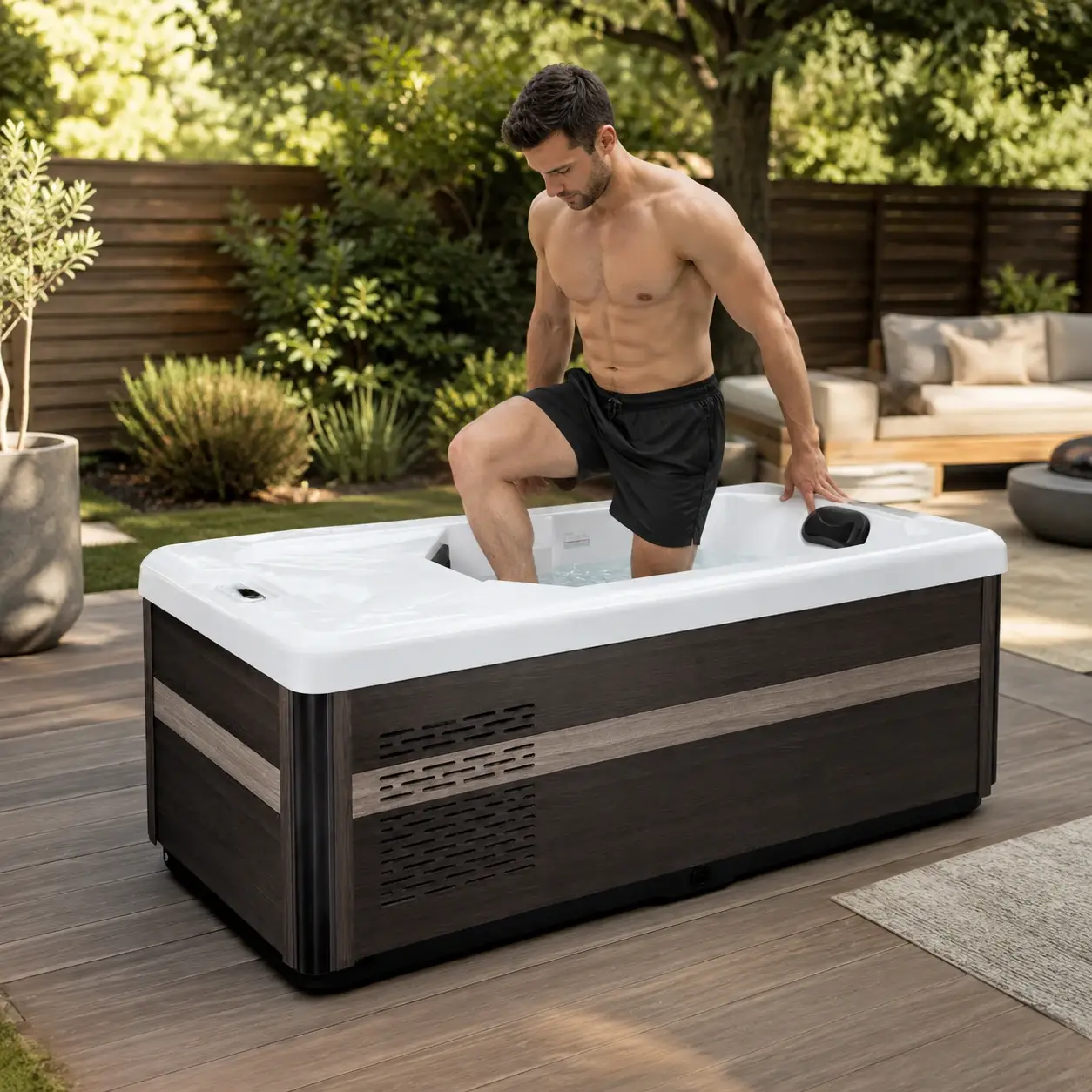
Planning a Home Sauna and Cold Plunge Setup
This benefits article should answer the health and routine questions. For detailed placement, plumbing, electrical, drainage, and space planning, see our dedicated home sauna and cold plunge setup guide.
Keep the Transition Easy
The easier it is to move safely between sauna and cold exposure, the more likely you are to use the setup consistently.
Decide Whether You Need a Plunge
If you are new to contrast therapy, a cold shower may be enough. If you already know you enjoy cold immersion and want a repeatable experience, a dedicated plunge can make the routine easier.
Think About Drainage and Wet Areas
Cold plunge areas create splashing, wet feet, and condensation. Flooring, drainage, slip resistance, and maintenance access matter.
Choose the Sauna for the Heat Experience You Prefer
Traditional and infrared saunas can both be used in a contrast routine. Traditional sauna provides higher ambient heat, while infrared generally provides a lower-temperature experience.
Compare the differences in our infrared vs. traditional sauna guide.
Sauna & Steam Center has designed, installed, and serviced sauna and wellness systems since 2004. A good contrast-therapy space should be easy to use, easy to service, safe to move through, and realistic for your home.
Planning a Home Contrast Therapy Space?
Build a Sauna and Cold Plunge Routine Around Your Home
We can help you compare sauna types, cold plunge options, indoor and outdoor layouts, drainage, electrical requirements, ventilation, service access, and long-term maintenance.
Frequently Asked Questions About Sauna and Cold Plunge
What are the benefits of sauna and cold plunge?
The most realistic benefits are relaxation from heat, alertness from cold, temporary relief from perceived muscle soreness, and a repeatable recovery or wellness routine.
What is the benefit of cold plunge after sauna?
Cold after sauna creates rapid cooling, often increases alertness, and may reduce perceived post-exercise soreness. Many people also prefer the sharp contrast as the final phase of the routine.
Should I sauna before or after cold plunge?
Most people use sauna first and cold second. Cold first and sauna second can also work if you prefer to finish warm. There is no universal best order for every goal.
Can I take a cold shower after sauna instead?
Yes. A cold shower is one of the easiest ways to try contrast therapy and is especially useful for beginners or homes without room for a plunge tub.
What is the best sauna cold plunge routine?
A conservative starting routine is 10 to 15 minutes of sauna followed by 30 seconds to 2 minutes of cold exposure. Rest and repeat only if you continue to feel comfortable.
How many rounds of sauna and cold plunge should I do?
One to three rounds is enough for most home users. More rounds do not automatically create more benefit.
How long should I stay in a cold plunge after sauna?
Beginners can start around 30 seconds and build gradually. Many users stay between 30 seconds and 2 minutes. Longer exposure is not automatically better.
What temperature should a cold plunge be?
You do not need near-freezing water. A moderate cold temperature that feels challenging but controllable is usually a smarter starting point.
What are sauna and cold shower benefits?
Sauna followed by a cold shower provides many of the practical advantages people seek from contrast therapy, including a clear hot-to-cold transition, alertness, and an easy repeatable routine.
Is sauna and cold water therapy good for recovery?
It may support a recovery routine. Cold water immersion has evidence for reducing perceived muscle soreness, while sauna may help relaxation and temporary stiffness. It should not replace sleep, nutrition, hydration, or medical care.
Are sauna and cold plunge benefits proven?
Some individual effects are better supported than others. Sauna physiology and cold-water soreness reduction are fairly well studied. Claims that the combination causes major fat loss, detoxification, hormone optimization, or disease prevention are much less established.
What are the risks of sauna and cold plunge?
Risks include dehydration, dizziness, excessive heat stress, cold shock, and added cardiovascular strain. Certain medical conditions require individualized guidance.
Research and Safety References
- Laukkanen T, et al. Association Between Sauna Bathing and Fatal Cardiovascular and All-Cause Mortality Events. JAMA Internal Medicine. 2015. View study.
- Leeder J, et al. Cold water immersion and recovery from strenuous exercise: a meta-analysis. British Journal of Sports Medicine. PubMed.
- Hannuksela ML, Ellahham S. Benefits and risks of sauna bathing. American Journal of Medicine. 2001. PubMed.
- Hussain J, Cohen M. Clinical Effects of Regular Dry Sauna Bathing: A Systematic Review. 2018. PMC.
- Cleveland Clinic. Sauna Benefits and Risks. Cleveland Clinic.
- CDC/NIOSH. Heat-Related Illnesses. CDC.
Conclusion: Sauna and Cold Plunge Works Best When It Is Sustainable
Sauna and cold plunge can be a valuable wellness routine when the expectations are realistic. Heat can provide relaxation and temporary cardiovascular effects. Cold can provide a strong alerting response and may reduce perceived soreness after demanding exercise. Together, they create a contrast experience that many people genuinely enjoy.
The best routine is not the hottest sauna, coldest water, or most rounds. It is the routine that fits your health, goals, tolerance, and home well enough to repeat safely.
If you are still deciding whether you need a dedicated plunge, start with a cold shower after sauna. If you already know contrast therapy is something you will use regularly, then a properly planned sauna and cold plunge setup can make the experience easier and more consistent.