
Sauna Before or After Massage? Which Is Better?
Editorial disclosure: Sauna & Steam Center sells, designs, installs, and services sauna and steam systems. Our installation and room-planning guidance reflects industry experience; we are not licensed massage therapists or healthcare providers. This educational guide is not medical advice and has not been medically reviewed.
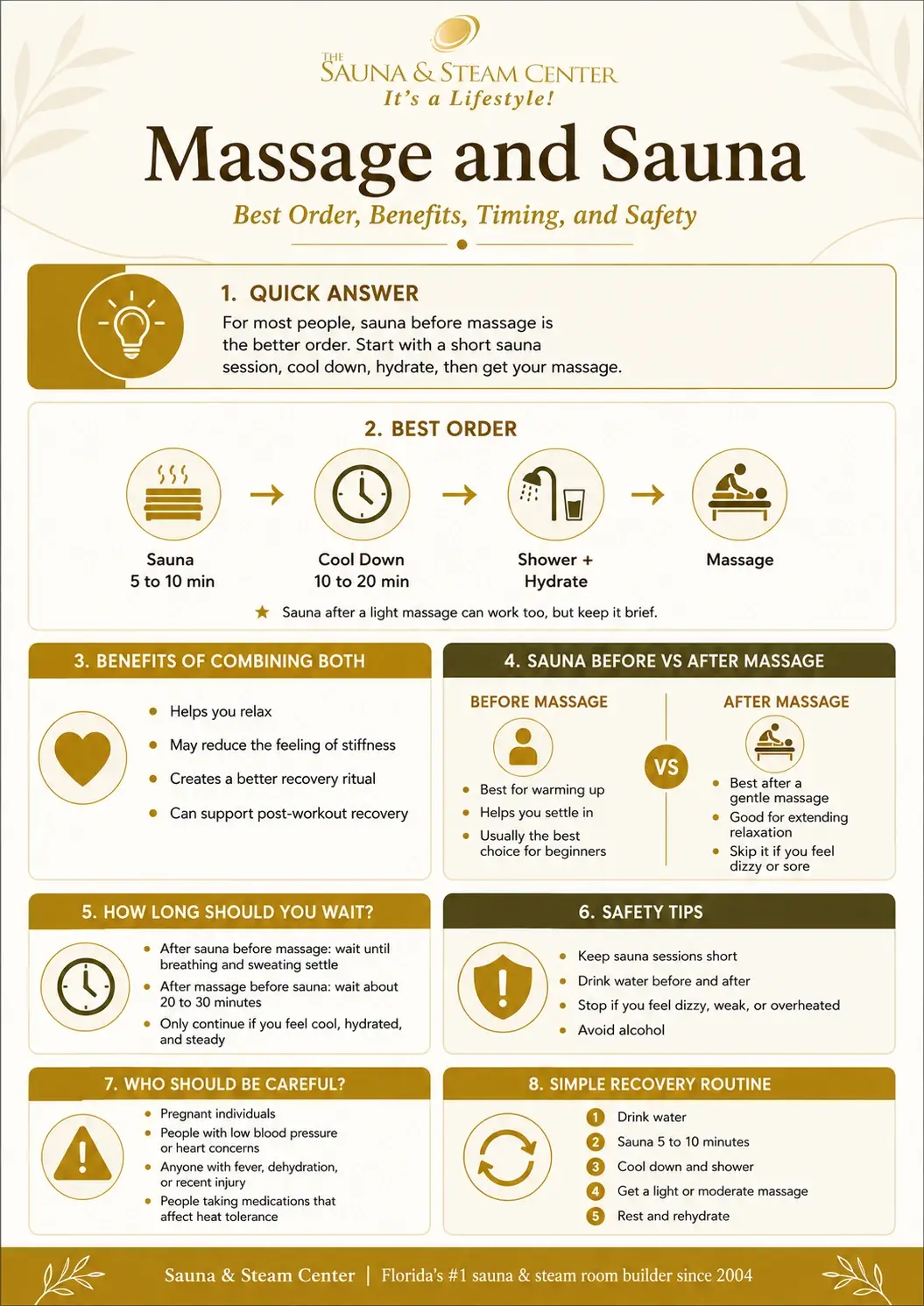
Quick answer: Should you sauna before or after a massage? For many healthy adults, a short sauna before massage is a practical starting point. After comfortable heat, cool down completely, stop heavy sweating, shower, and hydrate before the appointment.
Sauna after massage can be optional following gentle relaxation massage if you feel cool, hydrated, and steady. Consider skipping immediate heat after deep tissue, sports, hot stone, or other intense bodywork. No large body of direct studies has established one medically superior sequence for everyone.
If you searched for massage before or after sauna or wondered whether it is better to sauna before or after a massage, the most useful answer is about timing and comfort , not simply which activity comes first. Heat can make you feel pleasantly warm, but it also causes sweating and changes in circulation. Give yourself enough time to recover before moving to the massage table.
Below you will find a straightforward comparison, practical waiting guidance, advice for steam rooms and deep tissue massage, and sample routines. If you are new to heat exposure, start with our guide to using a sauna safely .
Evidence and safety: Direct research comparing sauna-first and massage-first routines is limited. Times in this article are illustrative, conservative starting points, not medically established rules. Do not use a sauna if you feel sick, dehydrated, faint, or overheated. Leave the heat immediately if you develop dizziness, nausea, chest discomfort, confusion, severe weakness, or difficulty cooling down.
Should You Use a Sauna Before a Massage?
Sauna before massage is often the simpler option if you already tolerate heat well and have time to cool down before treatment. A brief session may help you feel warmer and more relaxed, without adding an extra heat exposure after the massage.
For someone who is generally healthy and accustomed to sauna use, 5 to 10 minutes of comfortable heat can be a conservative example. This is not a required duration. If you are not comfortable, leave sooner or skip the sauna entirely.
How to Sauna Before Massage
- Choose a comfortable temperature and keep the sauna session short.
- Leave the sauna before you become overheated or exhausted.
- Cool down until sweating has settled and you feel steady.
- Shower, dry off, and drink water as appropriate.
- Let your massage therapist know you used the sauna.
Why this order may work: You can use heat as a relaxation step and then assess how you feel before your appointment. That is a matter of practical comfort and risk management, not proof that sauna makes massage treatment clinically more effective.
Is It Good to Use a Sauna After Massage?
A sauna after massage is not automatically harmful, but it is not necessary. It may suit an experienced sauna user who has just had a gentle relaxation massage and feels alert, cool, hydrated, and physically steady.
Massage can leave some people sleepy, tender, or lightheaded. A further heat exposure may increase sweating and fluid loss. If the appointment was vigorous, involved hot stones or intense pressure, or left you uncomfortable, rest at room temperature instead.
When Sauna After Massage May Be Reasonable
- The massage was gentle, and you have no new tenderness or concerning symptoms.
- You already know that you tolerate sauna heat comfortably.
- You have cooled down, replaced fluids as appropriate, and removed any heat-sensitive oils or topical products.
- You are willing to end the session early rather than trying to complete a planned duration.
When You Should Skip the Post-Massage Sauna
Avoid adding heat if you feel dizzy, faint, nauseated, unusually weak, dehydrated, or overheated. Skip immediate sauna after deep tissue, hot stone, vigorous sports massage, or any treatment for which your massage therapist recommends avoiding heat.
Bottom line: If you want both experiences during one visit, sauna first is an easier default for many people, but there is no universal medically proven winner. After-massage heat should remain optional.
Massage Before or After Sauna: Side-by-Side Comparison
Use this single comparison chart to decide which approach best fits the kind of massage you are receiving and how well you tolerate heat.
| Your Situation | Practical Starting Point | What Matters Most |
|---|---|---|
| Sauna before a gentle massage | Often reasonable | Keep heat comfortable; cool down, shower, and hydrate first. |
| Massage before sauna | Optional after gentle massage | Only consider more heat if you feel completely well and are experienced with sauna use. |
| Sauna after deep tissue or sports massage | Usually skip immediate heat | Rest if the treatment leaves you tender or fatigued; follow your therapist’s aftercare advice. |
| Steam room before massage | Short steam exposure may fit | High humidity can intensify heat stress; allow a full cool-down. |
| Massage after a hard workout | Consider separate sessions | Exercise, heat, and vigorous bodywork together can add fatigue and fluid loss. |
For readers asking “sauna or massage first?” , the most useful general sequence is comfortable heat, full cool-down, shower, hydration, then massage . Your health and comfort take priority over following a fixed schedule.
Sauna or Massage First? Find Your Ideal Routine
Answer five quick questions to explore a practical sauna-and-massage sequence based on your plans and heat comfort.
The ideal order depends on the type of massage and how you feel. Sometimes the best routine is to skip extra heat.
Make your next spa visit feel easier.
We will help you think through massage intensity, sauna experience, how you feel today, and any heat-related precautions.
This educational guide is not a diagnosis, safety clearance, or medical assessment.
What type of massage are you planning?
Important: This quiz offers general educational guidance, not medical advice or a determination that heat or massage is safe for you. If you have pregnancy-related concerns, cardiovascular or blood-pressure conditions, heat sensitivity, or medications that affect heat tolerance, ask an appropriate healthcare professional. Stop if you become dizzy, faint, nauseated, weak, or overheated.
How Long Should You Wait Between Sauna and Massage?
There is no research-backed waiting period that works for everyone. Temperature, session length, humidity, hydration, and personal response all matter. Do not begin the next activity just because a set number of minutes has elapsed.
How Long After Sauna Before Massage?
Following a short sauna, some healthy adults may need approximately 10 to 20 minutes or longer to cool down, shower, drink water, and stop heavy sweating. Wait until breathing is comfortable, balance feels steady, and you no longer feel unusually hot.
How Long After Massage Before Sauna?
After a gentle massage, allow enough time to feel fully alert and steady before even considering the sauna. A 20 to 30 minute pause can be a practical example, not a validated minimum or a guarantee of safety. Avoid immediate heat after intensive treatments or when any concerning symptoms are present.
Important: No precise interval eliminates the risk of overheating, dehydration, or lightheadedness. Your response and any advice from your healthcare professional or massage therapist matter more than a timer.
Steam Room Before or After Massage: Which Order Is Better?
If you are wondering whether to use a steam room before or after massage , a short steam-room session before the appointment is often the simpler choice, followed by a complete cool-down, shower, and hydration.
Steam rooms use high humidity, which slows sweat evaporation. As a result, the heat may feel intense even at a lower air temperature than a dry sauna. Do not move directly from steam into your massage while overheated or heavily sweating.
What About a Steam Room After Massage?
Consider it only as an optional extra after gentle massage when you feel fully recovered. Skip post-massage steam after deep tissue, sports, or hot stone massage, or whenever you feel tired, weak, tender, or lightheaded.
For steam-room basics beyond massage timing, see how to use a steam room .
Can You Use a Sauna After Deep Tissue Massage?
It is usually more prudent to skip an immediate sauna after deep tissue massage. Deeper pressure may cause tenderness or fatigue, and another heat exposure may contribute to fluid loss or lightheadedness. Your therapist’s individual aftercare instructions should take priority.
A Practical Deep Tissue Routine
- If you choose to sauna beforehand, keep the heat brief and comfortable.
- Cool down fully, shower, and hydrate before the massage.
- Tell your massage therapist about the heat exposure.
- Complete the treatment and recover at room temperature afterward.
- Consider sauna on another day if you feel recovered and have no concerning symptoms.
There is no universal, scientifically established number of hours to wait after deep tissue massage. Massage intensity, soreness, medications, hydration, and health status differ from person to person.
Simple Sauna and Massage Routines by Goal
These examples are meant for generally healthy adults who already tolerate heat. They are not prescribed treatments or required durations. Follow facility rules, individualized health advice, and any instructions from your massage therapist.
Routine 1: Relaxation Massage
- Begin well hydrated and use approximately 5 to 10 minutes of comfortable sauna heat if tolerated.
- Cool down completely, allowing roughly 10 to 20 minutes or more if needed.
- Shower, dry off, drink water, and check that you feel steady.
- Receive a gentle or moderate massage.
- Rest and hydrate afterward rather than automatically returning to the sauna.
Routine 2: Massage First, Optional Sauna Later
- Complete a gentle relaxation massage.
- Recover until you feel fully awake, cool, and steady.
- Wash off products that should not be exposed to heat.
- If experienced with sauna use and feeling well, consider a very short, comfortable session; otherwise skip it.
- Cool down again before leaving the facility.
Routine 3: Deep Tissue or Demanding Workout
- Make the massage the priority and avoid stacking intense treatments.
- Discuss soreness, injuries, and recent activity with the therapist.
- Plan sauna for a separate day when you feel recovered, if appropriate.
Can You Combine Massage and Sauna in One Spa Visit?
Yes, some people can enjoy both in the same visit. However, a sauna is a form of heat exposure that increases sweating and cardiovascular demand, while massage involves manual pressure to soft tissue. Combining them does not necessarily produce a greater health benefit than doing either separately.
The aim is to feel comfortable, not to maximize how hot the sauna is or how deep the massage pressure becomes. For a wider discussion of heat-exposure evidence, see our guide to realistic sauna benefits .
How Do Sauna and Massage Affect Your Body?
What Happens During Sauna Heat?
Sauna heat raises skin temperature and typically increases sweating and heart rate. Blood vessels near the skin widen to help release heat, and blood pressure may change during and after a session. Overheating or dehydration can make a person feel unsteady.
What Happens During Massage?
Massage applies physical pressure to muscles and soft tissues and may temporarily reduce perceived tension or soreness. Strong pressure can also leave areas tender. A person who is already hot, dizzy, or dehydrated may find the massage uncomfortable.
These responses explain why moderation, cooling time, and individual tolerance matter more than a strict sauna-before-or-after rule.
Realistic Benefits of Combining Massage and Sauna
People commonly combine massage and sauna because both can contribute to a relaxing wellness experience. Potential benefits are primarily related to comfort and routine, not guaranteed medical outcomes.
1. A More Relaxed Starting Point
A short, comfortable sauna session may help some people transition from a busy day to a quieter massage appointment, provided they cool down before treatment.
2. Temporary Warmth and Less Stiffness
Warmth may change how tight the body feels for a short period. That can be pleasant before massage, but it should not be confused with treating an injury or proving that muscles have healed.
3. A More Intentional Recovery Routine
Planning time for heat, cooling, showering, hydration, and massage can make recovery feel less rushed. Massage research suggests possible short-term reductions in perceived post-exercise soreness, but strong evidence for an added benefit from combining these exact treatments is limited.
What Does the Research Say About Sauna Before or After Massage?
There is limited direct research comparing the two possible orders. Massage and sauna have been studied separately more often than as a combined routine. Systematic reviews indicate that massage may reduce perceived delayed-onset muscle soreness following strenuous exercise, while results for strength, performance, and other recovery measures are more mixed.
Sauna research documents short-term changes in heart rate, blood pressure, and temperature regulation. These findings make it reasonable to emphasize cooling time and caution, but they do not prove that sauna before massage is medically superior or that combining both accelerates healing.
How We Evaluated These Claims
We prioritize systematic reviews, meta-analyses, peer-reviewed research, and guidance from established health organizations. We treat spa traditions, experiences that vary by person, and claims about detoxification or guaranteed recovery separately from evidence-based findings. Sources are listed in the references section .
Massage and Sauna After a Workout
Exercise, sauna heat, and deep massage may all place demands on the body. After a hard workout, especially in hot weather, adding both can increase fatigue and fluid loss. If you feel drained or dehydrated, choose rest and hydration and schedule other treatments later.
After a moderate workout, an experienced user might find a brief sauna and a gentle massage comfortable, with ample cooling time between activities. See sauna after the gym for additional workout-specific considerations.
If you are also considering cold immersion, review our sauna and cold plunge guide before adding another recovery practice.
What If Your Spa Visit Includes a Hot Tub?
At some spas, “spa before or after massage” means hot tub or whirlpool use rather than a sauna. A hot tub is another form of heat exposure. Avoid stacking a hot tub, steam room, and sauna around a massage simply because all three are available.
If you want a warm-up before a gentle massage, choose one moderate heat activity, cool down thoroughly, shower, and follow the facility’s safety guidance.
How to Prepare Safely for Massage and Sauna
- Drink water normally throughout the day; do not start the session dehydrated.
- Eat a light snack when appropriate rather than beginning after a long period without food.
- Avoid alcohol and recreational drugs before heat exposure or massage.
- Start with comfortable heat and leave before overheating.
- Allow a complete cool-down, shower, and time to reassess how you feel.
- Tell the massage therapist about heat exposure, health concerns, and any areas of tenderness.
- Stand slowly afterward and leave only when you feel alert and stable.
Stop and seek help when appropriate: Chest pain, fainting, confusion, significant weakness, severe headache, or symptoms of heat illness warrant prompt attention. Do not try to treat dizziness or overheating by adding another spa treatment.
Risks and Common Myths About Sauna and Massage
Possible Risks
- Dehydration, excessive sweating, headache, or cramps
- Dizziness or faintness related to heat and changes in blood pressure
- Overheating, nausea, confusion, or weakness
- Added tenderness after intensive massage
- Skin irritation from lotions, oils, pain creams, or temperature-sensitive patches
What the Combination Has Not Been Proven to Do
Massage plus sauna is not an established method to remove toxins, cure injuries, melt body fat, or guarantee faster athletic recovery. Sweating mainly supports body temperature regulation. Any short-term change in body weight after sweating primarily reflects fluid loss, not fat loss.
Who Should Avoid the Combination or Ask a Healthcare Professional?
Seek individualized guidance before combining massage and heat if you have a relevant health condition, take a medication that changes heat tolerance, or are recovering from an illness or procedure. Some circumstances can make one or both activities inappropriate.
- Unstable cardiovascular conditions, frequent fainting, or symptomatic low blood pressure
- Known or suspected blood clot, recent surgery, fracture, or acute injury
- Pregnancy, recent childbirth, or other situations requiring individualized heat precautions
- Fever, infection, vomiting, diarrhea, or dehydration
- Reduced temperature sensation, difficulty sweating, or history of heat illness
- Open wounds, burns, or active skin infection
- Medication or patches that affect blood pressure, hydration, sweating, or temperature tolerance
Pregnancy
Pregnancy involves special precautions around overheating and massage positioning or technique. Ask your prenatal clinician before heat exposure. See our article about sauna use during pregnancy .
Oils, Lotions, and Medication Patches
Some topical products can irritate skin when heated, and temperature can affect certain transdermal patches. Check the product directions or ask a pharmacist, clinician, or massage therapist before using post-massage heat.
What Sauna & Steam Center’s Experience Since 2004 Adds
Our practical expertise is sauna design, installation, service, and room planning rather than massage therapy. In home and commercial wellness spaces, the arrangement of the sauna, cooling area, shower, and massage room can make a routine easier to use comfortably.
Leave Room to Cool Down
A safe layout includes a clear walking route from the sauna, non-slip flooring, nearby seating, towel storage, and access to drinking water. Do not position the sauna so users must immediately climb steps or navigate crowded furniture while hot or dizzy.
Plan Shower Access and Serviceability
A convenient shower supports hygiene between treatments. Good ventilation, suitable materials, electrical planning, and access to service components are important whether the project is a compact home sauna or a larger spa.
Consider South Florida Conditions
In South Florida, humidity, year-round warm weather, rain exposure, and indoor air conditioning influence moisture management, ventilation, material selection, and locations for comfortable cooling.
Planning a Home Sauna and Massage Recovery Space
If you are building a home recovery area, think about the entire routine rather than choosing a sauna cabin in isolation. Consider where you will cool down, shower, drink water, and move safely between spaces.
- Compact home wellness area: prioritize efficient sauna size, nearby shower, adequate ventilation, and a comfortable cooling chair.
- Home gym: provide a clear route between exercise, sauna, shower, and recovery areas.
- Residential or commercial spa: plan privacy, durable finishes, maintenance access, accessibility, and safe circulation.
Compare infrared vs. traditional saunas , use the sauna cost calculator , explore our home sauna cost guide , or learn about sauna installation in South Florida .
Create a Complete Recovery Space
Plan a Sauna Around Your Wellness Routine
Sauna & Steam Center helps South Florida homeowners and commercial clients compare sauna options and plan ventilation, electrical needs, shower access, cooling areas, and long-term service.
Frequently Asked Questions About Massage and Sauna
Should I sauna before or after a massage?
For many healthy adults, a short sauna before a gentle massage is a practical option if there is time to cool down, shower, and hydrate. The best order is not medically established for everyone.
Is sauna after massage good?
It can be an optional extra after a gentle massage for experienced sauna users who feel fully recovered. Skip it if you feel sore, overheated, dehydrated, dizzy, or unusually tired.
Should I use a steam room before or after massage?
Brief steam before massage may be easier to manage, but high humidity can make heat exposure feel intense. Allow a full cool-down and shower before treatment.
Can I sauna immediately after deep tissue massage?
It is generally more prudent to skip immediate heat after deep tissue massage, particularly if you are tender or fatigued. Follow your therapist’s individualized aftercare guidance.
How long should I use the sauna before massage?
For a healthy person who already tolerates saunas, about 5 to 10 minutes at a comfortable temperature can be a conservative example. It is not a requirement, and you should leave sooner if you feel unwell.
Should I shower between sauna and massage?
Yes, a shower helps remove sweat and improves comfort and hygiene for you and your therapist. Be sure you are cool and steady before your appointment.
Can I use an infrared sauna before a massage?
Infrared sauna can be another heat-first option if you tolerate it well. Use comfortable heat, allow a full cool-down, and shower and hydrate before massage. Infrared heat does not remove the usual heat-exposure precautions.
Is there an exact amount of time to wait between sauna and massage?
No. Common waiting times are practical examples rather than validated safety thresholds. Wait until you feel cool, hydrated, alert, and steady, and skip the next activity if you do not recover comfortably.
Conclusion: Choose the Order That Keeps You Comfortable
For many healthy adults, sauna before massage is the simpler starting point because it allows time to cool down before hands-on treatment. Massage first is not necessarily wrong, but sauna afterward is optional and often best skipped after intense bodywork.
Use moderate heat, respect your individual response, and do not force a schedule when you feel unwell. A well-designed sauna space should support cooling, showering, hydration, and safe movement just as much as the sauna itself.
References
- Massage Alleviates Delayed Onset Muscle Soreness After Strenuous Exercise: A Systematic Review and Meta-Analysis
- Effect of Sports Massage on Performance and Recovery: A Systematic Review and Meta-Analysis
- Heat and Cold Therapy Reduce Pain in Delayed Onset Muscle Soreness: A Systematic Review and Meta-Analysis
- Acute and Short-Term Efficacy of Sauna Treatment on Cardiovascular Function: A Meta-Analysis
- The Effect of Heat Therapy on Blood Pressure and Peripheral Vascular Function: A Systematic Review and Meta-Analysis
- National Center for Complementary and Integrative Health: Massage Therapy, What You Need To Know
- National Center for Complementary and Integrative Health: Massage Therapy for Health, What the Science Says
- American College of Obstetricians and Gynecologists: Can I Use a Sauna or Hot Tub Early in Pregnancy?