
Sauna Benefits for Skin: What Heat and Sweating Really Do
Editorial disclosure: Sauna & Steam Center sells, designs, installs, and services sauna systems. Product and ownership guidance reflects first-hand industry experience. Skin and health information is educational and is not a substitute for individualized medical advice from a dermatologist or other qualified healthcare professional.
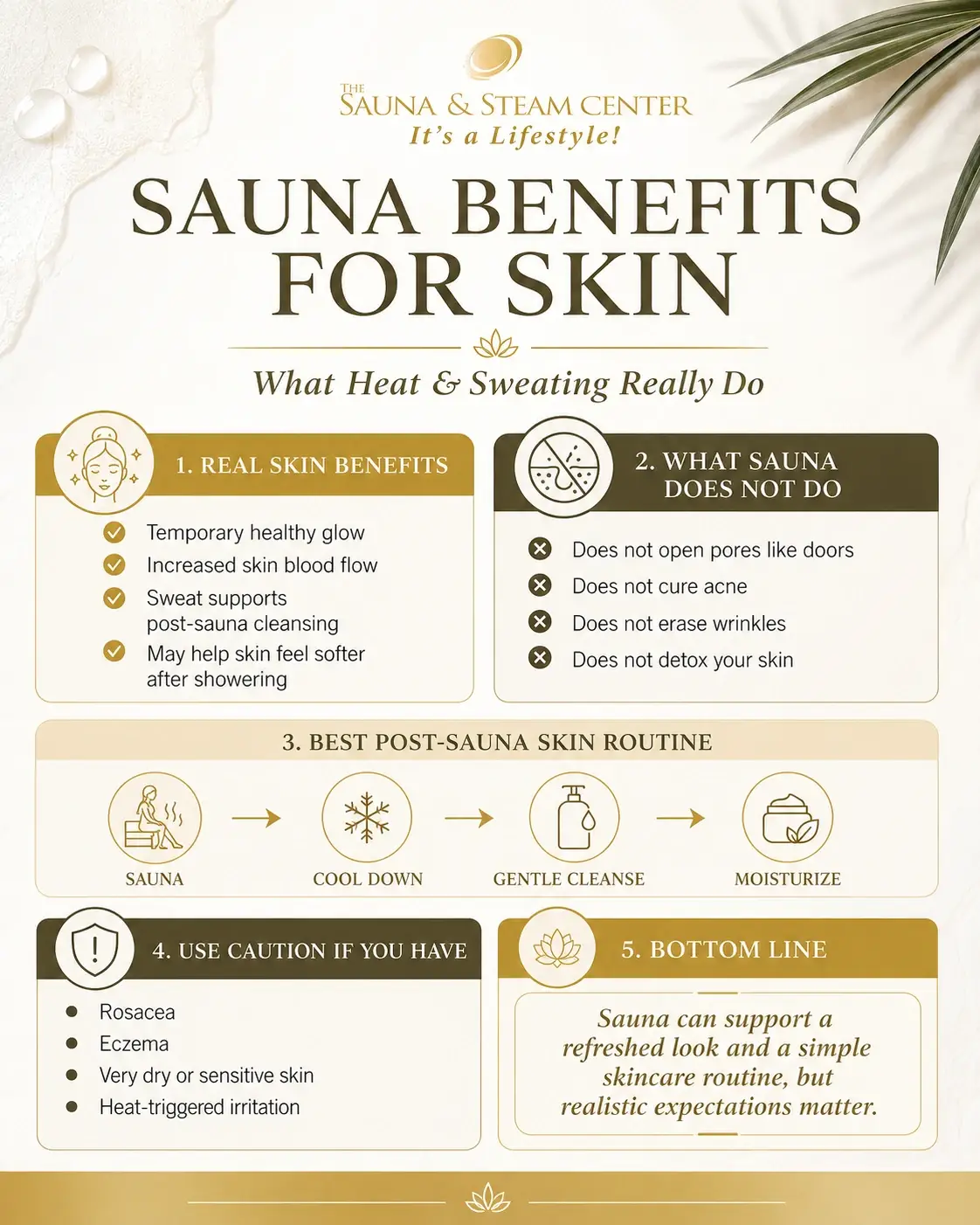
Sauna benefits for skin are often exaggerated online. Heat and sweating can temporarily increase skin blood flow, create a flushed or refreshed appearance, and support a simple post-sauna cleansing routine. But sauna use is not proven to shrink pores, cure acne, erase wrinkles, detox the skin, or provide the same collagen-related effects studied with dedicated red-light therapy.
Sauna Benefits for Skin: Quick Answers
| Question | Direct Answer |
|---|---|
| Is sauna good for your skin? | It can temporarily increase skin blood flow and sweating, and some research suggests regular use may influence skin barrier function and hydration. It is not a proven treatment for skin disease. |
| Does sauna make your skin glow? | It can create a temporary flushed or refreshed appearance because skin blood flow increases during heat exposure. |
| Does sauna open pores? | No. Pores do not literally open and close. Heat and sweat can soften surface oil and make cleansing feel easier. |
| Does sauna help acne? | Not reliably. Sweat and heat may help some people feel cleaner after washing, but they can also aggravate irritation or breakouts in others. |
| Does sauna help wrinkles? | There is not strong evidence that ordinary sauna heat reduces wrinkles or meaningfully rebuilds facial collagen. |
| Does sauna detox the skin? | Sweating is mainly a cooling mechanism. The liver and kidneys perform most detoxification functions. |
| Does sauna help with a puffy face? | It may temporarily change facial appearance through heat, sweating, and fluid shifts, but it is not a proven treatment for facial puffiness. Persistent or one-sided swelling should be evaluated medically. |
| Should you moisturize after sauna? | Often yes, especially if your skin feels tight or dry after heat exposure and showering. |
What Happens to Your Skin in a Sauna?
Sauna heat raises skin temperature and causes blood vessels near the surface to widen. Skin blood flow increases as the body attempts to release heat, and sweat production rises to support cooling. A small controlled study of 41 healthy adults compared regular sauna users with non-users and found differences in skin physiology, including stratum corneum hydration, barrier recovery, skin surface pH, skin blood perfusion, sweat composition, and forehead sebum. The study suggested that regular sauna exposure may influence how the skin barrier responds to heat, but it was exploratory and should not be treated as proof that sauna cures or reverses skin conditions.- Temporary flushing or redness
- Increased sweating
- A warmer or more radiant appearance
- Temporary changes in surface oil and moisture
- More sensitivity if your skin already reacts poorly to heat
What Does a Sauna Do for Your Skin?
A sauna mainly affects the skin through heat, circulation, sweating, and short-term changes in surface moisture. During a session, blood flow to the skin increases so the body can release heat. Sweat production rises, and the skin surface may temporarily look warmer, shinier, or more flushed.| Skin Effect | What Is Happening | How Long It Lasts |
|---|---|---|
| Temporary glow | Increased skin blood flow and surface moisture | Usually short-lived |
| Sweating | Normal thermoregulation | During and shortly after heat exposure |
| Softer-feeling skin | Heat, moisture, and cleansing can change surface feel | Temporary |
| Dryness or tightness | Heat, sweating, and showering can reduce surface moisture in some people | Varies by skin type |
| Redness | Heat-related vasodilation | Usually temporary, but may last longer in rosacea-prone skin |
What Are the Real Sauna Benefits for Skin?
1. Temporary increase in skin blood flow
Heat causes superficial blood vessels to widen, which can make the skin look flushed or more vibrant for a short time after the session.2. Sweating can support a post-sauna cleansing routine
Sweat itself does not deep-clean pores, but showering after a session can remove sweat, surface oil, sunscreen, makeup residue, and other debris from the skin.3. Regular use may influence skin barrier function
The small 2008 controlled study found more stable epidermal barrier function and higher stratum corneum hydration among regular sauna users compared with controls. These findings are interesting, but they do not prove that sauna is a treatment for dry skin, eczema, acne, or other dermatologic conditions.4. Skin may feel softer after heat and cleansing
Warmth, moisture on the skin surface, and a gentle shower afterward can temporarily change skin texture. A moisturizer after the session may help people who notice tightness or dryness.5. Sauna can fit into a simple skincare routine
For many users, the most practical routine is sauna, cool down, shower, gentle cleansing if needed, then moisturizer.Does Sauna Make Your Skin Glow?
Yes, sauna can make your skin look temporarily more radiant or “glowy.” As heat increases skin blood flow, the face and body can look warmer, pinker, and more vibrant. Sweating can also make the skin surface look dewy for a short time. The important limitation is that this sauna glow is temporary. It does not mean the sauna has permanently changed skin tone, repaired sun damage, increased collagen, or created lasting rejuvenation.Does Sauna Help With a Puffy Face?
Sauna may make the face look temporarily less puffy in some people, but it is not a proven treatment for facial swelling. Heat causes blood vessels near the skin to widen and sweating increases fluid loss. Those short-term changes can alter how the face looks, especially if puffiness is mild and related to temporary fluid retention. However, facial puffiness can have many causes, including sleep, salt intake, allergies, medications, sinus issues, hormonal changes, skin inflammation, and medical conditions. Sauna should not be used to “treat” unexplained or persistent swelling.Does Sauna Open Your Pores?
No. Pores do not literally open and close like doors. Heat can soften surface oil, increase sweating, and make the skin feel more receptive to cleansing, but the physical size of a pore is influenced by factors such as genetics, oil production, skin structure, and age.Does Sauna Help Acne?
Sauna does not reliably help acne and should not be treated as an acne therapy. Some people like the feeling of sweating followed by cleansing, but heat, sweat, friction, makeup, heavy skincare products, and tight clothing can also irritate acne-prone skin or contribute to breakouts.- Remove makeup before entering.
- Avoid applying heavy occlusive products immediately before the session.
- Use a clean towel and avoid touching or picking the face.
- Shower after the sauna.
- Cleanse gently if needed.
- Use non-comedogenic skincare products that already work well for your skin.
Does Sauna Help Blackheads?
Sauna heat may soften surface oil and make cleansing feel easier, but it does not reliably “steam blackheads out.” Avoid squeezing or aggressively scrubbing the skin after a sauna.Is Sauna Good for Wrinkles?
There is not strong evidence that sauna is good for wrinkles in the sense of reducing them long term. Temporary flushing and changes in skin hydration may make fine lines look less noticeable for a short time, but ordinary sauna heat has not been shown to reliably rebuild enough collagen or elastin to create a meaningful anti-aging effect. Questions about dedicated light-based skin treatment belong in our separate guide to red light therapy benefits for skin.Does Sauna Increase Collagen?
Sauna heat should not be marketed as a proven collagen-building facial treatment. There is not enough direct evidence to promise that a normal sauna routine increases facial collagen enough to reduce wrinkles or create a measurable anti-aging effect. Infrared sauna and red-light therapy are not interchangeable. A sauna may use infrared wavelengths to deliver heat, while photobiomodulation devices are designed around specific light wavelengths and dosing.If your main goal is cosmetic skin support rather than heat exposure, our red light therapy benefits for skin, face, wrinkles, and collagen guide explains how dedicated red and near-infrared light differs from ordinary sauna heat. It covers the skin-focused questions people often mean when they search for anti-aging, collagen, skin texture, redness, or wrinkle-related light therapy.
If you are comparing equipment that combines sauna heat with a separate therapeutic light system, see our red light therapy sauna guide. That guide explains the difference between infrared sauna heating, decorative red lighting, and purpose-built red or near-infrared emitters so you can compare the technologies without mixing their claims.
What Are the Infrared Sauna Benefits for Skin?
An infrared sauna can produce sweating, warmth, increased skin blood flow, and a temporary post-session glow. Infrared cabins usually operate at lower air temperatures than traditional saunas, but the skin is still exposed to sustained heat. For broader differences in infrared heating, temperature, experience, and general evidence, see our infrared sauna benefits guide and infrared vs. traditional sauna. If you specifically want to know whether a sauna can include a separate red-light system for skin or recovery goals, our guide to saunas with dedicated red light therapy explains what features and technical differences to look for.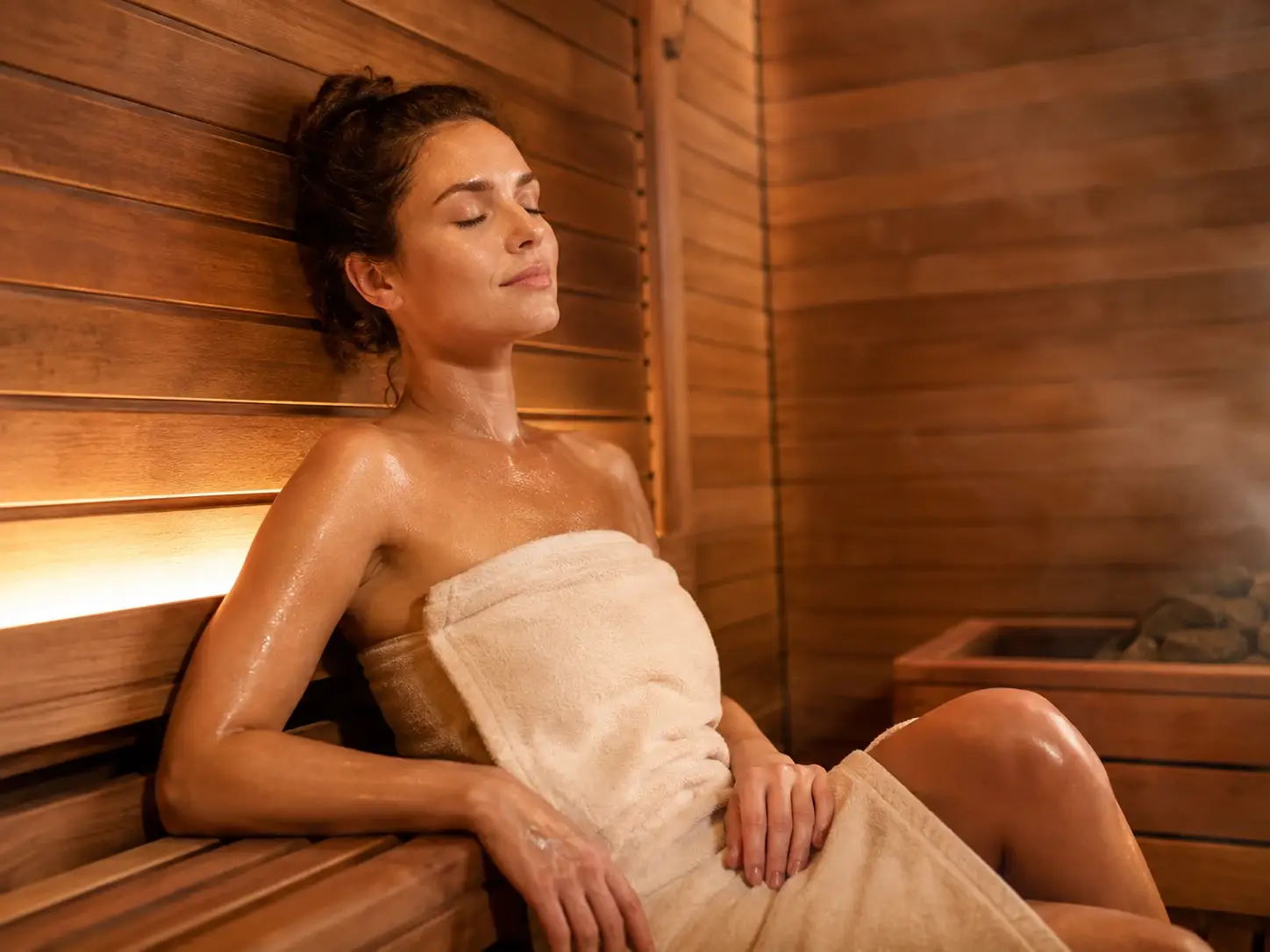
Traditional vs. Infrared Sauna for Skin
| Factor | Traditional Sauna | Infrared Sauna |
|---|---|---|
| Air temperature | Typically higher | Typically lower |
| Main heat delivery | Hot air, heated surfaces and stones | Radiant infrared energy plus warmed air |
| Sweating | Yes | Yes |
| Temporary flushing | Possible | Possible |
| Proven acne treatment | No | No |
| Proven wrinkle treatment | No | No |
| Equivalent to red-light therapy | No | No, unless a separate dedicated light system is included and evaluated on its own |
Is Sauna Good for Dry Skin?
The answer depends on the individual. One small controlled study found higher stratum corneum hydration and more stable barrier function among regular sauna users, but acute heat exposure and showering can still leave some people feeling dry or tight afterward.- Keep session length moderate.
- Use a lukewarm rather than very hot post-sauna shower.
- Use a gentle, fragrance-free cleanser when needed.
- Pat rather than aggressively rub the skin dry.
- Apply moisturizer afterward if the skin feels dry.
Is Sauna Good for Oily Skin?
Heat and sweating may temporarily change the way oily skin feels, but oiliness is not something that needs to be “sweated out.” A gentle cleanse after the session is usually more useful than aggressive washing.Sauna and Sensitive Skin: Eczema, Rosacea and Heat Reactions
Heat is not beneficial for every skin type. The American Academy of Dermatology identifies overheating and heat as common rosacea triggers, and heat and sweating can also aggravate some forms of eczema.Rosacea
People with rosacea may flush or flare when they become overheated. If sauna heat repeatedly causes prolonged redness, burning, or discomfort, reduce exposure and discuss the pattern with a dermatologist.Eczema and heat-sensitive skin
Heat, dryness, and sweat can irritate some eczema-prone skin. Do not treat sauna exposure as eczema therapy unless your dermatologist has specifically advised it.What Should You Put on Your Face Before a Sauna?
Usually, less is better.- Remove makeup.
- Remove heavy occlusive products if they make you uncomfortable in heat.
- Use a gentle cleanse if your face is dirty or heavily coated with sunscreen.
- Avoid experimenting with strong acids, scrubs, or irritating products immediately before heat.
- Use products recommended by your dermatologist if you are treating a skin condition.
Should You Wash Your Face After a Sauna?
For most people, gently cleansing or rinsing after a sauna is reasonable. Sweat, oil, sunscreen, makeup residue, and environmental debris can remain on the skin after a session.Should You Moisturize After a Sauna?
Moisturizing after a sauna can be useful if your skin feels tight or dry after sweating and showering. A simple fragrance-free moisturizer may help reduce that dry feeling and support the skin barrier.Sauna Before or After Skincare?
- Remove makeup and heavy products.
- Use the sauna for a comfortable, appropriate session.
- Cool down.
- Shower or gently cleanse.
- Pat the skin dry.
- Apply your normal moisturizer or dermatologist-recommended products.
How Long Should You Stay in a Sauna for Skin Benefits?
Do not stay longer simply to chase skin benefits. There is no evidence-based “skin glow” duration that justifies extending a session beyond your normal safe tolerance. For session-length guidance, see our dedicated guide on how long you should stay in a sauna and our step-by-step guide on how to use a sauna safely.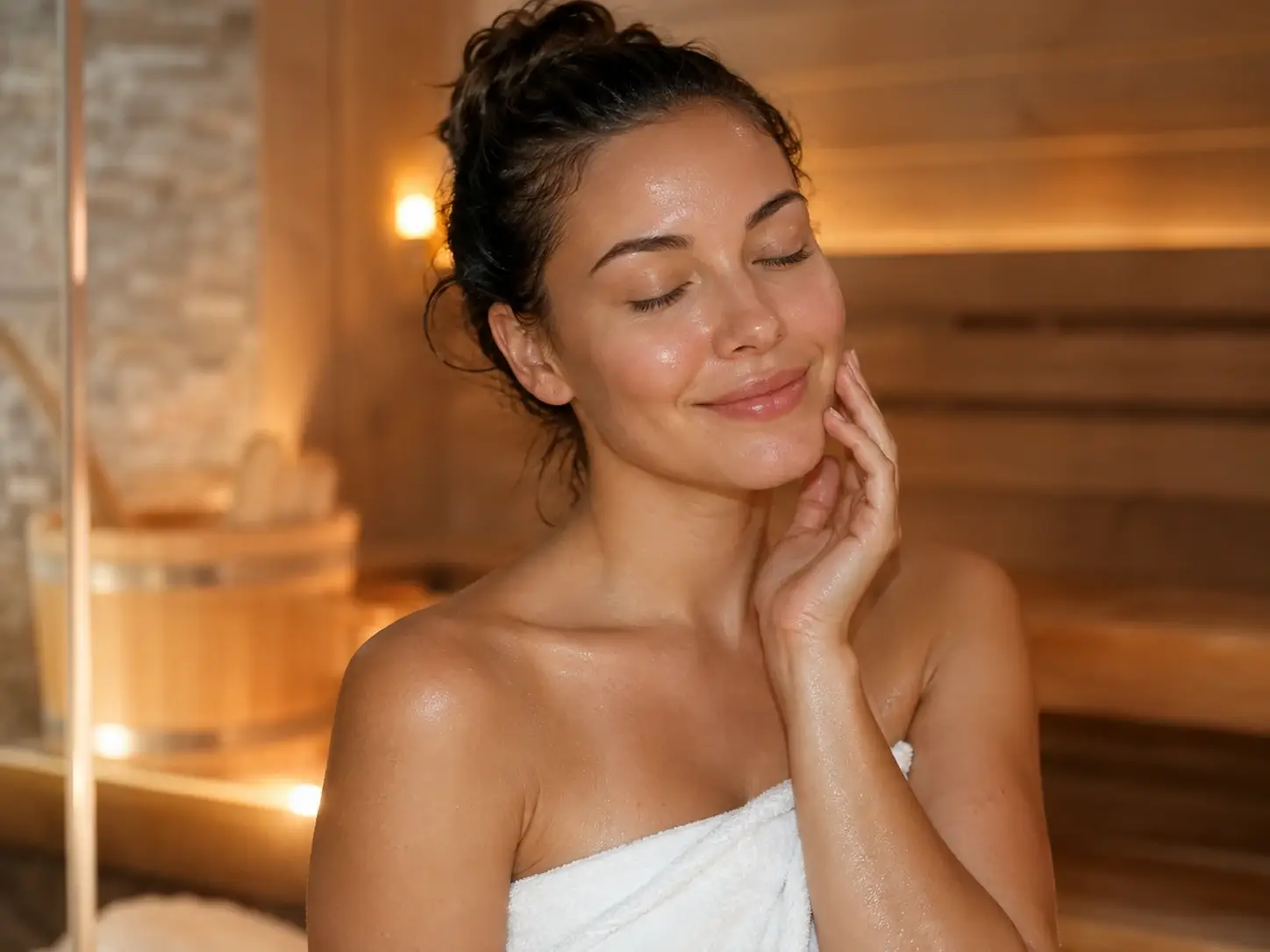
Sauna Skin Benefits vs. Skin Risks at a Glance
| Claim or Effect | Evidence / Expectation | Best Interpretation |
|---|---|---|
| Temporary skin glow | Reasonable short-term effect | Heat increases skin blood flow and can create temporary flushing |
| Skin barrier changes with regular use | Small controlled study | Interesting physiology finding, not proof of treatment |
| More sweat means cleaner pores | Overstated | Sweat is mainly thermoregulation; cleansing afterward removes surface residue |
| Pores open and close | Myth | Heat may soften surface oil, but pores do not open like doors |
| Acne treatment | Not established | Heat and sweat can help some people feel cleaner but can irritate others |
| Wrinkle reduction | Not established for ordinary sauna heat | Do not borrow red-light therapy claims |
| Collagen increase | Not established for typical sauna use | Keep collagen claims separate from photobiomodulation evidence |
| Dryness or irritation | Possible | More likely in heat-sensitive or dry skin |
| Rosacea flare | Recognized heat-related concern | Overheating is a common rosacea trigger |
| Eczema irritation | Possible | Heat and sweat can trigger some eczema-prone skin |
What Our Sauna Experience Since 2004 Has Taught Us About Skin Claims
Our experience designing, installing, and servicing sauna systems does not replace dermatology research, but it does help us separate realistic ownership expectations from marketing hype.More heat is not automatically better
Customers often assume that more sweating means more benefit. For skin, longer and hotter sessions can simply mean more redness, dehydration, or irritation.Comfort matters more than chasing a cosmetic effect
A sauna that feels comfortable enough to use consistently is more useful than a room selected because of exaggerated promises about acne, collagen, detoxification, or anti-aging.Planning a Home Sauna?
Choose a Sauna for Comfort, Quality and the Routine You Will Actually Use
If you are comparing traditional, infrared, indoor, or outdoor sauna options, Sauna & Steam Center can help you evaluate the available space, heater requirements, electrical needs, seating, materials, controls, ventilation, and installation scope.Frequently Asked Questions About Sauna Benefits for Skin
What does a sauna do for your skin?
A sauna mainly increases skin temperature, blood flow, and sweating. These effects can create a temporary glow, change surface moisture, and make cleansing afterward feel easier, but they are not the same as treating a skin condition.Does sauna make your skin glow?
Yes, it can create a temporary glow because heat increases skin blood flow and sweating. The effect is short-lived and should not be confused with permanent rejuvenation.Does sauna help with a puffy face?
Sauna may temporarily change facial appearance through heat, sweating, and fluid shifts, but it is not a proven treatment for facial puffiness. Persistent or unusual swelling should be medically evaluated.Is sauna good for wrinkles?
There is not strong evidence that ordinary sauna use reduces wrinkles long term. Temporary flushing and hydration changes may make skin look refreshed for a short time.Is sauna good for skin?
It can have some short-term skin effects, including increased blood flow, sweating, and a temporary glow. Evidence for long-term cosmetic or dermatologic benefits is limited.Is sauna good for your skin?
Sauna heat can temporarily increase skin blood flow and sweating, and one small controlled study found differences in skin hydration and barrier recovery among regular sauna users. Sauna is not a proven treatment for acne, wrinkles, rosacea, eczema, or other skin conditions.Does sauna help your skin glow?
It can create a temporary flushed or refreshed appearance because heat increases blood flow near the skin surface. The effect is temporary and should not be confused with permanent skin rejuvenation.Does sauna open pores?
No. Pores do not literally open and close. Heat can soften surface oil and increase sweating, which may make cleansing feel easier afterward.Does sauna help acne?
Not reliably. Sauna is not an acne treatment. Sweat followed by gentle cleansing may feel helpful for some people, but heat, sweat, friction, makeup, and occlusive products can worsen irritation or breakouts in others.Does sauna help blackheads?
Sauna heat may soften surface oil, but it does not reliably remove blackheads. Gentle skincare and evidence-based acne treatments are more appropriate for persistent blackheads.Does sauna help wrinkles?
There is not strong evidence that ordinary sauna heat reduces wrinkles. Temporary flushing or hydration changes can make skin look refreshed without creating permanent structural changes.Does sauna increase collagen?
Sauna heat should not be treated as a proven collagen-building treatment. Infrared sauna and red-light photobiomodulation are different technologies and should not share claims without evidence specific to each.Can sauna make rosacea worse?
Yes, it can for some people. The American Academy of Dermatology identifies overheating and heat as common rosacea triggers.Should you wash your face after sauna?
Usually, a gentle rinse or cleanse is reasonable after sweating. Use lukewarm water and avoid aggressive scrubbing.Should you moisturize after sauna?
Moisturizing can be useful if your skin feels tight or dry after sweating and showering. Use products you already tolerate, especially if you have sensitive skin.Should sauna come before or after skincare?
For a simple routine, use the sauna first, then cool down, rinse or cleanse, and apply moisturizer or your normal skincare afterward.Conclusion: Sauna Can Affect How Your Skin Looks and Feels, but Keep Expectations Realistic
The most realistic sauna benefits for skin are temporary increases in skin blood flow, sweating, a short-lived flushed or glowing appearance, and the opportunity to follow the session with gentle cleansing and moisturizing. Small research findings on skin barrier function are interesting, but the evidence is not strong enough to treat sauna as a dermatologic therapy. Do not rely on sauna heat to shrink pores, cure acne, remove blackheads, rebuild collagen, erase wrinkles, or detox the skin. Those claims either lack evidence or belong to different treatment categories. If your skin is sensitive, dry, rosacea-prone, eczema-prone, or consistently irritated by heat, reduce exposure and get individualized dermatology guidance.References
- Kowatzki D, et al. Effect of regular sauna on epidermal barrier function and stratum corneum water-holding capacity in vivo in humans. Dermatology. 2008.
- American Academy of Dermatology: How to prevent rosacea flare-ups
- American Academy of Dermatology: Triggers could be causing your rosacea flare-ups
- American Academy of Dermatology: Dyshidrotic eczema self-care
- American Academy of Dermatology: How to treat eczema at home