
How to Use a Sauna: Beginner Guide, Steps, Time & Safety Tips
Editorial and medical disclosure: Sauna & Steam Center sells, designs, installs, services, and repairs sauna systems. This guide is educational and is not medical advice. Sauna heat can affect hydration, heart rate, blood pressure, and heat tolerance. Follow the manufacturer instructions and posted facility rules for the sauna you are using. Seek individualized medical guidance if you are pregnant, have cardiovascular or blood-pressure concerns, faint easily, have fluid restrictions, or take medications that affect hydration, sweating, alertness, or heat tolerance.
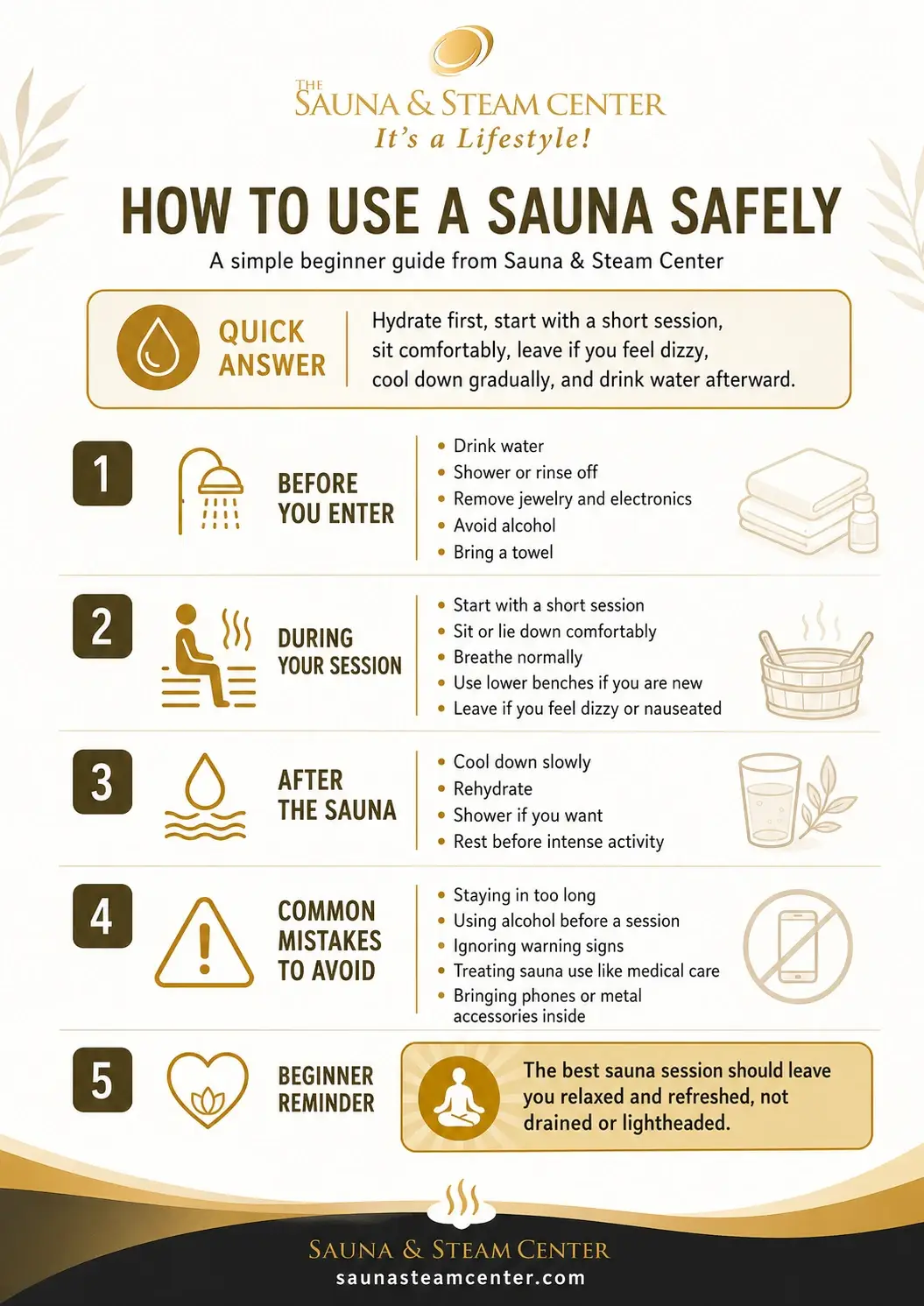
How to use a sauna properly: hydrate before you start, enter clean and comfortable, begin with a short session, sit or lie down and relax, monitor how you feel, leave before the heat becomes uncomfortable, cool down gradually, and drink water afterward. If it is your first time using a sauna, the goal is not to tolerate the hottest temperature or longest session. The goal is to learn how your body responds and develop a routine you can comfortably repeat.
If you searched for how to use a sauna, what to do in a sauna, how to sauna, how to work a sauna, or the proper way to use a sauna, you are probably looking for practical instructions rather than a complicated wellness protocol.
This guide walks through the entire experience, including how to start a sauna, what to do before entering, what you actually do while sitting inside, beginner timing and temperature, traditional versus infrared use, water on sauna rocks, cooling down, home-sauna operation, gym etiquette, common mistakes, and when to leave immediately.
How to Use a Sauna: Quick Answers
| Question | Direct Answer |
|---|---|
| How do you use a sauna? | Hydrate, prepare, enter at a comfortable heat level, sit or lie down, relax, leave before becoming uncomfortable, cool down, and rehydrate. |
| What do you do in a sauna? | Sit or lie comfortably, breathe normally, relax, enjoy the heat, and monitor how you feel. You do not need to exercise or force sweating. |
| How do you sauna for the first time? | Start conservatively, choose a lower bench or mild setting, stay only a short time, and increase future sessions gradually. |
| How do you work a sauna? | Use the approved controls, choose temperature and time according to the manual, allow preheating when required, use the room normally, then shut down or allow the timer to finish. |
| What is the best way to use a sauna? | Use moderate heat consistently rather than extreme heat occasionally. Comfort, hydration, and repeatability matter more than intensity. |
| What is the proper way to use a sauna? | Follow the correct before, during, and after routine while respecting your sauna type, manufacturer instructions, and personal heat tolerance. |
| How do you use a home sauna? | Check that the heater area is clear, start the system using the approved control, preheat if required, use the room, then shut it down, remove wet items, and allow it to dry. |
| What should beginners know? | Start low and slow, stay hydrated, use a towel, avoid alcohol, do not chase maximum heat, and leave as soon as you feel unwell. |
Key Takeaways for Sauna Beginners
- Start with a short, comfortable session rather than trying to reach a specific maximum time.
- Hydrate before and after because sweating increases fluid loss.
- Sit or lie down and relax. The sauna itself is the activity.
- A lower bench usually feels cooler than an upper bench in a traditional sauna.
- Do not exercise hard inside the room.
- Avoid alcohol before and during sauna use.
- Do not enter already dehydrated, overheated, feverish, or acutely ill.
- Only pour water on rocks when the traditional heater and facility rules specifically allow it.
- Traditional and infrared saunas operate differently, so do not apply one system’s instructions to the other.
- Home controls vary by manufacturer. The exact heater manual always takes priority over generic instructions.
- Leave immediately if you feel faint, dizzy, confused, nauseated, unusually weak, short of breath, or excessively hot.
How to Use a Sauna Step by Step
If you only remember one part of this guide, use this routine.
| Step | What to Do | Why It Matters |
|---|---|---|
| 1. Hydrate | Drink water before entering. | Sweating increases fluid loss. |
| 2. Prepare | Shower or rinse if practical, dry off, remove jewelry and electronics, and bring a towel. | Improves hygiene, comfort, and equipment protection. |
| 3. Start Mild | Use a lower bench or moderate setting if you are new. | Allows you to learn your heat tolerance gradually. |
| 4. Sit on a Towel | Place a clean towel between your body and the bench. | Improves hygiene and keeps benches cleaner. |
| 5. Relax | Sit or lie down, breathe normally, and let the heat do the work. | Hard exercise adds unnecessary physical stress. |
| 6. Monitor Yourself | Pay attention to dizziness, nausea, unusual weakness, breathing difficulty, or excessive discomfort. | Your body is a better guide than a timer. |
| 7. Leave Before You Need To | Exit while you still feel reasonably comfortable. | You do not need to stay until the heat becomes unpleasant. |
| 8. Cool Down | Spend a few minutes in a cooler environment. | Allows body temperature and heart rate to settle. |
| 9. Rehydrate | Drink water afterward. | Helps replace fluid lost through sweating. |
| 10. Shower and Recover | Rinse off sweat and rest briefly. | Completes the session comfortably. |
What Should You Do Before Using a Sauna?
Hydrate Normally
Do not enter already dehydrated.
This is particularly important after exercise, outdoor work, travel, or any activity that has already caused significant sweating.
Shower or Rinse
A quick shower can remove sweat, lotion, deodorant, dirt, and excess body products.
In a shared facility, showering first is often part of basic etiquette. At home, it can also help keep the wood and benches cleaner.
Dry Off
Entering dry can make the experience more comfortable and reduce unnecessary water on wooden surfaces.
Remove Jewelry
Metal jewelry can become uncomfortable when heated.
Leave Electronics Outside
Phones, smartwatches, earbuds, and other electronics may not tolerate sauna temperatures.
For more detail, read our guide to phones and electronics in a sauna.
Avoid Alcohol
Alcohol can increase dehydration and can make it harder to recognize when heat exposure is becoming excessive.
Do Not Sauna if You Are Already Overheated or Ill
A fever, significant dehydration, or acute illness is not the time to add additional heat stress.
How Do You Start and Work a Sauna?
People searching for how to work a sauna or how to start a sauna may literally be asking how to turn the equipment on.
There is no universal button sequence because heater systems and controls differ.
General Home Sauna Startup Sequence
- Inspect the heater area. Make sure towels, clothing, cleaning supplies, and other objects are not resting on or too close to the heater.
- Check ventilation openings. Do not intentionally block vents.
- Turn the system on. Use the approved wall control, built-in control, or manufacturer-supported app.
- Select the temperature. Stay within the manufacturer-approved operating range.
- Set the timer. Use the operating or delay timer according to the control manual.
- Allow preheating when required. Traditional saunas generally need time for the room and rocks to warm.
- Confirm normal operation. Make sure the system is heating normally before entering.
- Use the sauna. Follow the heat, timing, and water instructions for that system.
- Shut down correctly. Turn the system off or confirm that its timer has ended.
- Allow the room to dry. Remove wet towels and follow your ventilation and maintenance instructions.
Why Exact Instructions Vary
Harvia, Finnleo, HUUM, Tylo, Saunum, and other manufacturers use different controllers, timers, sensors, apps, and operating sequences.
If you own the sauna, keep the exact heater and controller manual accessible.
How to Use a Sauna for the First Time
Your first sauna should be treated as an introduction rather than a test of endurance.
You are learning three things:
- How the heat feels
- Which bench level feels comfortable
- How your body responds during and after the session
First-Time Sauna Checklist
- Drink water before entering.
- Avoid alcohol beforehand.
- Shower or rinse if practical.
- Remove jewelry and electronics.
- Bring a clean towel.
- Use a lower bench or milder setting.
- Begin with a short session.
- Leave earlier whenever you want.
- Cool down gradually.
- Drink water afterward.
- Notice how you feel over the next few minutes before deciding whether you want another heat cycle.
What Do You Actually Do in a Sauna?
Good Things to Do
- Sit or lie comfortably.
- Use a towel under your body.
- Breathe normally.
- Relax your shoulders, neck, and jaw.
- Enjoy a quiet break from screens.
- Move lower if the heat feels too strong.
- Move higher only if you intentionally want more heat and feel comfortable.
- Leave before you feel pushed to your limit.
Things You Do Not Need to Do
- Push-ups
- Cardio
- Hard stretching
- Breath-holding challenges
- Trying to sweat as much as possible
- Staying until a timer forces you out
- Using your phone
Can You Meditate in a Sauna?
Yes, if sitting quietly helps you relax.
Keep breathing normal and avoid breath-holding practices that could make dizziness harder to recognize.
Can You Stretch in a Sauna?
Gentle movement may feel comfortable, but aggressive stretching is unnecessary. Heat can change how flexible you feel, so avoid forcing a range of motion simply because muscles feel warm.
What Should You Wear in a Sauna?
What you wear depends on whether you are at home, a gym, spa, hotel, or public facility.
At Home
Use whatever is comfortable and appropriate for your household, while placing a clean towel between your body and the bench.
At a Gym or Spa
Follow the facility’s clothing rules. Depending on the location, this may mean a towel, swimsuit, or other appropriate clothing.
What to Avoid
- Heavy clothing
- Metal jewelry
- Heat-sensitive electronics
- Shoes unless specifically required
- Products with strong fragrances
- Items that could melt, warp, or become excessively hot
How Long Should You Stay in a Sauna?
There is no single perfect session length for every person, temperature, and sauna type.
First-time users should begin conservatively and increase only when previous sessions have felt comfortable.
| Experience | Practical Approach |
|---|---|
| First session | Keep it short and use the session to learn how the heat feels. |
| New user | Increase gradually only when earlier sessions felt comfortable during and afterward. |
| Regular user | Continue following the sauna type, temperature, manufacturer guidance, and personal tolerance. |
General consumer guidance commonly discusses sessions in the range of approximately 15 to 20 minutes, but that should never be treated as a mandatory target.
For a deeper explanation, see our guide to sauna session length.
What Temperature Should a Beginner Use?
The correct temperature depends heavily on the type of sauna.
Traditional Sauna
Traditional saunas can operate at significantly higher air temperatures than infrared systems.
A beginner can make the experience milder by using a lower bench and avoiding the highest temperature setting.
Infrared Sauna
Infrared saunas generally operate at lower ambient air temperatures while delivering radiant heat from infrared emitters.
Beginners should still start conservatively and increase heat or time only as comfort allows.
Do Not Chase the Maximum Setting
A hotter room is not automatically a better session.
Temperature, duration, bench height, humidity, and individual tolerance all interact.
For detailed ranges by sauna type, see our sauna temperature guide.
Which Bench Should a Beginner Use?
Traditional sauna rooms commonly have multiple bench heights.
Hot air rises, so upper benches generally feel hotter than lower benches.
| Bench Position | Typical Experience |
|---|---|
| Lower bench | Milder heat and a good starting point for beginners. |
| Middle position | Moderate heat in larger multi-level rooms. |
| Upper bench | Hotter environment for users who intentionally prefer more heat. |
If the room feels too intense, moving lower can be more comfortable than trying to tolerate the hottest position.
How to Use a Traditional Sauna vs. an Infrared Sauna
The basic hydration, comfort, and safety routine is similar, but the equipment and experience differ.
| Feature | Traditional Sauna | Infrared Sauna |
|---|---|---|
| How heat is produced | Heater warms the room and sauna rocks | Infrared emitters provide radiant heat |
| Air temperature | Generally higher | Generally lower |
| Preheating | Usually required | Depends on manufacturer and system |
| Water on rocks | May be allowed when heater is designed for it | Not applicable to infrared panels |
| Bench height effect | Upper levels usually hotter | Heat distribution works differently depending on emitter placement |
| Beginner strategy | Lower bench, moderate heat, short initial exposure | Conservative temperature and time, then increase gradually |
Can You Pour Water on Sauna Rocks?
Only when the heater is specifically designed for water use.
In a traditional Finnish-style sauna with approved stones, a small amount of water can be poured over the heated rocks to create löyly, a temporary increase in humidity and perceived heat.
Do Not Pour Water On:
- Infrared panels
- Control panels
- Electrical components
- A heater not designed for water
- A shared gym or hotel heater when rules prohibit it
What Should You Do After a Sauna?
1. Cool Down Gradually
Move to a comfortable environment and allow your heart rate and body temperature to settle.
2. Drink Water
Replace fluid after sweating, particularly if you exercised beforehand.
3. Shower
A shower can rinse away sweat and help you feel refreshed.
You do not need to force an extremely cold shower simply because you used heat.
4. Rest Briefly
Give yourself a few minutes to notice how you feel before returning to strenuous exercise or another intense heat exposure.
5. Eat Normally
If the sauna was part of a workout or long wellness session, resume normal food and hydration according to your usual needs.
How to Use a Home Sauna
A home sauna follows the same basic user routine, but ownership also gives you responsibility for the heater, controls, room drying, and maintenance.
Before Each Home Sauna Session
- Check that the heater area is clear.
- Make sure towels and clothing are not touching the heater.
- Check that air openings are not blocked.
- Use the approved control system.
- Set temperature and timer according to the manual.
- Allow proper preheating if required.
During the Session
- Use a towel on the bench.
- Do not cover sensors.
- Do not hang towels over the heater.
- Use water only if the heater allows it.
- Keep the exit accessible.
- Follow the heater’s operating limits.
After the Session
- Turn the system off or confirm automatic shutdown.
- Remove wet towels.
- Allow the room to ventilate and dry.
- Wipe benches when needed.
- Inspect the room periodically.
- Follow wood, rock, heater, and control maintenance instructions.
If you are considering ownership, see our home sauna guide.
How to Use a Sauna at a Gym or Spa
A public or shared sauna adds etiquette and facility rules to the basic routine.
- Shower first when required.
- Wear whatever the facility rules require.
- Sit on a clean towel.
- Keep conversation at a respectful volume.
- Do not play music or videos aloud.
- Leave electronics outside.
- Do not shave or groom inside.
- Avoid applying strong fragrances.
- Do not pour water on the heater unless explicitly allowed.
- Respect occupancy limits.
- Follow posted time and temperature rules.
How Often Should a Beginner Use a Sauna?
There is no universal beginner schedule that everyone must follow.
A practical approach is to begin with occasional short sessions and increase only when:
- You tolerate the heat comfortably.
- You remain well hydrated.
- You feel normal after sessions.
- The routine feels relaxing instead of draining.
- You have enough time to cool down and recover.
Consistency matters more than forcing a high frequency immediately.
Should You Eat or Drink Before Using a Sauna?
Water
Being normally hydrated before the session is more important than drinking an extreme amount of water immediately beforehand.
Heavy Meals
A very large meal immediately before intense heat may feel uncomfortable for some people. Give yourself enough time to feel comfortable before entering.
Alcohol
Avoid alcohol around sauna use because it can increase dehydration and interfere with awareness of heat-related symptoms.
Caffeine
Individual tolerance varies. The main concern is entering the sauna already dehydrated or feeling overstimulated or unwell.
Should You Use a Sauna Before or After a Workout?
Many people prefer sauna use after exercise because it can serve as part of a cooldown and relaxation routine.
However, exercise itself can already increase body temperature and fluid loss.
If you sauna after a workout:
- Allow your heart rate to begin settling.
- Replace some fluid first when needed.
- Use a conservative session if the workout was demanding.
- Do not treat sauna sweating as an extension of the workout.
Using intense heat before hard exercise can also affect hydration and comfort.
For workout-specific guidance, see our sauna after the gym guide.
Common Sauna Mistakes Beginners Should Avoid
| Mistake | Better Approach |
|---|---|
| Staying until the heat becomes unbearable | Leave while you still feel reasonably comfortable. |
| Starting on the hottest bench | Begin lower and move higher only if desired. |
| Entering dehydrated | Hydrate normally before and after. |
| Using alcohol before sauna | Avoid alcohol around the session. |
| Exercising hard inside | Use the sauna for heat and relaxation. |
| Trying to force maximum sweating | Let sweating occur naturally. |
| Bringing electronics | Leave heat-sensitive electronics outside. |
| Pouring water on every heater | Add water only when the heater and facility rules allow it. |
| Copying someone else’s routine | Build your own tolerance gradually. |
| Ignoring dizziness or nausea | Exit immediately. |
| Assuming hotter is always better | Choose a heat level that you can comfortably repeat. |
| Blocking vents or sensors | Leave safety and ventilation components unobstructed. |
When Should You Leave a Sauna?
You can leave whenever you have had enough. You do not need to wait for a timer.
Leave immediately if you experience:
- Dizziness
- Feeling faint
- Nausea
- Unusual weakness
- Confusion
- Difficulty breathing
- Chest discomfort
- Severe headache
- Loss of coordination
- Excessive heat discomfort
Who Should Be More Careful With Sauna Use?
Individualized professional guidance may be appropriate for people with:
- Heart disease or recent cardiac symptoms
- High or low blood-pressure concerns
- A history of fainting
- Pregnancy
- Kidney disease or fluid restrictions
- Heat intolerance
- Neurologic conditions affected by heat
- Medications that affect sweating, hydration, alertness, or blood pressure
What Is the Best Way to Use a Sauna for Beginners?
The best beginner routine is not the hottest or longest one.
A useful routine looks like this:
- Arrive normally hydrated.
- Shower or rinse if appropriate.
- Remove electronics and jewelry.
- Start at a comfortable heat level.
- Use a towel on the bench.
- Sit quietly and breathe normally.
- Move lower if the heat feels too intense.
- Leave before you become uncomfortable.
- Cool down gradually.
- Drink water.
- Notice how you feel afterward.
- Adjust the next session based on your experience.
Want a Sauna That Is Easy to Use at Home?
Plan the Sauna Around How You Will Actually Use It
Sauna & Steam Center has designed, installed, and serviced sauna systems since 2004. We help homeowners compare heater types, controls, bench layouts, ventilation, electrical requirements, indoor and outdoor placement, and service access so the sauna remains comfortable and practical long after installation.
Frequently Asked Questions About How to Use a Sauna
How do you properly use a sauna?
Start hydrated, enter clean, use a comfortable heat level, sit or lie down and relax, leave before you feel unwell, cool down gradually, and drink water afterward. Follow the specific heater manual or facility rules.
What should you do in a sauna?
Sit or lie comfortably, breathe normally, relax, and monitor how you feel. The sauna itself is the activity, so you do not need to exercise or force sweating.
How should a beginner use a sauna?
Start conservatively with a short session and a lower bench or milder heat level. Increase future time or heat only when previous sessions have felt comfortable.
How do you use a sauna for the first time?
Drink water beforehand, shower if practical, bring a towel, start on a lower bench, stay only as long as you feel comfortable, cool down afterward, and rehydrate.
How do you start a sauna?
Make sure the heater area is clear, use the approved control system, select temperature and time according to the manual, and allow the room to preheat when required.
How do you work a home sauna?
Use the manufacturer-approved controller, select temperature and operating time, allow preheating if needed, use the sauna normally, then shut it down and allow the room to ventilate and dry.
How long should a beginner stay in a sauna?
Beginners should start with a short session and increase gradually according to comfort. General consumer guidance often discusses sessions around 15 to 20 minutes, but you should always leave sooner if you feel uncomfortable.
What temperature should a beginner use?
Use a moderate setting appropriate for the sauna type rather than starting at maximum heat. Traditional and infrared saunas operate at different temperature ranges.
Should you shower before using a sauna?
A quick shower or rinse is helpful for hygiene, particularly in shared facilities. It also removes lotions, sweat, and other products that can transfer to benches.
Should you shower after a sauna?
Yes, many people prefer to cool down first and then shower to rinse away sweat and feel refreshed.
What should you wear in a sauna?
Wear what is appropriate for the facility or home setting. In shared saunas, follow clothing rules and use a clean towel between your body and the bench.
Can you bring your phone into a sauna?
It is better to leave heat-sensitive electronics outside because high temperatures can exceed their recommended operating conditions.
Can you pour water on sauna rocks?
Only when the traditional heater is designed for water and the manufacturer or facility allows it. Never pour water onto infrared panels, controls, or unapproved electrical components.
Should you sit on the top or bottom sauna bench?
The upper bench is generally hotter because hot air rises. Beginners often find the lower bench more comfortable while learning their heat tolerance.
Can you exercise inside a sauna?
Hard exercise is unnecessary and adds additional physical stress to an already hot environment. Use the room primarily for heat and relaxation.
How often should beginners use a sauna?
There is no universal schedule. Begin with occasional short sessions and increase only when you consistently tolerate the heat well and feel normal afterward.
What should you not do in a sauna?
Avoid alcohol, hard exercise, excessive heat exposure, heat-sensitive electronics, blocking vents or sensors, ignoring warning symptoms, and pouring water on a heater that is not designed for it.
How do you know when to leave a sauna?
You may leave whenever you have had enough. Exit immediately if you feel dizzy, faint, weak, nauseated, confused, unusually short of breath, or excessively hot.
What is the best way to use a sauna?
The best routine is moderate and repeatable: hydrate, use comfortable heat, relax, leave before discomfort, cool down, and replace fluids afterward.
What should you do after using a sauna?
Cool down gradually, drink water, shower if desired, and allow yourself a few minutes to recover before returning to strenuous activity.
Research and Safety References
-
Cleveland Clinic
-
Harvard Health Publishing
-
Harvard Health Publishing
-
Mayo Clinic
Conclusion: How to Use a Sauna Properly
Learning how to use a sauna does not require a complicated protocol.
The basic routine is:
- Hydrate before entering.
- Start with moderate heat.
- Use a towel.
- Sit or lie down and relax.
- Monitor how you feel.
- Leave before discomfort becomes significant.
- Cool down gradually.
- Drink water afterward.
If it is your first time, begin conservatively and build familiarity over several sessions rather than trying to copy an experienced sauna user.
If you own the sauna, learn the exact heater and control system rather than relying on generic button instructions.
If you use a gym, hotel, or spa sauna, follow the facility’s rules even when they differ from your home routine.
The best way to use a sauna is not the hottest, longest, or most complicated routine. It is one that feels comfortable, fits your health and lifestyle, and is easy enough to use consistently.