What to Wear in a Sauna: Infrared, Gym and Home Clothing Guide
Editorial disclosure: Sauna & Steam Center sells, designs, installs, and services sauna systems. This guide combines practical clothing and equipment considerations with general heat-safety advice. It has not been medically reviewed and does not claim that any particular outfit improves medical results.
The practical answer to what to wear in an infrared sauna is much the same as for a traditional sauna: use enough coverage to feel comfortable, without adding unnecessary layers. What changes the outfit is where you’re using it. A private home sauna, a mixed-use gym, and a spa with a clothing-optional policy can have very different expectations.
What to Wear in a Sauna at Home, at the Gym, or at a Spa
Start with the venue’s rules. A swimsuit may be expected in a shared U.S. gym sauna, while a towel-only or clothing-optional approach may be permitted in private or certain traditional facilities. Do not assume the policy is the same everywhere.
| Setting | Practical clothing choice | Remember |
|---|---|---|
| Private home infrared sauna | Towel wrap, loose shorts, swimsuit, or minimal clothing if preferred | Keep a clean towel between your body and the bench. |
| Gym or fitness club sauna | Clean swimsuit, swim trunks, or facility-approved coverage | Change out of sweaty exercise clothes first. |
| Spa or wellness studio | Swimsuit, supplied wrap, or other attire specified by the venue | Ask about coed sessions, towels, and footwear. |
| Hotel or shared residential sauna | Lightweight, modest coverage that meets posted rules | Bring a separate bench towel. |
| Traditional Finnish-style or clothing-optional sauna | Follow the specific sauna’s towel and dress requirements | Local customs vary. Do not assume swimwear is required or prohibited. |
What should you wear in a gym sauna after a workout?
Bring a fresh swimsuit or loose shorts rather than staying in your used leggings, compression gear, or soaked training shirt. If you’ve just exercised hard, cool down and begin rehydrating before entering. For more on recovery and heat exposure, read our sauna after a workout guide.
Best Clothes and Fabrics for an Infrared Sauna
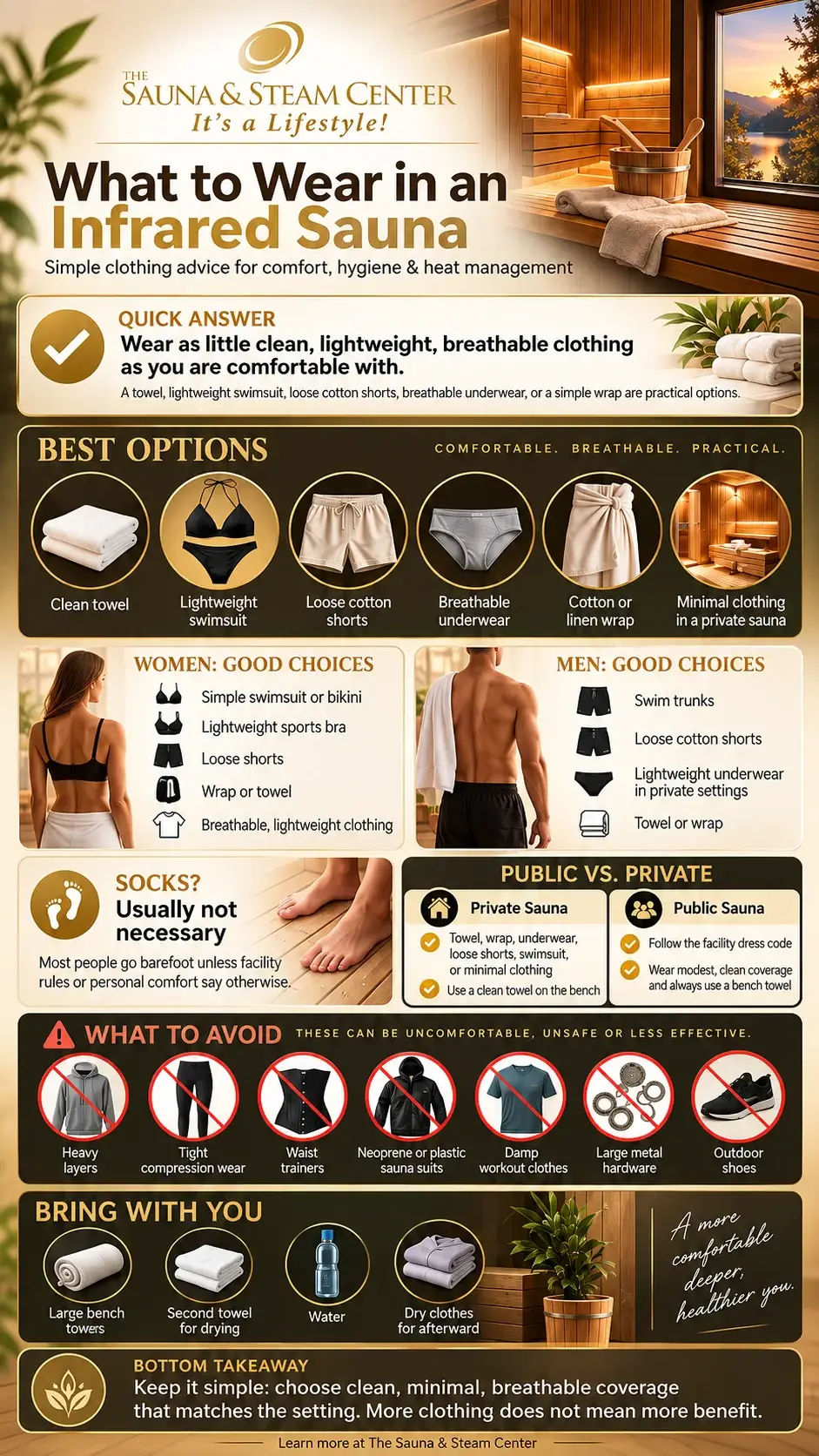
You do not need to buy special infrared sauna clothing. Instead, choose comfortable coverage that’s easy to remove when you are done.
| Item | Good choice? | What to know |
|---|---|---|
| Clean cotton towel | Yes | Useful as a bench barrier and, where permitted, as a wrap. |
| Lightweight swimsuit | Yes | A straightforward shared-sauna option; choose a comfortable fit and minimal hardware. |
| Loose cotton or linen shorts | Yes | Easy, modest coverage for venues that allow them. |
| Clean, light T-shirt or wrap | Sometimes | Fine if you want more coverage and the fabric does not feel too hot or damp. |
| Lightweight sports bra | Sometimes | Choose a comfortable fit without irritating clasps or underwire. |
| Leggings or tight compression clothing | Usually less comfortable | May cling to the skin and hold moisture during a hot session. |
| Thick bathrobe | Better outside | Useful while changing or cooling down, but generally bulky inside. |
Is cotton always better than a synthetic swimsuit?
Not necessarily. Cotton and linen can be comfortable in loose garments, but they also absorb moisture. Many ordinary swimsuits contain nylon or polyester and can be practical when a venue requires swimwear. The important distinctions are fit, comfort, cleanliness, exposed hardware, and the manufacturer’s or facility’s rules. There is no good reason to claim that every synthetic swimsuit is unsafe or that cotton produces extra sauna benefits.
What Should Women and Men Wear in a Sauna?
The basic rules are the same for everyone: comfortable coverage, clean fabric, a towel on the bench, and respect for the facility dress code. These are examples, not requirements based on gender.
Practical options for women
- At a gym: A simple one-piece swimsuit or bikini, with a clean bench towel.
- At home: A towel wrap, loose shorts, a lightweight sports bra, or minimal coverage if comfortable.
- When you want more coverage: A light cotton or linen wrap, provided it meets the sauna’s rules.
Skip underwire, large metal clasps, heavy padded layers, and waist trainers if they become uncomfortable with heat.
Practical options for men
- At a gym or hotel: Comfortable swim trunks or other approved attire.
- At home: Loose shorts, a towel wrap, or minimal coverage based on preference.
- After exercise: Fresh shorts instead of sweaty compression gear.
A loose, uncomplicated outfit is often easier to manage than clothing with heavy waistbands, zippers, or pockets.

Can You Wear Socks or Shoes in a Sauna?
Socks are optional, not necessary. In a clean private sauna, many people prefer bare feet. In a shared facility, footwear rules vary. Clean lightweight socks may be allowed, but thick or damp socks tend to feel unpleasant, and socks can be slippery on some floors.
- Inside the sauna: Follow the posted rule for bare feet, socks, or approved sandals.
- In the locker room or shower: Facility-approved shower sandals may be useful on wet shared floors.
- Avoid: Dirty outdoor shoes, wet gym socks, and footwear that could mark or damage the floor.
What Should You Not Wear in a Sauna?
Most wardrobe mistakes come from adding too much insulation or bringing unnecessary accessories into a hot, shared environment.
- Plastic sauna suits, neoprene belts, and waist trainers: These trap additional heat and moisture. They are not a method for targeted fat loss.
- Damp workout clothes: Change into something clean before the session, especially in a shared sauna.
- Heavy hoodies, sweatpants, and thick robes: More fabric can make you hotter and less comfortable.
- Metal jewelry, watches, and large clothing hardware: Remove items that may become uncomfortably hot or interfere with movement.
- Electronics: Leave phones and earbuds outside unless their manufacturer and the sauna operator specifically permit use in those conditions.
What should you wear in a sauna to lose weight?
No special outfit makes sauna exposure burn targeted body fat. Adding a sauna suit or extra layers may increase sweating and temporary water loss, not reliable fat loss. Choose comfortable clothing and focus on safe heat tolerance rather than the amount of sweat you can produce.
Do you need a sauna hat?
Sauna hats are associated mainly with some traditional hot-sauna customs. They are generally not essential for a lower-air-temperature infrared cabin. If you use one, follow the venue’s and manufacturer’s instructions; do not wear it just to push through overheating symptoms.
Does an Infrared Sauna Work Through Clothes?
Yes, you can feel warm and sweat while clothed in an infrared sauna. Infrared panels emit radiant energy that warms exposed skin and other surfaces, while the cabin air and warmed materials also contribute to the overall experience. Clothing can absorb or block some of the radiation before it reaches your skin, depending on the fabric and coverage.
That does not establish that a particular degree of skin exposure produces better clinical outcomes. Choose clothing for comfort, hygiene, and the sauna’s intended use, not because a seller promises that one outfit will make infrared heat dramatically more effective.
If you want the heating explanation and differences between near, far, and full-spectrum systems, visit what an infrared sauna is and how it works.
Is clothing different in an infrared sauna and a traditional sauna?
The core clothing advice stays similar, but a traditional sauna often has much hotter air, making thick fabric and metal accessories particularly uncomfortable. Infrared cabins frequently operate at lower air temperatures, yet you should still respect session limits and respond promptly if you feel unwell. Neither type requires special clothing for a medically proven advantage.
What Should You Wear in a Sauna With Red Light Therapy?
First confirm what the equipment actually does. Infrared sauna heaters primarily provide heat. A dedicated red light therapy panel delivers a different type of light exposure, and red-colored decorative lighting is not necessarily therapeutic equipment.
For a sauna that also contains dedicated red light panels, use the equipment manufacturer’s instructions for any skin exposure requirements, eye protection, distance, and session time. Fabric covering a treatment area may reduce the light reaching that area. Do not confuse these directions with general sauna heating advice.
Learn the difference in our red light therapy sauna comparison.
What to Bring for Your First Sauna Session
This packing list works for most gym visits and can be simplified for a home infrared sauna.
- A clean, comfortable swimsuit, wrap, or loose shorts if clothing is required
- One large clean towel for the bench
- One separate towel for drying afterward
- Water and your normal hydration plan
- Clean, loose, dry clothes for afterward
- Facility-approved shower sandals for shared wet areas, if needed
Before, during, and after: a simple routine
- Before: Read the sauna rules, shower if required, remove unnecessary accessories, and do not enter already overheated or dehydrated.
- During: Sit on your bench towel, keep your session appropriate for your experience and equipment, and leave if you feel dizzy, faint, nauseated, or otherwise unwell.
- After: Cool down, dry off, rehydrate as appropriate, and change into clean, dry clothing rather than staying in a wet swimsuit or gym gear.

Thinking Beyond Your First Sauna Visit?
Explore a Comfortable Home Infrared Sauna
Sauna & Steam Center helps homeowners compare infrared sauna sizes, placement, electrical requirements, delivery, installation, and service support. Start with the information that matters to your space and routine.
Quick Answers to Common Sauna Clothing Questions
Do you wear clothes in an infrared sauna?
You can. A clean towel, lightweight swimsuit, or loose shorts are common choices. In private settings, minimal clothing is a personal preference; shared facilities set their own rules.
Can you wear a bathing suit in an infrared sauna?
Yes. A simple, comfortable swimsuit without bulky metal hardware is a practical option, especially for a shared or gym sauna.
Can you wear leggings or a sports bra in a sauna?
Clean lightweight athletic clothing may be allowed, but tight leggings can become uncomfortable when damp. A lightweight sports bra without irritating hardware may work if permitted.
Can you go into a sauna with just a towel?
Yes, where the sauna allows towel-only attire. Bring an additional towel to sit on so the bench stays clean.
Should you sit on a towel in a sauna?
Yes. A clean bench towel is a good habit for hygiene, especially in shared spaces. Check whether your venue requires it.
What should you wear after an infrared sauna?
After cooling down and drying off, change into loose, clean, dry clothes. A robe is useful outside the sauna, even if it feels too warm inside.
Sources and Further Reading
Clothing choices depend on the sauna operator and the equipment manufacturer. The sources below support general infrared sauna and heat-safety context, not claims that a specific fabric delivers medical benefits.
The Bottom Line on Sauna Clothing
For an infrared sauna or a traditional sauna, start with a clean towel, comfortable light coverage if you want it, and the dress code of the place you’re visiting. A swimsuit often makes sense at the gym, while a towel wrap or minimal clothing may be comfortable at home. Do not add layers to chase more sweating: a simpler outfit usually makes for a better session.