
How to Build a Sauna at Home
How to build a sauna at home is really a question about planning, moisture control, ventilation, and heat, not just carpentry. Technically, yes, many homeowners can build one. Practically, not every homeowner should. A good home sauna needs the right footprint, the right heater, safe electrical work, the right wall assembly, and airflow that keeps the room comfortable instead of stuffy. Miss those details and you can end up with uneven heat, hidden moisture problems, or a project that costs more to fix than it saved to build in the first place.
At Sauna & Steam Center, we talk to homeowners every week who are deciding between a true DIY build, a sauna kit, and a professionally installed model. This guide is built to help you make that decision with confidence. We will cover what a home sauna actually requires, the key steps, the common mistakes, the real tradeoffs, and when a different path may give you better value.
Quick Answer
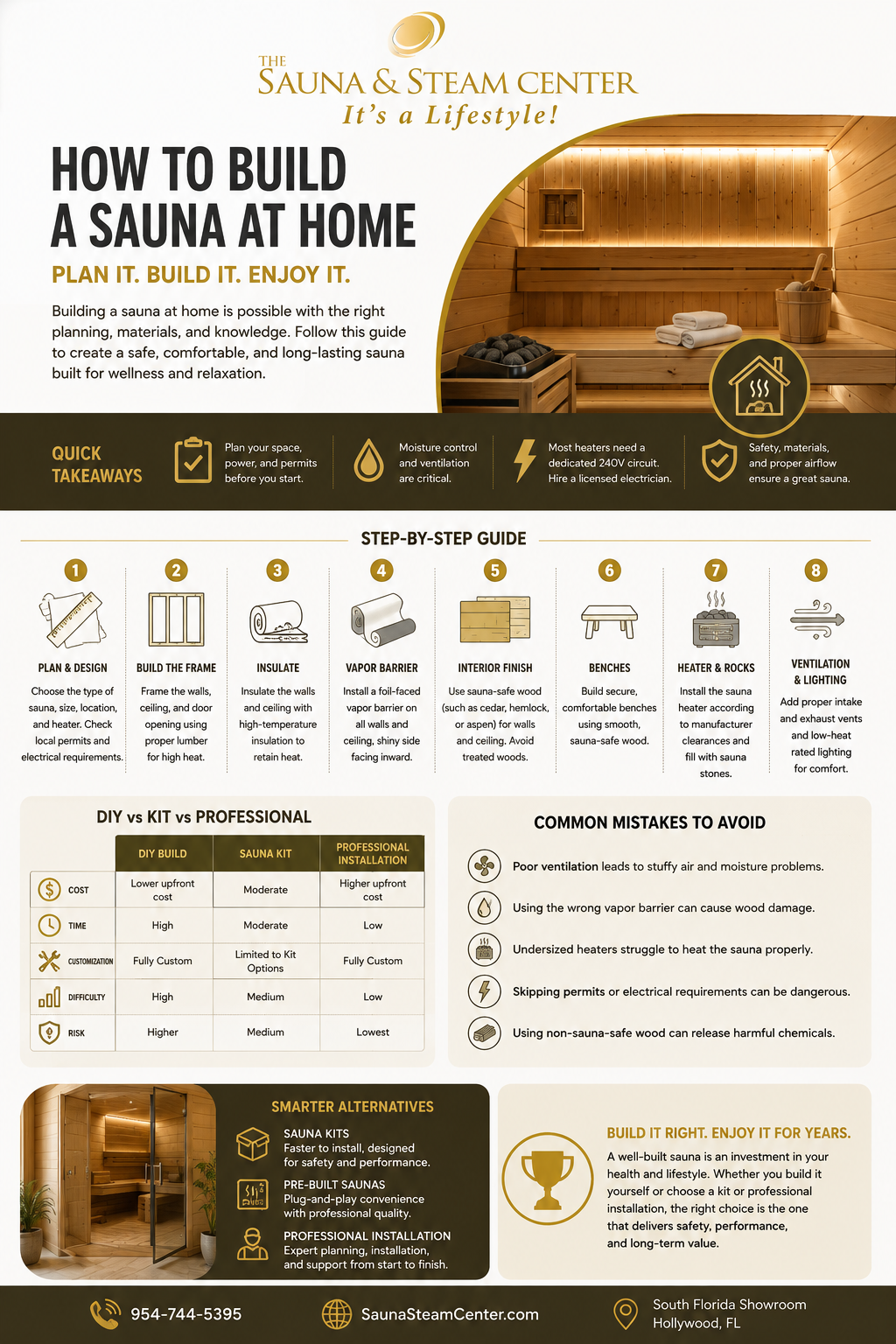
You can build a sauna at home by choosing the right sauna type, confirming local permit and power requirements, framing and insulating the space, installing a foil vapor barrier, finishing the interior with sauna-safe wood, adding benches, and completing the room with the right heater, ventilation, lighting, and outward-swinging door. The hardest parts are usually heater sizing, electrical planning, moisture control, and airflow. For many homeowners, a small indoor sauna is the most realistic DIY project. For many others, a kit or installed sauna is the smarter, lower-risk choice.
Key Takeaways
- The first decision is not what wood to buy. It is whether you want a traditional, infrared, indoor, or outdoor sauna.
- Most DIY sauna problems come from poor ventilation, the wrong vapor barrier, or underestimating electrical requirements.
- A small traditional indoor sauna is usually the most manageable build from scratch.
- DIY can save money on paper, but it adds real time, permit, labor, and rework risk.
- If you want a faster and cleaner path, sauna kits and professional installation deserve a serious look.
What People Usually Mean When They Search “How to Build a Sauna at Home”
Most people searching this are not looking for abstract sauna history. They are trying to answer a practical buying and planning question: can I really build one myself, what will it cost, and is DIY actually the best route for my space?
That matters, because the right answer is not the same for everyone. Some homeowners want a custom basement sauna and already have solid carpentry experience. Others mostly want a reliable sauna at home without turning the next six weekends into a construction project. Those are two very different starting points.
Bottom line: building a sauna at home is possible, but the smart choice depends on your space, your skills, and how much complexity you actually want to own.
Step One: Choose the Right Sauna Type
Traditional saunas
This is the classic sauna experience. The room is heated by a sauna heater and stones, and you can adjust the feel with dry heat or steam from water on the rocks. Traditional saunas usually demand more infrastructure, but they also deliver the hottest and most familiar sauna environment.
Infrared saunas
Infrared saunas often run at lower ambient temperatures and can be easier to place in a home, especially in smaller rooms. They are often easier to buy than to build from scratch, which is why many homeowners treat them more as a product selection decision than a custom construction project.
Indoor saunas
Indoor builds work well in basements, home gyms, large bathrooms, and dedicated wellness rooms. They are protected from weather and often easier to use consistently. If you are still comparing locations, our guide to indoor vs. outdoor saunas for your home can help you sort through space, convenience, and ownership tradeoffs before you commit.
Outdoor saunas
Outdoor saunas create a great experience, but they also add weatherproofing, drainage, foundation choices, and often a longer electrical run. They can absolutely be worth it. They just tend to be a bigger project than many people expect.
Best DIY path for most homeowners: a compact traditional indoor sauna with realistic power access and a simple footprint.
Plan the Room, Power, and Permits First
Get the footprint right
A sauna does not need to be huge to work well. A 4 x 4 foot or 4 x 6 foot layout is a common starting point for home projects. In many builds, a ceiling around 7 feet helps the room heat more efficiently than a taller space would.
Think about heater size before you buy materials
The heater drives both the experience and the infrastructure. An undersized heater can leave you with long warm-up times and disappointing performance. An oversized one can create its own issues if the room design is not balanced properly. If you want a clearer sense of how power, room volume, and heater choice fit together, our sauna heater guide is a strong next step.
Expect real electrical requirements
Many traditional heaters need a dedicated 240V circuit, which usually means licensed electrical work. Some smaller units and some infrared models can be easier to place, but you should not assume the power side is simple until you confirm the exact model requirements and your local code.
Budget for the whole project, not just lumber
The wood shell is only part of the spend. Insulation, foil vapor barrier, benches, heater, stones, lighting, ventilation, glass door, and electrician labor can move the total much faster than first-time builders expect. We break those cost drivers down in more detail in our guide to what an in-home sauna really costs.
Check permits before you frame anything
Electrical permits are common when you are adding a dedicated circuit. Building permits may also apply, especially for outdoor structures or structural changes indoors. Checking early is much easier than fixing an unpermitted project later.
What Materials and Components You Really Need
A sauna that looks finished is not always a sauna that is built correctly. The performance of the room depends on the full assembly working together.
Core build materials
- Standard wall framing sized for the room layout
- Flooring that handles moisture and cleaning well
- Adequate ceiling framing and insulation depth
- Sauna-safe interior wood such as cedar, hemlock, or spruce
Heat and moisture control materials
- Heat-appropriate insulation, commonly mineral wool
- Foil vapor barrier on the warm side of the wall assembly
- Foil tape to seal seams and penetrations cleanly
Comfort and performance components
- Properly sized heater and stones for traditional sauna use
- Benches designed for comfort, not just capacity
- Fresh-air intake and exhaust ventilation
- Heat-rated lighting and controls
- An outward-swinging door with sauna-appropriate hardware
Simple rule worth remembering: do not treat a sauna like a normal finished room. Shortcuts with moisture control, heater sizing, or ventilation are where expensive problems usually start.
Step by Step: How to Build a Sauna at Home
1. Finalize the layout before closing the walls
Mark bench placement, heater location, door swing, vent positions, and control locations before you move into finish work. This is the point where a few inches can affect comfort and airflow later.
2. Coordinate electrical and ventilation early
Do not leave heater wiring and vent planning as late-stage decisions. Those systems are part of the structure of the room, not cosmetic add-ons.
3. Insulate the walls and especially the ceiling
Good insulation helps the sauna heat faster and perform more evenly. Poor insulation makes the room feel underpowered, even if the heater itself is high quality.
4. Install the foil vapor barrier carefully
This is one of the most important steps in the entire build. Overlap seams, tape them properly, and seal around penetrations. The goal is to keep moisture and heat moving where they should, not into the wall cavity.
5. Finish the ceiling first, then the walls
Tongue-and-groove paneling is common. Starting at the ceiling usually makes the wall finish cleaner and easier to detail.
6. Build benches for comfort
Bench depth, step access, legroom, and back support matter more than many first-time builders realize. A sauna that technically fits more people is not better if it is awkward to use.
7. Install the heater, stones, door, and lighting
Follow manufacturer clearance requirements exactly. Use only the proper stones and hardware. The door should swing outward and should never trap the user in the room.
8. Test and fine-tune the room
After installation, pay attention to warm-up time, bench comfort, and airflow. Even a well-built sauna may need small adjustments to ventilation or use habits to feel its best.
DIY vs Kit vs Professional Installation
A comparison table is useful here because the real question is often not “can I build it?” but “which route actually gives me the best value?”
| Path | Best for | Main upside | Main tradeoff |
|---|---|---|---|
| Build from scratch | Hands-on homeowners with good planning and finish carpentry skills | Maximum customization | Highest complexity and most room for mistakes |
| Sauna kit | Buyers who want faster setup with less guesswork | Cleaner path to ownership | Less custom freedom than a fully bespoke build |
| Professional installation | Homeowners who want expert guidance and lower project risk | Best blend of performance, speed, and support | Higher upfront cost than a bare DIY materials budget |
Common Mistakes and What Happens if You Do It Anyway
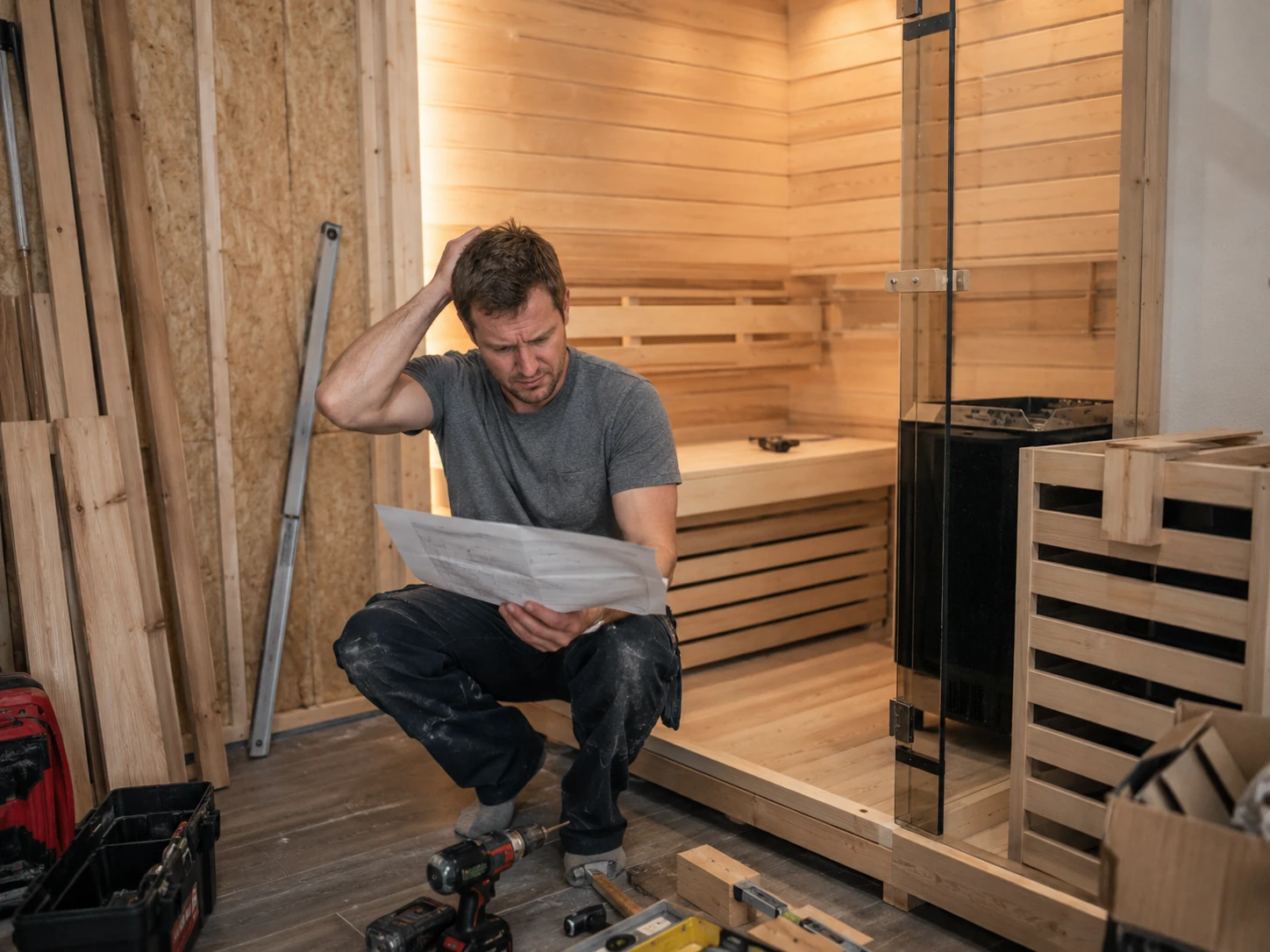
“It seems harmless to use standard plastic sheeting.”
It is a common assumption, but sauna wall assemblies are not normal wall assemblies. Using the wrong moisture barrier can create the kind of hidden problem you do not notice until smells, condensation, or wall damage show up later.
“I only need the room to get hot.”
Not quite. A sauna also needs to feel breathable and comfortable. Poor ventilation can lead to stale air, uneven heat, and a room that feels oppressive instead of relaxing.
“I can save money by handling the electrical myself.”
This is one of the riskiest shortcuts in the whole project. Even if the room looks great, improper electrical work can create safety problems, code issues, warranty problems, and expensive rework.
“I am only off by a little on heater size.”
That little mismatch can matter. Glass, exterior walls, ceiling height, and room volume all affect real-world performance. A sauna that is slow to warm up or never quite feels right is often showing you that the planning stage was not quite right.
What happens if you cut corners? Usually not a dramatic failure on day one. More often, it is a sauna that performs below expectations and becomes a frustrating project to fix later.
Smarter Alternatives If You Want Less Risk
Sauna kits
If you like the idea of owning a sauna but do not want to solve every construction variable yourself, a kit is often the middle ground worth considering. Our overview of sauna kits, custom designs, and prefab options is useful for comparing what you gain in simplicity versus what you give up in customization.
Professionally guided home sauna selection
For some homeowners, the best move is to stop treating this like a pure DIY problem and start with the buying decision instead. That helps you narrow the right size, heater style, room type, and installation path before you invest time in the wrong plan. If you are at that stage, our home sauna buying guide is the best next read.
What to do instead if you are on the fence
Price out a realistic DIY build, then compare it with a kit or installed option that gives you similar capacity and performance. When homeowners do that honestly, the answer often becomes much clearer.
Keep Sauna Benefits and Safety in Perspective
Most people want a home sauna for relaxation, routine, heat exposure, and comfort. That is a reasonable expectation. Some evidence also suggests sauna bathing may support cardiovascular wellness and relaxation for some people, but the online conversation often overstates what sauna use can do.
What is well supported? Saunas can raise heart rate, increase sweating, and feel deeply relaxing. What is more mixed or overstated? Claims about detox, major fat loss, or sauna use replacing exercise or medical treatment. Use caution if you are pregnant, dehydrated, prone to dizziness, taking medications that affect hydration or blood pressure, or managing a medical condition that makes heat exposure a concern. This article is not medical advice.
FAQ
How much does it cost to build a sauna at home?
That depends on size, heater type, finish materials, and how much electrical work is required. A simple indoor build may stay in the lower thousands, while larger or outdoor projects can climb much higher once heater, door, wiring, ventilation, and finish details are included.
What is the best wood for a home sauna?
Cedar is popular because it handles heat and moisture well and feels comfortable in use. Hemlock and spruce are also common choices. The bigger point is to use sauna-appropriate materials and avoid unsuitable treated wood in the hot room.
Can I build a sauna in my basement?
Yes, many homeowners do. Basements can be practical because they are private and easier to dedicate to a fixed footprint. The space still needs to be dry, ventilated properly, and suitable for the electrical and moisture demands of the build.
Do I need a permit for a home sauna?
Often yes for electrical work, and sometimes for the structure itself. The exact answer depends on your location and whether the project is indoor, outdoor, plug-in, or hardwired.
Is an infrared sauna easier to add at home than a traditional sauna?
Usually, yes. Infrared models often have simpler placement and power requirements. Traditional saunas remain the first choice for buyers who want higher heat and the classic stone-and-steam experience.
Is building from scratch always the cheapest path?
No. It can look cheaper at first, but once you add your time, tools, electrician labor, and the cost of mistakes, the value gap between DIY and other options can shrink quickly.
Conclusion
Building a sauna at home can be a rewarding project, but it is not a basic weekend woodshop build. It is a heat, airflow, moisture, and comfort project that happens to use wood as the finish. When the planning is right, the result can be excellent. When the planning is loose, the project can turn into an expensive lesson.
If you are committed to DIY, keep the design simple, plan the power early, and treat ventilation and moisture control as top-tier priorities. If you are mainly trying to get to a reliable home sauna with less risk, start by comparing kits and installation-ready options before you commit to building from scratch.
References
- Cleveland Clinic: Get Your Sweat On: The Benefits of a Sauna
- Cleveland Clinic: Sweat
- Harvard Health: Can regular sauna sessions support a healthy heart?
- Harvard Health: Sauna Health Benefits: Are saunas healthy or harmful?
- CDC NIOSH: Heat-related illnesses
- NHS: Heat exhaustion and heatstroke
- PubMed: Acute effects of sauna bathing on cardiovascular function