
Outdoor vs Indoor Sauna: Differences, Pros, Cons, Cost & Installation
Editorial disclosure:
Sauna & Steam Center sells, designs, installs, and services indoor and outdoor sauna systems. Product and installation guidance reflects our first-hand industry experience. Final recommendations depend on the property, sauna model, electrical requirements, site conditions, climate, permits, and the homeowner’s routine.
When comparing an outdoor vs indoor sauna, the biggest differences are not the basic sauna experience itself. They are convenience, installation, weather exposure, maintenance, available space, electrical routing, drainage, site preparation and how the sauna fits your routine. An indoor sauna usually offers easier daily access and less weather exposure, while an outdoor sauna can provide more design freedom, preserve indoor floor space and create a dedicated backyard wellness retreat.
Quick answer: Indoor or outdoor sauna, which is better?
Choose an indoor sauna when frequent use, easy shower access, lower weather exposure and simpler exterior maintenance matter most. Choose an outdoor sauna when you want to preserve indoor space, create a backyard retreat, use a larger footprint or combine the sauna with an outdoor shower, cold plunge or relaxation area. Outdoor projects usually require more attention to the foundation or base, drainage, roofing, exterior finishes, utilities and weather protection.
Important:
Do not assume that an indoor sauna can simply be moved outside. Indoor and outdoor sauna models may use different exterior assemblies, roofing, bases, finishes, electrical details and weather-protection requirements. Use a sauna outdoors only when the manufacturer approves the specific model and installation for outdoor conditions.
Outdoor vs Indoor Sauna: Quick Answers
| What People Ask | Direct Answer |
|---|---|
| Outdoor vs indoor sauna: which is better? | Indoor usually wins for convenience and lower weather exposure. Outdoor usually wins for space, privacy and a dedicated backyard experience. |
| Indoor vs outdoor sauna: what are the differences? | The main differences are installation, site preparation, maintenance, weather exposure, electrical routing, available space and everyday convenience. |
| Indoor or outdoor sauna? | Choose based on how often you will use it, available space, climate, power access, construction requirements and maintenance tolerance. |
| How do outdoor saunas compare to indoor saunas? | Both can provide an excellent sauna experience. Outdoor saunas need an exterior-ready enclosure and site, while indoor saunas must integrate correctly with the home’s floor, ventilation, electrical system and surrounding finishes. |
| How do indoor and outdoor saunas compare for installation? | Indoor projects may involve framing, flooring, ventilation and electrical work through finished areas. Outdoor projects may add a base or slab, grading, drainage, trenching, exterior construction, setbacks and weather protection. |
| How do indoor and outdoor saunas compare for maintenance? | Both need interior cleaning and heater care. Outdoor saunas also require inspection of roofing, exterior wood, coatings, seals, drainage, foundation and weather-exposed hardware. |
| How do weather conditions affect outdoor saunas? | Sun, rain, humidity, wind, snow, freezing weather and coastal salt can affect roofing, finishes, seals, hardware, drainage and sometimes warm-up performance. |
| Can I put an indoor sauna outside? | Not unless the manufacturer specifically approves that sauna for outdoor installation. An indoor-rated cabin may not have the roof, exterior protection, base or electrical design required for weather exposure. |
| How do outdoor saunas work? | They create the same basic heated sauna environment as an indoor sauna, but the complete structure is designed or installed to withstand outdoor exposure and sit on an appropriate exterior base. |
| Is Florida humidity bad for an outdoor sauna? | Florida humidity does not prevent outdoor sauna ownership, but drainage, ventilation, exterior finishes, roofing, elevated bases and corrosion-resistant materials become more important. |
| Is outdoor heat the same as sauna heat? | No. Hot outdoor weather is uncontrolled environmental heat. A sauna is a purpose-built enclosed room with a designed heater, ventilation system and controlled session environment. |
Simple decision rule:
Choose indoor for convenience, protection and frequent low-friction use. Choose outdoor for space, privacy, atmosphere and backyard wellness design. Then compare the complete installed project rather than only the sauna cabin price.
Key Takeaways
- Indoor saunas usually offer the easiest access and lowest exposure to exterior weather.
- Outdoor saunas usually provide more design freedom and a stronger retreat atmosphere.
- The main indoor vs outdoor differences involve the property and installation, not whether the sauna can create effective heat.
- Indoor installations need proper electrical planning, ventilation, floor protection and integration with surrounding rooms.
- Outdoor installations additionally need a suitable base, drainage, roofing, weather protection and exterior-rated construction.
- An indoor sauna should not automatically be placed outdoors unless the manufacturer approves it.
- Outdoor sauna maintenance typically includes more exterior inspections than indoor sauna maintenance.
- Florida humidity, heavy rain, UV exposure and coastal salt should influence outdoor-sauna materials and site planning.
- Weather can affect outdoor-sauna maintenance and warm-up conditions, but a properly designed outdoor sauna can operate successfully across many climates.
- For U.S. projects, electrical, building, zoning, setback and association requirements can vary by location.
- The best choice is normally the sauna location your household will realistically use and maintain.
Indoor vs Outdoor Sauna Differences That Matter Most
The most important indoor vs outdoor sauna differences involve the installation environment around the sauna.
A properly designed indoor sauna and a properly designed outdoor sauna can both produce a satisfying traditional or infrared sauna experience.
The differences become much more obvious when you look at how the sauna interacts with the property.

| Difference | Indoor Sauna | Outdoor Sauna |
|---|---|---|
| Location | Inside the conditioned or protected home | Separate exterior structure or outdoor-rated cabin |
| Convenience | Usually easier for frequent use | Depends on pathway, distance, weather and lighting |
| Interior space | Consumes indoor floor area | Preserves indoor living space |
| Weather exposure | Minimal direct exposure | Direct exposure to sun, rain, humidity, wind and local climate |
| Foundation or base | Uses an appropriate existing or prepared interior floor | May require slab, platform, piers or another manufacturer-approved base |
| Roof | Protected by the surrounding building | Must manage rain and weather as part of the exterior structure |
| Drainage | Primarily room-specific moisture and cleaning considerations | Includes both sauna use and exterior site drainage |
| Electrical route | May pass through finished interior spaces | May require longer runs, trenching and exterior-rated components |
| Maintenance | Mostly interior sauna care | Interior care plus exterior structure maintenance |
| Design flexibility | Limited by the house layout | May allow larger footprints and backyard integration |
Indoor vs Outdoor Sauna Pros and Cons
| Sauna Location | Pros | Cons |
|---|---|---|
| Indoor sauna | Convenient access, easier connection to showers and changing areas, less direct weather exposure, easier nighttime use and usually less exterior maintenance. | Uses interior floor space, may require renovation, ventilation planning, flooring changes and electrical work through finished areas. |
| Outdoor sauna | Preserves interior space, creates a dedicated retreat, allows more site flexibility and integrates naturally with pools, cold plunges, outdoor showers and landscaping. | Requires weather protection, an appropriate base, drainage, exterior maintenance, outdoor electrical planning and safe access from the home. |
Which has fewer disadvantages?
There is no universal answer. An indoor sauna can become complicated when the home requires major renovation. An outdoor sauna can be surprisingly straightforward when the property already has a suitable level site, nearby electrical service and good access.
Indoor or Outdoor Sauna: Which Is Better?
An indoor sauna is usually better for homeowners who prioritize frequent use, short weekday sessions, immediate shower access and minimal exposure to weather.
An outdoor sauna is usually better for homeowners who prioritize privacy, backyard atmosphere, more layout freedom or preserving interior square footage.
Choose an Indoor Sauna If:
- You expect to use the sauna several times per week.
- You want it near a bathroom, shower or home gym.
- You do not want to walk outside during rain or at night.
- You have suitable interior space.
- You prefer lower exterior-maintenance demands.
- Your electrical route is easier indoors.
Choose an Outdoor Sauna If:
- You do not want to sacrifice interior floor space.
- You want a separate wellness retreat.
- You have a suitable backyard site.
- You want a larger sauna than your home can comfortably accommodate.
- You want to combine it with a pool, cold plunge or outdoor shower.
- You are comfortable maintaining an exterior structure.
Simple summary:
Indoor often wins on convenience. Outdoor often wins on atmosphere and space. The better option is the one that fits the actual property and lifestyle.
How Do Outdoor Saunas Work?
An outdoor sauna works on the same basic principle as an indoor sauna: a heater creates the intended sauna environment inside an enclosed room.
Traditional outdoor saunas typically use an electric or wood-burning sauna heater, depending on the product and local installation requirements. Outdoor infrared products also exist, although the manufacturer must specifically approve the cabin and equipment for the proposed outdoor environment.
What Makes an Outdoor Sauna Different?
The heating concept is not the main difference. The exterior structure is.
An outdoor sauna must account for:
- Structural base or foundation
- Level installation surface
- Roofing
- Exterior cladding
- Rain management
- Drainage around the structure
- Weather-resistant exterior finishes
- Electrical routing
- Anchoring where required
- Exterior ventilation openings
- Local setbacks and building requirements
For example, current Finnleo outdoor sauna instructions call for a solid, flat, level supporting surface, appropriate clearances, anchoring, electrical work that meets applicable codes, protective exterior finishes and unobstructed ventilation.
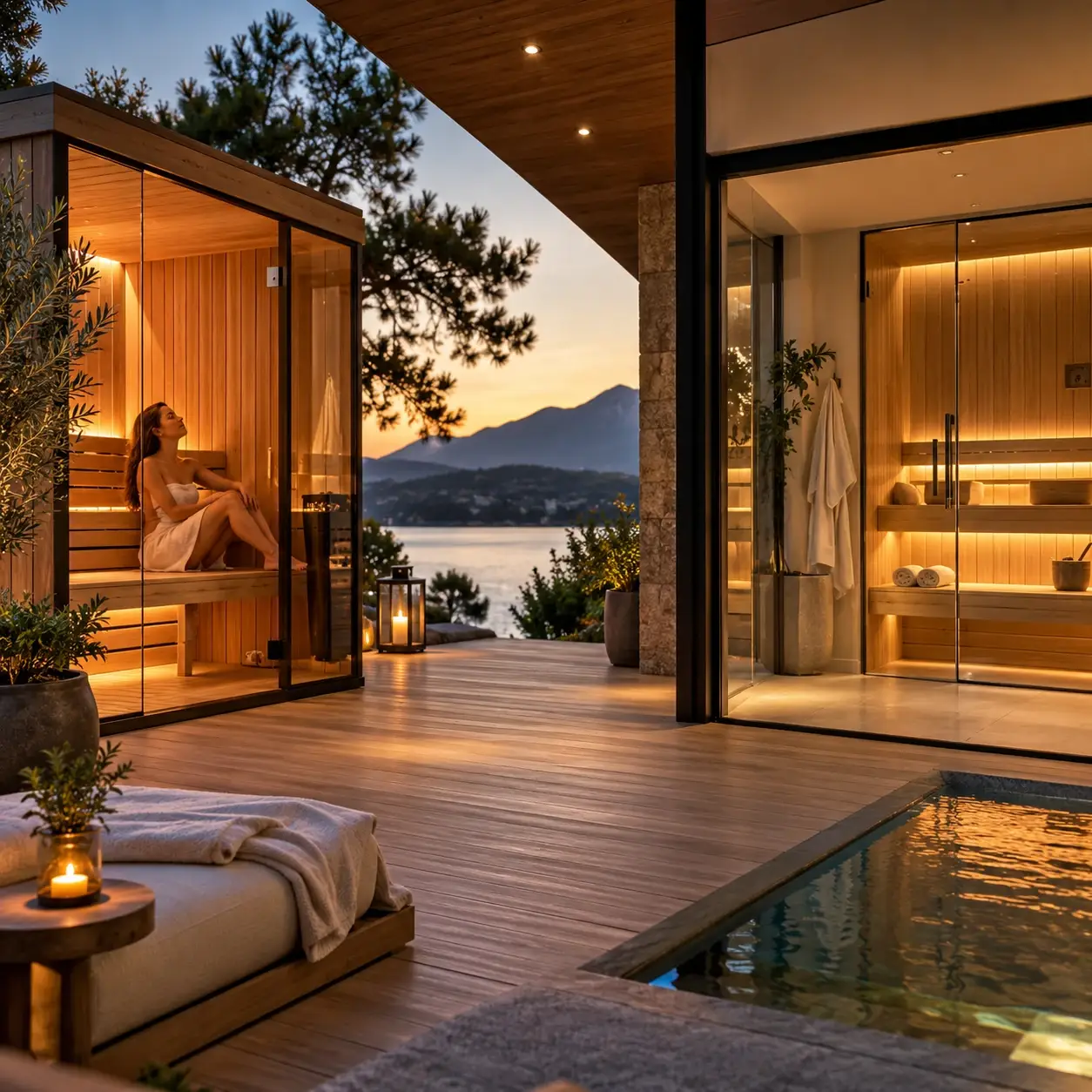
Outdoor sauna rule:
Think of an outdoor sauna as both a sauna and an exterior structure. The heater and interior are only part of the project.
Why Homeowners Choose Indoor Saunas
1. Easier Daily Use
An indoor sauna can be only a few steps from a shower, towels, drinking water, changing area and climate-controlled cool-down space.
This convenience often matters more after ownership than buyers initially expect.
2. Predictable Year-Round Access
Rain, outdoor temperature, insects, darkness and wet pathways have less effect on whether you use the sauna.
3. Easier Short Sessions
Someone who wants to use a sauna after exercise or before an evening shower may find indoor placement easier to incorporate into a normal routine.
4. Protection From Exterior Weather
The sauna is protected from direct rain, UV exposure, wind and coastal salt.
5. Integration With a Home Wellness Room
Indoor saunas can work particularly well in home gyms, large bathrooms, spa rooms or dedicated wellness areas.
For construction choices, see our
Sauna Kits, Custom Design and Prefabricated Sauna Guide
.
Why Homeowners Choose Outdoor Saunas
1. They Preserve Indoor Space
An outdoor sauna does not consume an existing bedroom, bathroom, gym or other interior room.
2. They Create a Dedicated Retreat
Walking to a separate sauna can create a stronger sense of separation from the normal household environment.
3. They Allow Greater Layout Freedom
A suitable backyard may make room for longer benches, larger cabins, changing areas, covered entrances or adjacent wellness features.
4. They Pair Naturally With Outdoor Wellness Features
An outdoor sauna can be placed near:
- Cold plunges
- Pools
- Outdoor showers
- Relaxation seating
- Covered patios
- Landscaped privacy areas
5. They Separate Sauna Traffic From the House
This can be useful for families, guests or properties where the sauna will be used by several people.
Florida homeowners should also read our
Outdoor Sauna in Florida Guide
.
Can I Put an Indoor Sauna Outside?
Usually, you should not put an indoor-rated sauna outdoors unless the manufacturer specifically approves that model and installation.
An indoor sauna may look similar to an outdoor sauna, but the exterior assembly can be very different.
An Outdoor Sauna May Require Features an Indoor Model Does Not Have
- Weather-resistant roof assembly
- Exterior-grade cladding or protection
- UV-resistant exterior finish
- Suitable floor or base design
- Exterior drainage considerations
- Weather-resistant fasteners and hardware
- Approved outdoor electrical components
- Anchoring provisions
- Exterior door and seal details
Finnleo, for example, publishes separate installation documentation for its indoor and outdoor sauna series rather than treating the cabins as universally interchangeable.
Can an indoor sauna go on a covered patio?
A roof over the sauna does not automatically make an indoor model suitable for outdoor placement. Humidity, wind-driven rain, temperature swings and condensation can still affect the structure and electrical components. Follow the manufacturer’s approved-location requirements.
Warranty consideration:
Before moving an indoor sauna outside, confirm the manufacturer’s installation requirements and warranty. An unapproved location may create performance, maintenance, electrical or warranty problems.
Outdoor vs Indoor Sauna Comparison
| Factor | Indoor Sauna | Outdoor Sauna |
|---|---|---|
| Daily convenience | Usually highest | Depends on distance and weather |
| Atmosphere | Integrated home-spa environment | Separate retreat experience |
| Space | Limited by interior floor plan | Potentially greater flexibility |
| Weather exposure | Low | High |
| Base requirements | Suitable interior floor | May require slab, piers or approved platform |
| Exterior maintenance | Minimal | Roof, finishes, seals and site require inspection |
| Electrical installation | May pass through finished walls | May require longer exterior runs or trenching |
| Weather protection | Provided by the home | Must be built into sauna structure and site |
| Cooling | Easy shower access | Natural fresh-air cool-down and easier cold-plunge integration |
| Maintenance complexity | Usually lower | Usually somewhat higher |
Indoor vs Outdoor Sauna Cost and Installation Differences
Neither type is automatically cheaper.
The sauna package may be similar in price while the surrounding project costs are completely different.
Common Indoor Installation Costs
- Interior demolition
- Framing
- Floor preparation
- Ventilation
- Electrical installation
- Finished-wall repair
- Custom glass
- Room finish integration
- Difficult stairs or interior delivery routes
Common Outdoor Installation Costs
- Grading
- Concrete slab or approved base
- Drainage
- Roofing
- Exterior finish
- Trenching
- Long electrical runs
- Outdoor disconnects or components
- Steps and pathways
- Lighting
- Privacy improvements
- Delivery access
Cost rule:
Compare the complete installed project. A more expensive sauna cabin with simple site conditions can cost less overall than a lower-priced sauna requiring major construction.
For budget planning, see our
Home Sauna Cost Guide
.
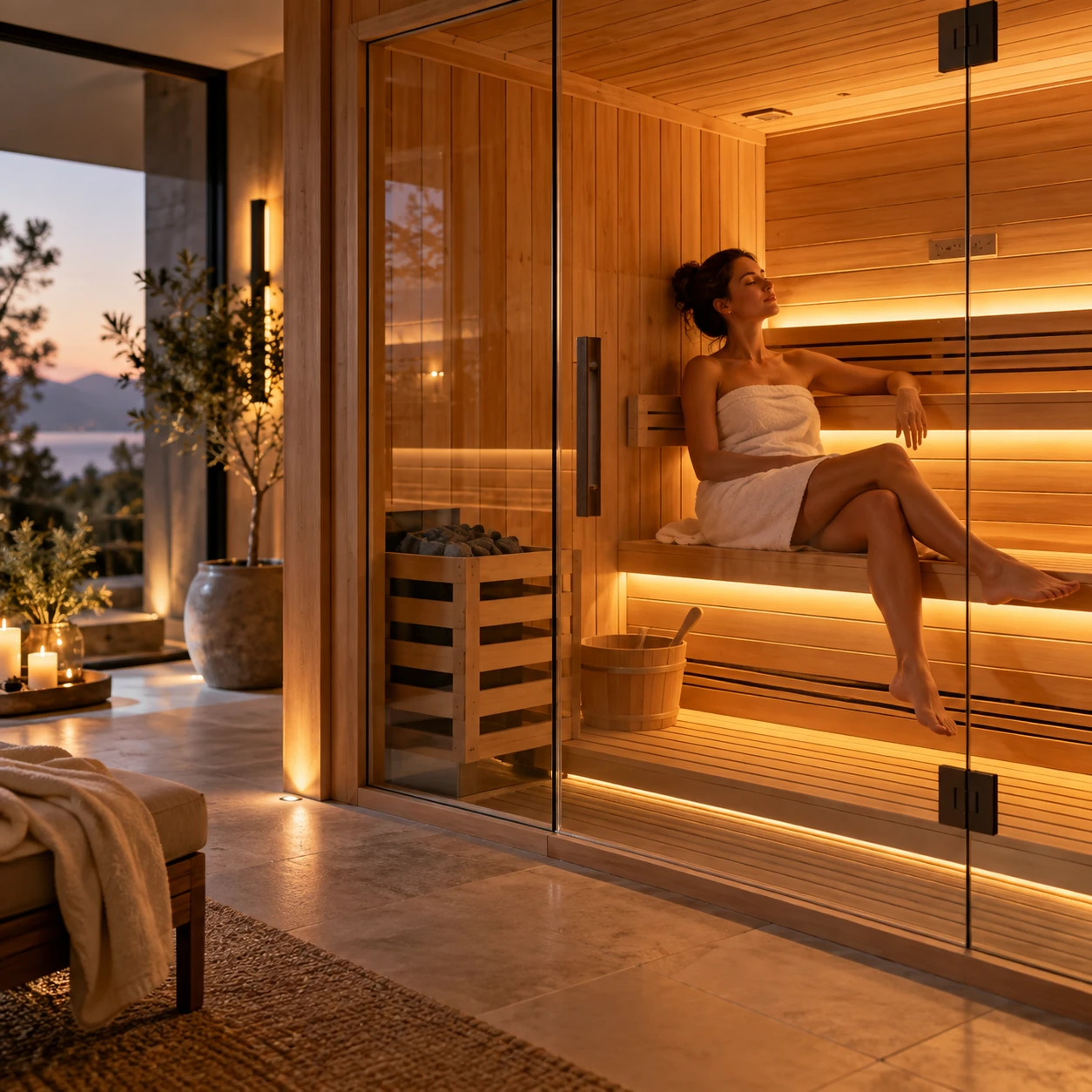
How Do Indoor and Outdoor Saunas Compare for Installation in the United States?
In the United States, installation requirements vary by state, county, municipality and property type.
Electrical work, structural work, accessory structures, setbacks, homeowner association rules and inspections can all influence the final project.
| Installation Factor | Indoor Sauna | Outdoor Sauna |
|---|---|---|
| Electrical | May be easier with a nearby panel, although finished walls can complicate routing | May require longer runs, trenching and exterior-rated installation |
| Foundation | Usually an existing or prepared indoor floor | May require slab, platform, piers or another approved base |
| Ventilation | Must coordinate with the interior room | Must still meet sauna requirements while operating within an exterior structure |
| Weatherproofing | Provided primarily by the surrounding house | Critical part of sauna construction |
| Zoning and setbacks | Usually less relevant to an existing interior room | May apply to an exterior accessory structure |
| Delivery | Interior doors, stairs and turns may be limiting | Gates, side yards and equipment access may be limiting |
U.S. installation rule:
Do not assume that one location is universally easier. Check the manufacturer’s instructions and the requirements that apply to the actual property before purchasing.
How Do Indoor and Outdoor Saunas Compare for Maintenance?
Indoor Sauna Maintenance
Normal indoor sauna maintenance includes:
- Cleaning benches
- Cleaning or vacuuming floors
- Allowing the room to dry after use
- Inspecting heater stones where applicable
- Checking vents
- Inspecting the door
- Monitoring surrounding finishes for moisture problems
Outdoor Sauna Maintenance
Outdoor saunas require similar interior care plus exterior inspections.
- Roof
- Exterior wood or cladding
- Paint, stain or protective coating where required
- Door seals
- Windows
- Fasteners
- Exterior hardware
- Base or foundation
- Drainage
- Exterior electrical components
- Vegetation near the structure
Are outdoor saunas harder to maintain?
Usually they require more categories of maintenance because they are exterior structures. That does not mean they are difficult to own. Good site preparation and appropriate materials can substantially reduce future problems.
How Do Weather Conditions Affect Outdoor Saunas?
Weather primarily affects the outside of the sauna, surrounding site and maintenance schedule.
Rain
Roofing, drainage, door details, base elevation and exterior finishes should keep repeated moisture away from vulnerable assemblies.
Humidity
High humidity can slow drying and increase the importance of airflow, exterior coatings, drainage and proper detailing.
Strong Sun and UV Exposure
UV exposure can change the appearance of exterior wood and coatings over time.
Cold and Snow
Cold climates increase the importance of insulation, door sealing, roof design, snow-load considerations and safe access.
Wind
Wind-driven rain can reach areas that remain relatively dry during normal rainfall.
Coastal Salt Air
Salt exposure can accelerate corrosion of some exposed metal components and should influence hardware and exterior material selection.
Weather rule:
The appropriate outdoor sauna design in Minnesota may not be the same as the appropriate outdoor sauna design in South Florida. Match the complete structure to the local climate.
Outdoor Sauna in Florida Humidity: What Changes?
Florida humidity does not make outdoor sauna ownership impractical.
It does make site preparation and exterior construction more important.
South Florida outdoor sauna projects should account for:
- High ambient humidity
- Frequent heavy rain
- Wind-driven moisture
- Strong ultraviolet exposure
- Warm temperatures for much of the year
- Insects
- Coastal salt exposure in some locations
- Drainage during heavy storms
Drainage Matters
Do not create a low point where stormwater repeatedly collects around the sauna base.
Exterior Finish Matters
Follow the sauna manufacturer’s requirements for exterior coatings or finishes.
Roof Design Matters
Repeated rainfall makes roofing and water shedding especially important.
Ventilation Still Matters
A humid outdoor climate does not eliminate the need for properly designed sauna ventilation.
Hardware Selection Matters
Properties near the coast should pay additional attention to corrosion resistance.
For deeper Florida-specific planning, read:
Outdoor Sauna Florida
.
Sauna vs Outside Heat: Is Sitting Outside in Florida the Same Thing?
No.
A hot Florida afternoon and a sauna both expose the body to heat, but they are not equivalent environments.
A sauna is a purpose-built enclosed room with:
- A controlled heat source
- Designed ventilation
- A predictable session environment
- Purpose-built seating
- Materials selected for sauna temperatures
- A defined beginning and end to the heat session
Outdoor heat varies with sun exposure, humidity, wind, shade, time of day and weather.
Important:
Do not treat extreme outdoor heat as a substitute for sauna use. Heat safety still matters in both environments, and high outdoor temperatures can increase the risk of overheating and dehydration.
Sauna Benefits, Limits and Safety
The physiological heat exposure associated with sauna use depends mainly on the sauna environment and session, not simply whether the structure is indoors or outdoors.
General Sauna Safety
- Begin with shorter sessions when you are new to sauna use.
- Hydrate appropriately.
- Leave if you feel dizzy, weak, nauseated, confused or overheated.
- Avoid sauna use when significantly dehydrated or acutely ill.
- Ask a healthcare professional about sauna use when health conditions or medications may affect heat tolerance.
Additional Outdoor Safety
- Provide a stable walkway.
- Use adequate nighttime lighting.
- Provide slip-resistant surfaces.
- Plan safe steps.
- Keep drainage away from walking areas.
- Consider rain, insects and storms.
- Make the cool-down area private and safe.
Important:
This article is educational and is not medical advice. Seek professional medical guidance when personal health conditions may affect safe heat exposure.
Common Indoor vs Outdoor Sauna Questions
I Want the Easiest Sauna to Use
Indoor generally has the advantage because there is less friction between deciding to use the sauna and starting a session.
I Want the Best Backyard Experience
Outdoor usually has the advantage because the sauna can become part of a larger pool, cold-plunge or wellness area.
I Am Concerned About Moisture Inside My House
That is a legitimate design concern, but proper ventilation, flooring, wall assemblies and drying practices can allow indoor saunas to function successfully.
I Am Concerned About Outdoor Maintenance
An outdoor sauna does require exterior care, but appropriate construction, roofing, drainage and finishes can make the maintenance manageable.
Can I Save Money by Putting an Indoor Sauna Outside?
That can become false economy if the model was not designed for exterior exposure. Weather damage, unsuitable roofing, electrical issues or warranty problems may cost more than choosing the correct outdoor model initially.
Sauna Intérieur vs Extérieur: Quelle Est la Différence?
If you searched sauna intérieur vs extérieur, the basic comparison is the same. An indoor sauna generally offers easier access and protection from weather, while an outdoor sauna offers more space, privacy and integration with a backyard wellness area. Installation, climate exposure and maintenance are the biggest practical differences.
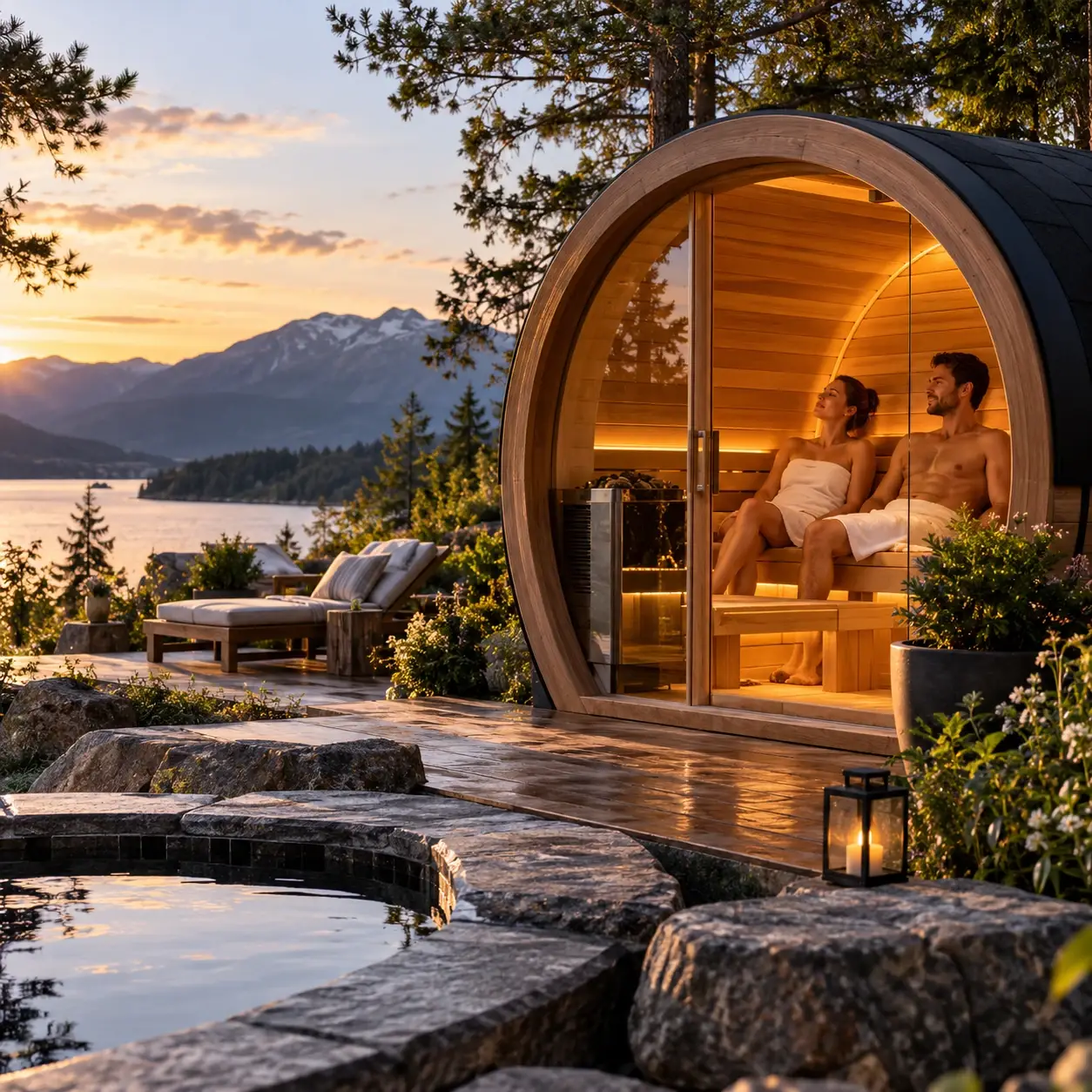
How to Choose Between an Indoor and Outdoor Sauna
- Decide how often you expect to use it.
Frequent short sessions often favor easy indoor access. - Identify realistic locations.
Compare suitable indoor rooms with actual outdoor sites. - Check electrical access.
The distance from the electrical panel can significantly affect installation. - Check the delivery path.
Measure doors, stairs, hallways, gates and backyard access. - Compare preparation work.
Indoor renovation may be more expensive than an outdoor base, or the reverse. - Evaluate climate exposure.
Outdoor construction should match the local environment. - Review permits and property restrictions.
Check electrical, building, zoning, setback and association requirements where applicable. - Estimate ongoing maintenance.
Include exterior finishes and roof care for an outdoor sauna. - Compare total installed cost.
Do not compare sauna cabin prices alone. - Choose the location you will actually use.
Convenience and lifestyle fit often determine long-term satisfaction.
| Your Priority | Likely Direction |
|---|---|
| Frequent weekday use | Indoor |
| Easy access to a shower | Indoor |
| Lowest weather exposure | Indoor |
| Preserve interior space | Outdoor |
| Dedicated backyard retreat | Outdoor |
| Cold plunge or outdoor shower integration | Outdoor |
| Lowest exterior maintenance | Indoor |
| More freedom for cabin size | Outdoor, when property conditions allow |
Compare the Locations Before You Buy
Get Help Planning an Indoor or Outdoor Sauna
Sauna & Steam Center can help evaluate indoor rooms and outdoor sites, heater requirements, electrical access, delivery, ventilation, foundations, weather exposure and installation scope before you select your sauna.
Frequently Asked Questions About Indoor vs Outdoor Saunas
Outdoor vs indoor sauna: which is better?
Indoor is usually better when convenience, frequent use, shower access and lower weather exposure are priorities. Outdoor is usually better when you want more space, privacy, backyard atmosphere and design freedom.
Indoor vs outdoor sauna: what are the main differences?
The main differences are installation, site preparation, weather exposure, maintenance, electrical routing, available space and convenience. Either location can provide an excellent sauna environment when designed correctly.
What are the pros and cons of indoor vs outdoor saunas?
Indoor saunas offer easier access and lower exterior-maintenance requirements but consume indoor space. Outdoor saunas preserve interior space and create a dedicated retreat but require weather-resistant construction, site preparation and more exterior maintenance.
How do outdoor saunas work?
Outdoor saunas create the same basic heated sauna environment as indoor saunas, but the room is built or manufactured to operate as an exterior structure with appropriate roofing, base, finishes, drainage and utilities.
How do outdoor saunas compare to indoor saunas in the United States?
Both can work well. U.S. homeowners should compare climate, available space, electrical access, local building requirements, setbacks, delivery routes, maintenance and expected frequency of use.
How do indoor saunas compare to outdoor saunas for installation?
Indoor saunas may require framing, flooring, ventilation and electrical work through finished areas. Outdoor saunas may require a foundation or platform, drainage, exterior weather protection, trenching and additional site preparation.
How do indoor and outdoor saunas compare for maintenance?
Both require interior cleaning and heater maintenance. Outdoor saunas also require periodic inspection of the roof, exterior finish, seals, drainage, base, fasteners and other weather-exposed materials.
How do weather conditions affect outdoor saunas?
Weather can affect roofing, exterior finishes, drainage, seals, hardware and maintenance. Cold conditions may also affect warm-up requirements, while hot, humid and coastal environments create different exterior-material concerns.
Can I put an indoor sauna outside?
Only if the manufacturer specifically approves the model for that installation. Indoor sauna cabins may not have the roofing, exterior finishes, base design or electrical protection required for outdoor exposure.
Can I put an indoor sauna on a covered patio?
A covered patio does not automatically make an indoor sauna suitable for exterior placement. Humidity, temperature changes, wind-driven rain and condensation may still affect the cabin. Follow the manufacturer’s location requirements.
Is an indoor sauna cheaper than an outdoor sauna?
Not always. Indoor projects can become expensive when substantial renovation or electrical work is required. Outdoor projects can become expensive when foundations, drainage, trenching, roofing or difficult delivery are involved.
Are outdoor saunas harder to maintain?
They generally require more exterior maintenance because of weather exposure, but a properly constructed outdoor sauna with a good base, roof and exterior finish can be straightforward to maintain.
Is Florida humidity bad for an outdoor sauna?
Florida humidity does not prevent outdoor sauna ownership. It increases the importance of drainage, ventilation, roofing, weather-resistant exterior finishes and appropriate hardware, particularly in coastal areas.
Is sitting in Florida heat the same as using a sauna?
No. Outdoor weather is uncontrolled and varies with humidity, sun, shade and wind. A sauna is a purpose-built enclosed environment with a controlled heater and ventilation system.
Which sauna is better for frequent use?
Indoor often has the advantage because it reduces friction and makes it easier to use the sauna regardless of rain, darkness or outdoor weather.
Which is better for a backyard wellness setup?
Outdoor often has the advantage because it can integrate with cold plunges, outdoor showers, pools, seating, privacy features and landscaping without using interior floor space.
Conclusion: Outdoor vs Indoor Sauna Comes Down to Location, Climate and Routine
The outdoor vs indoor sauna decision is less about which sauna can produce better heat and more about which installation makes sense for your property.
An indoor sauna usually provides easier access, lower weather exposure and less exterior maintenance.
An outdoor sauna usually provides greater space flexibility, privacy and a stronger backyard retreat experience.
The right choice depends on electrical access, delivery, site preparation, climate, maintenance, permits, available space and how often you expect to use the sauna.
Bottom line:
Choose indoor when convenience and frequent use are your priorities. Choose outdoor when space, privacy and a dedicated wellness environment matter more. Do not place an indoor-rated sauna outdoors unless the manufacturer specifically permits it, and compare total installation and maintenance requirements before choosing either location.
References
Finnleo
Indoor and outdoor sauna installation manuals and owner resources. Finnleo publishes separate installation documentation for traditional indoor and outdoor sauna systems.
Finnleo
Euro Outdoor Sauna Installation and Operating Instructions.
Outdoor installation guidance covering level supporting surfaces, clearances, anchoring, electrical installation, exterior protection and ventilation.
Hussain J, Cohen M.
Clinical Effects of Regular Dry Sauna Bathing: A Systematic Review.
Laukkanen JA, et al.
Cardiovascular and Other Health Benefits of Sauna Bathing.
Mayo Clinic Proceedings. 2018.