Sauna Heater Guide: How to Choose the Right Sauna Heater for Your Home
Editorial disclosure: Sauna & Steam Center sells, designs, installs, and services sauna systems. Product and installation guidance in this article reflects our first-hand industry experience. Technical requirements should always be confirmed against the heater manufacturer’s instructions and applicable local requirements.
Quick Answer: What Is the Best Sauna Heater?
Sauna heater selection starts with proper sizing. The best heater is one that matches the sauna room’s adjusted volume, surface materials, location, ventilation, electrical or chimney requirements, and the heat experience you want. For most residential indoor saunas, an electric sauna heater is the most practical choice because it offers predictable operation, steady temperature control, and relatively simple maintenance. Wood-burning heaters are better suited to buyers who specifically want a traditional fire-based experience and have the space and infrastructure for a chimney, combustible clearances, fuel storage, and additional maintenance.
Stone capacity, controls, serviceability, and installation requirements matter too. A premium heater can still perform poorly when it is undersized, oversized, paired with the wrong stone load, or installed in a room with substantial glass, tile, stone, or other surfaces that increase heating demand.
A sauna heater is the heart of a traditional sauna. It controls how quickly the room heats, how evenly warmth spreads, how the stones respond to water, and how comfortable each session feels. If you are shopping for one, you are probably comparing heater size, electric versus wood-burning options, stone capacity, controls, installation requirements, and total project cost.
If you are still comparing complete sauna setups, our home sauna buying guide explains how heater selection fits into the larger buying process. If you are planning a complete installation, see our sauna installation in South Florida page for professional planning, equipment selection, and installation support.
Key Takeaways
- A sauna heater should be chosen based on room volume, surface materials, heater type, and installation conditions.
- Electric sauna heaters are usually the best fit for most indoor residential saunas.
- Wood-burning sauna heaters create a more traditional experience but require more planning, fuel storage, venting, and safety care.
- Glass doors, windows, stone, tile, concrete, and log walls can increase the heater power your sauna needs.
- Stone capacity affects how soft, full, and steady the heat feels.
- Controls, serviceability, clearance requirements, and ventilation should be considered before purchase.
- The best value usually comes from choosing the right fit, not simply the cheapest sauna heater.
What Is a Sauna Heater?
A sauna heater is the heat source inside a traditional sauna. Its job is to warm the room, heat the sauna stones, and create the dry heat and steam response people expect from a traditional sauna experience. When water is poured over hot sauna stones, the heater and stones work together to create a temporary burst of humidity often called löyly.
The heater is not just a technical component. It affects warmup time, heat recovery, steam quality, comfort, energy use, maintenance, and long-term satisfaction.
Bottom line: the sauna heater is the part of a traditional sauna that most directly controls how the room heats and how the heat feels.
How Does a Sauna Heater Work?
A traditional sauna heater warms electric heating elements or a wood-fired chamber, which then heats the sauna stones and the air around them. The stones store heat and help shape the sauna’s heat and humidity response. When water is added to approved hot stones, the stored heat vaporizes part of the water and briefly increases humidity.
This is different from a steam room. A sauna heater creates a hot, mostly dry environment with temporary humidity from water on the stones. A steam generator is designed to create a continuously high-humidity steam room environment. If you are comparing those experiences, see our sauna vs. steam room comparison.
What Are the Main Types of Sauna Heaters?
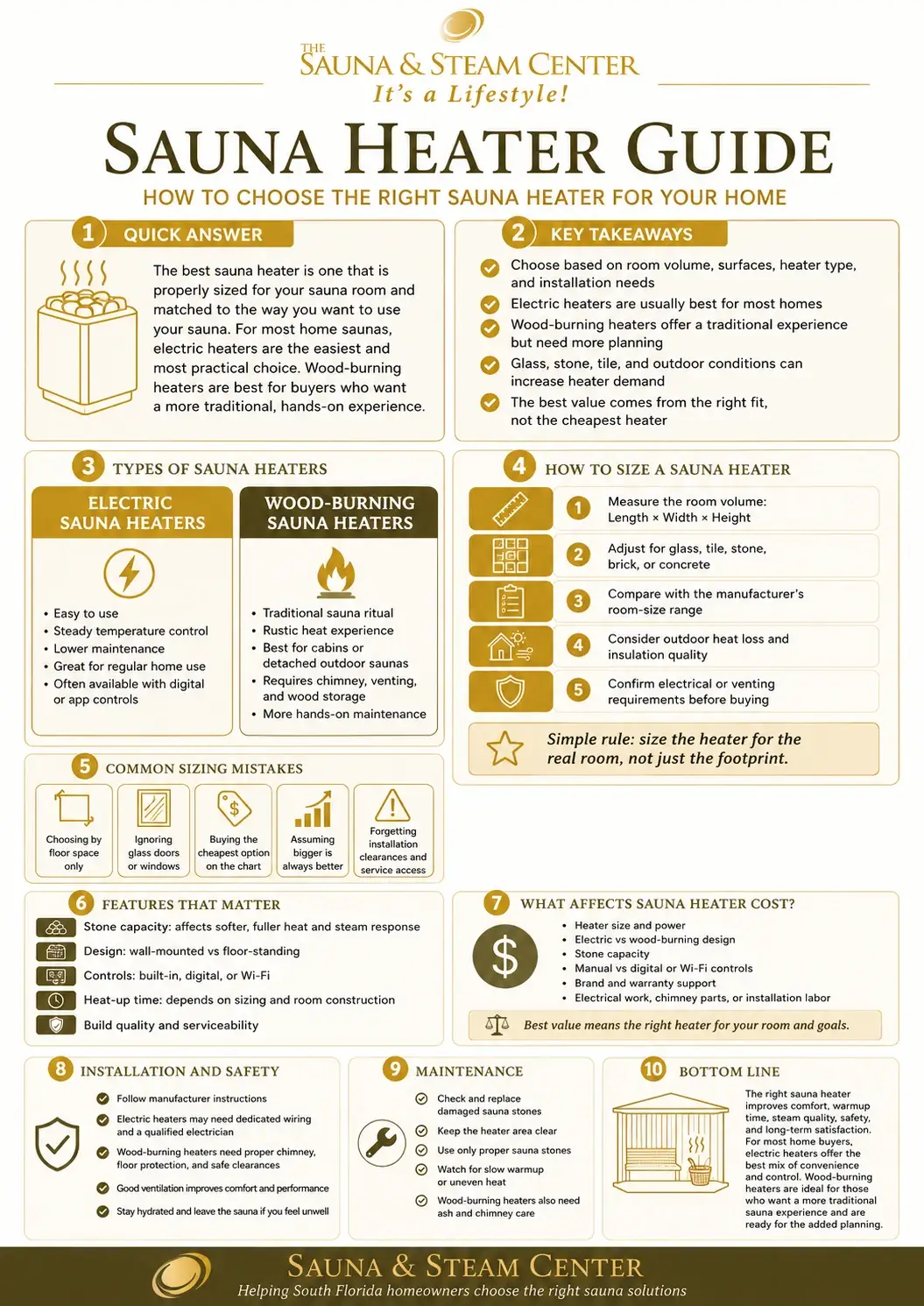
Most residential buyers are choosing between electric sauna heaters and wood-burning sauna heaters. Gas heaters are also used in some commercial or specialty applications, but electric and wood-burning models are the most common choices for home sauna projects.
For hotels, gyms, wellness facilities, and other high-use environments, see our commercial sauna installation guide for hotels and gyms.
Electric Sauna Heaters
Electric sauna heaters use electric heating elements to warm the stones and sauna room. They are popular because they are simple to operate, easy to control, and practical for many indoor and outdoor residential saunas. Depending on the model, they may use built-in controls, external digital controls, timers, or app-based features.
An electric sauna heater is often the best choice if you want a sauna that is easy to use several times per week. You do not need to build a fire, store wood, clean ash, or manage a chimney. You turn the heater on, allow the sauna to warm, and use the controls to manage the session.
Wood-Burning Sauna Heaters
Wood-burning sauna heaters use firewood to heat the stones and room. They appeal to people who want a more traditional and hands-on sauna experience. The fire, wood fuel, and slower process of heating the room can be part of the experience.
Wood-burning heaters usually require more planning. The project may require an appropriate chimney or flue system, combustible clearances, fire-safe materials, fuel storage, and careful attention to combustion safety. These heaters are often a better fit for cabins, rural properties, detached outdoor saunas, or homeowners who specifically want a wood-fired sauna.
Indoor vs. Outdoor Sauna Heaters
Indoor and outdoor saunas can use electric or wood-burning heaters, but the installation conditions differ. Outdoor saunas can begin at lower temperatures and experience more environmental heat loss. Indoor saunas often require careful electrical planning, ventilation, and integration with surrounding rooms.
Before choosing a heater, confirm that the model is appropriate for the sauna location and that the installation follows the manufacturer’s requirements.
Electric vs. Wood-Burning Sauna Heaters: Which Should You Choose?
Both electric and wood-burning sauna heaters can create a traditional sauna experience. The better choice depends on your property, your preferred routine, and how much daily involvement you want.
| Factor | Electric Sauna Heater | Wood-Burning Sauna Heater |
|---|---|---|
| Daily operation | Simple switch, timer, or digital control | Requires building and tending a fire |
| Best fit | Most residential indoor saunas | Detached, outdoor, rural, or traditional projects |
| Fuel or utility | Electricity | Firewood |
| Installation planning | Electrical circuit, controls, clearances, ventilation | Chimney, clearances, floor and wall protection, ventilation |
| Maintenance | Stone care, elements, controls, sensors | Stone care, ash, firebox, chimney, fuel management |
Choose an Electric Sauna Heater If:
- You want simple, predictable operation.
- You plan to use the sauna regularly at home.
- You prefer digital controls, timers, or remote features.
- You do not want to store firewood or clean ash.
- Your sauna is indoors or close to the home.
- You want a lower-maintenance ownership experience.
Choose a Wood-Burning Sauna Heater If:
- You want a more traditional sauna ritual.
- Your sauna is detached, outdoor, rural, or cabin-based.
- You enjoy building and tending a fire.
- You have space for firewood storage.
- You can properly plan for chimney, venting, clearances, and fire safety.
- You are comfortable with more hands-on maintenance.
Which Sauna Heater Is Better for Most Homes?
For most home sauna buyers, electric is usually the more practical choice. It is easier to start, schedule, control, and integrate into a residential routine. Wood-burning heaters can be excellent, but they are best for buyers who specifically want the fire-based process and are prepared for the additional installation and maintenance needs.
If you are still deciding whether a heater-based sauna is right for you, our guide to infrared vs. traditional sauna can help you compare the main sauna types.
How Do You Size a Sauna Heater?
Sauna heater sizing is one of the most important parts of the buying process. A heater that is too small may struggle to heat the room. A heater that is too large can be a poor match for the sauna and may behave differently than intended. The goal is not to buy the biggest heater. The goal is to select a heater within the manufacturer’s recommended range for the real room.
Step 1: Calculate Sauna Room Volume
Start by measuring the inside of the sauna room:
- Length
- Width
- Height
Formula: Length × Width × Height = sauna room volume.
For example, a sauna that is 6 feet long, 5 feet wide, and 7 feet high has a room volume of 210 cubic feet.
Step 2: Account for Glass and Heat-Storing Surfaces
Room volume is only the starting point. Glass doors, windows, tile, concrete, stone, brick, and log walls can increase the heating load. These surfaces do not behave like insulated wood walls, so the heater may need to be sized for a larger effective room volume.
This is why two saunas with the same floor dimensions can require different heaters. A small sauna with a large glass wall can create a greater heating demand than a slightly larger sauna with well-insulated wood walls.
Step 3: Check the Manufacturer’s Heater Range
Every sauna heater should specify a minimum and maximum room size. Choose a model that fits the adjusted room volume and follow the manufacturer’s sizing method. Do not rely on a generic rule when the manufacturer provides model-specific guidance.
Step 4: Think About Outdoor Conditions
Outdoor saunas may require more careful sizing because they can start colder and lose heat differently. Insulation quality, climate, door size, glass area, and how often the door opens can all affect performance.
Step 5: Confirm Electrical or Venting Requirements
Before purchasing the heater, confirm that the property can support the installation. Electric heaters may require a dedicated electrical circuit and professional electrical work. Wood-burning heaters need appropriate venting, chimney planning, floor protection, and safe clearances.
Simple rule: size the heater for the actual sauna room and manufacturer requirements, not just the floor area.
What Are the Most Common Sauna Heater Sizing Mistakes?
Mistake 1: Choosing by Floor Space Only
Floor space does not tell the full story. Sauna heater sizing depends on cubic volume, not only square footage. Ceiling height matters because the heater must warm the full air volume of the room.
Mistake 2: Ignoring Glass Doors and Windows
Glass changes the heating demand. A full glass door, large window, or glass wall can make the sauna harder to heat. Ignoring glass can lead to a heater that appears correct on a simple chart but underperforms in the finished room.
Mistake 3: Buying the Cheapest Heater That Fits the Chart
A sauna heater is not simply a box that produces heat. Stone capacity, controls, build quality, service support, installation flexibility, and replacement-part availability can all affect ownership.
Mistake 4: Assuming Bigger Is Always Better
A much larger heater is not automatically better. The manufacturer’s room-size range exists for a reason. Select the heater for the room rather than assuming that more power always improves the sauna experience.
Mistake 5: Forgetting the Full Installation
The heater must fit the room and the installation. Wall-mounted heaters, floor-standing heaters, pillar heaters, and wood-burning stoves all have different clearance, wiring, control, ventilation, service, and placement requirements.
Which Sauna Heater Features Matter Most?
Once you know the correct size and heater type, compare the features that affect daily use and long-term service.
Stone Capacity
Stone capacity has a major effect on how a heater stores heat and responds when water is added. Stone type, size, quantity, condition, and placement also matter. Our complete sauna rocks guide explains how to choose, stack, inspect, and replace sauna heater stones correctly.
Wall-Mounted vs. Floor-Standing Design
Wall-mounted sauna heaters are compact and work well in many smaller rooms. Floor-standing and pillar-style heaters often hold more stones and can become a visible design feature. The right style depends on room size, bench layout, safety clearances, stone capacity, and the look you want.
Built-In vs. External Controls
Some heaters have built-in controls. Others use external digital controls. A basic control can be enough for occasional use, while an external control may offer easier access, more precise settings, or a cleaner room design.
Wi-Fi and App Controls
Wi-Fi controls are not necessary for every sauna, but they can be useful when the heater and installation are designed for remote operation. Always follow the heater manufacturer’s requirements for remote-start safety and control configuration.
Heat-Up Time
Heat-up time depends on heater size, sauna volume, insulation, starting temperature, stone mass, ventilation, and surface materials. A properly sized heater in a properly built room should perform more predictably than an undersized heater working against a high heating load.
Build Quality
A sauna heater operates in a demanding environment with high heat, moisture, repeated heating and cooling, and water contacting approved stones. Materials, design, component quality, and manufacturer support matter over time.
Serviceability
Sauna stones need care, and components such as elements, sensors, and controls may eventually require service. Before buying, consider whether replacement parts, support, documentation, and qualified service are accessible.
If you are comparing premium electric sauna options, our Finnleo sauna collection overview can help you see how heater design, controls, and full-system comfort work together.
How Much Does a Sauna Heater Cost?
The cost of a sauna heater depends on size, type, brand, stone capacity, controls, materials, and installation needs. Electric sauna projects may involve the heater, stones, controls, electrical work, and possible wiring or circuit upgrades. Wood-burning sauna projects may involve the stove, stones, chimney system, floor protection, wall protection, venting components, and additional labor.
The cheapest heater is not always the best value. A better value is a heater that is properly matched to the sauna, supported by available parts and service, and suitable for the way the owner plans to use it.
What Affects Sauna Heater Price?
- Heater power and room-size capacity
- Electric vs. wood-burning design
- Wall-mounted, floor-standing, or pillar style
- Stone capacity
- Manual, digital, Wi-Fi, or app-based controls
- Brand and warranty support
- Electrical, chimney, or ventilation requirements
- Installation labor
If you are planning the complete project budget, our guide on how much a sauna costs explains the bigger picture. You can also review our in-home sauna cost guide for residential budgeting or use the sauna cost calculator to estimate a project based on the type of sauna you are considering.
What Should You Know About Sauna Heater Installation and Safety?
Sauna heater installation should not be treated as an afterthought. The heater must be installed according to the manufacturer’s instructions and the requirements that apply to the property and installation.
Electric Sauna Heater Installation
Electric sauna heaters often require dedicated wiring and appropriate breaker sizing. Depending on the heater and jurisdiction, professional electrical installation may be required. The control, sensor, heater guard, clearances, wiring, and ventilation layout all matter.
Wood-Burning Sauna Heater Installation
Wood-burning sauna heaters require careful planning around chimney design, combustible clearances, floor protection, wall protection, air supply, and carbon monoxide safety. The stove and chimney must be installed correctly so combustion gases leave the building safely.
Ventilation
Ventilation helps the sauna perform properly and can support a more comfortable environment. The correct ventilation layout depends on the heater, sauna design, and manufacturer guidance.
Clearances
Every heater has required clearances from walls, benches, guards, ceilings, and other surfaces. Never guess. Use the manufacturer’s published clearance requirements for the exact heater model.
User Safety
A sauna is a form of heat exposure. Stay hydrated, pay attention to how you feel, and leave the sauna if you become dizzy, weak, nauseous, or uncomfortable. People with medical concerns, pregnancy, cardiovascular conditions, blood pressure concerns, or medications that affect heat tolerance should seek guidance from a qualified healthcare professional before regular sauna use.
For buyers planning the room itself, our guide on how to build a sauna at home explains how heater selection fits into the larger installation plan. If you want the heater, controls, ventilation, clearances, and room construction evaluated as one system, learn more about our professional sauna installation services in South Florida.
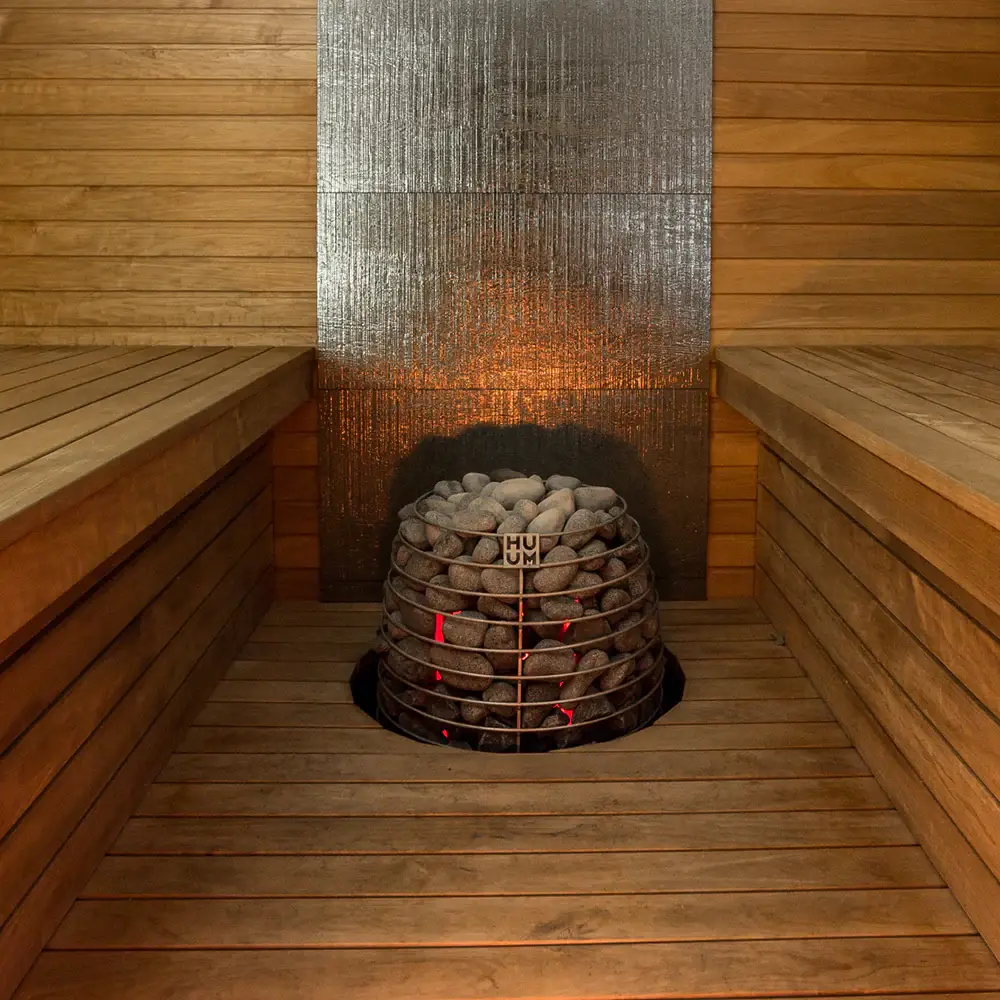
How Do You Maintain a Sauna Heater?
A sauna heater does not need complicated daily care, but it does need regular inspection and basic maintenance to keep the system performing as intended.
Check the Sauna Stones
Sauna stones can crack, weaken, crumble, or settle over time. Damaged stones should be removed and replaced according to the heater manufacturer’s guidance. Stones may also need to be rearranged so air can move correctly through the heater. For a broader ownership checklist, see our sauna maintenance guide.
Keep the Heater Area Clear
Do not store towels, buckets, oils, clothing, or other items against or too close to the heater. Maintain the clearances specified by the manufacturer.
Use the Right Stones
Only use sauna stones that meet the heater manufacturer’s specifications. Random landscaping, river, beach, or field stones should not be substituted for approved sauna stones.
Inspect Controls and Heating Performance
If the heater takes much longer than usual to warm the room, repeatedly trips a breaker, produces uneven heat, or shows signs of damage, stop using it until the problem is evaluated. If troubleshooting points to the heater, elements, controls, or sensors, review our sauna heater repair and replacement service information.
Wood-Burning Heater Maintenance
Wood-burning heaters also require ash removal, firebox care, chimney inspection, and attention to creosote and fuel quality. Follow the stove and chimney manufacturer’s maintenance guidance.
What Our Sauna Experience Since 2004 Has Taught Us About Heater Selection
In our experience designing, installing, and servicing sauna systems, heater selection works best when it is treated as part of the complete room rather than as a separate purchase. Room volume matters, but so do glass area, insulation, bench layout, ventilation, control location, available electrical service, stone capacity, clearances, maintenance access, and how frequently the sauna will be used.
A heater that looks attractive or has the highest power rating is not automatically the right heater. The better approach is to start with the room and usage requirements, confirm the manufacturer’s sizing and installation specifications, then compare heater features within that appropriate range.
For owners and builders, this also makes future service easier. A heater with accessible parts, correct stone loading, adequate ventilation, and a well-planned control system is generally easier to inspect and maintain than a system where those details were considered only after the sauna was built.
Sauna Heater Buying Checklist
Before ordering a sauna heater, confirm the following:
- Interior sauna dimensions and calculated room volume
- Glass, tile, stone, concrete, brick, or other heat-load surfaces
- Indoor or outdoor installation location
- Electric, wood-burning, or specialty heater type
- Manufacturer-recommended room-size range
- Required electrical service or chimney configuration
- Required clearances and heater-guard requirements
- Ventilation requirements
- Stone type, size, quantity, and capacity
- Built-in or external control requirements
- Availability of replacement elements, sensors, controls, and stones
- Installation and future service access
If several of these items are still uncertain, it is usually better to resolve them before purchasing the heater rather than trying to adapt the room around the wrong model afterward.
The Bottom Line on Choosing a Sauna Heater
The right sauna heater is the heater that fits the complete room and installation. Start with adjusted room volume, then account for glass and other heat-load surfaces, heater type, stone capacity, controls, electrical or chimney requirements, ventilation, clearances, serviceability, and the way you expect to use the sauna.
For most residential buyers, electric heaters offer the simplest ownership experience. Wood-burning heaters can be a strong choice when the property and owner are suited to the additional chimney, fuel, fire, and maintenance requirements.
Plan the Heater and Sauna as One System
Need Help Choosing or Replacing a Sauna Heater?
Sauna & Steam Center can help you evaluate room size, heater capacity, controls, stone requirements, ventilation, installation conditions, and future service before you commit to a system.
Frequently Asked Questions About Sauna Heaters
What size sauna heater do I need?
You need a sauna heater sized to the interior volume of your sauna room, with adjustments for glass, stone, tile, concrete, brick, log walls, outdoor conditions, and insulation quality. Always compare your adjusted room size to the manufacturer’s recommended heater range.
Is an electric sauna heater better than a wood-burning sauna heater?
Electric sauna heaters are better for most home buyers because they are easier to operate, easier to control, and simpler to maintain. Wood-burning heaters are better for buyers who want a traditional fire-based sauna and can handle the added installation and maintenance needs.
Can a sauna heater be too powerful?
Yes. A heater that is much too powerful can heat the air too quickly, feel less balanced, or make temperature control harder. A properly matched heater is better than simply choosing the largest option.
Can a sauna heater be too small?
Yes. An undersized heater may heat slowly, struggle to maintain temperature, reduce steam quality, and work harder than it should. This can lead to poor performance and possible long-term wear.
How long does a sauna heater take to warm up?
Warmup time depends on room size, heater power, insulation, outdoor temperature, stone mass, and surface materials. A properly sized heater in a well-built sauna should warm the room more efficiently than an undersized heater in a heat-hungry room.
Do sauna stones really matter?
Yes. Sauna stones help store and release heat. They also affect the quality of steam when water is added. Good stones and proper stone placement can make the heat feel fuller and more comfortable. For stone types, sizing, stacking, and replacement guidance, read our complete sauna rocks guide.
Do I need Wi-Fi controls for a sauna heater?
Not always. Wi-Fi controls are useful if they make the sauna easier to use. If remote start, scheduling, or app control helps you use the sauna more often, the feature may be worth it.
Can I install a sauna heater myself?
Some parts of sauna planning can be DIY-friendly, but heater installation often requires professional help. Electric heaters may require a licensed electrician. Wood-burning heaters require safe chimney and clearance planning. Always follow the manufacturer’s instructions and local code requirements.
How long does a sauna heater last?
Heater life depends on build quality, installation quality, usage, maintenance, stone care, and whether the heater was properly sized. A well-matched and well-maintained heater should provide years of use.
Is a sauna heater the same as a steam generator?
No. A sauna heater warms the air and stones in a traditional sauna. A steam generator creates high humidity for a steam room. They are different systems designed for different environments.
Conclusion: Choose the Sauna Heater That Fits the Room and the Way You Use It
The right sauna heater can make a major difference in warmup time, heat quality, steam response, convenience, safety, and long-term ownership. A good heater should match the room volume, surface materials, insulation, preferred heat style, and installation conditions.
For most home sauna buyers, an electric sauna heater offers a practical mix of convenience, control, and lower day-to-day maintenance. For buyers who want a traditional fire-based ritual and have the appropriate setting, a wood-burning sauna heater can be a good fit.
At Sauna & Steam Center, we help buyers compare sauna heaters, room designs, controls, stone loads, and full sauna systems so the final choice fits the project instead of forcing the project to fit the heater.
References
- Harvia Support: How do I select the correct heater power?
- HUUM: Sauna Heater Size Calculator.
- Centers for Disease Control and Prevention: Carbon Monoxide Poisoning Basics.
- U.S. Environmental Protection Agency: Wood Smoke and Your Health.
- Hussain J, Cohen M. Clinical Effects of Regular Dry Sauna Bathing: A Systematic Review.
- Laukkanen T, Khan H, Zaccardi F, Laukkanen JA. Association Between Sauna Bathing and Fatal Cardiovascular and All-Cause Mortality Events.
- Harvard Health Publishing: Saunas and Your Health.