
Massage and Sauna: Best Order, Benefits, Timing, and Safety
Editorial disclosure: Sauna & Steam Center sells, designs, installs, and services sauna and steam systems. Product and installation guidance reflects our first-hand industry experience. This educational article is not medical advice, has not been medically reviewed, and does not replace guidance from a qualified healthcare professional or licensed massage therapist.
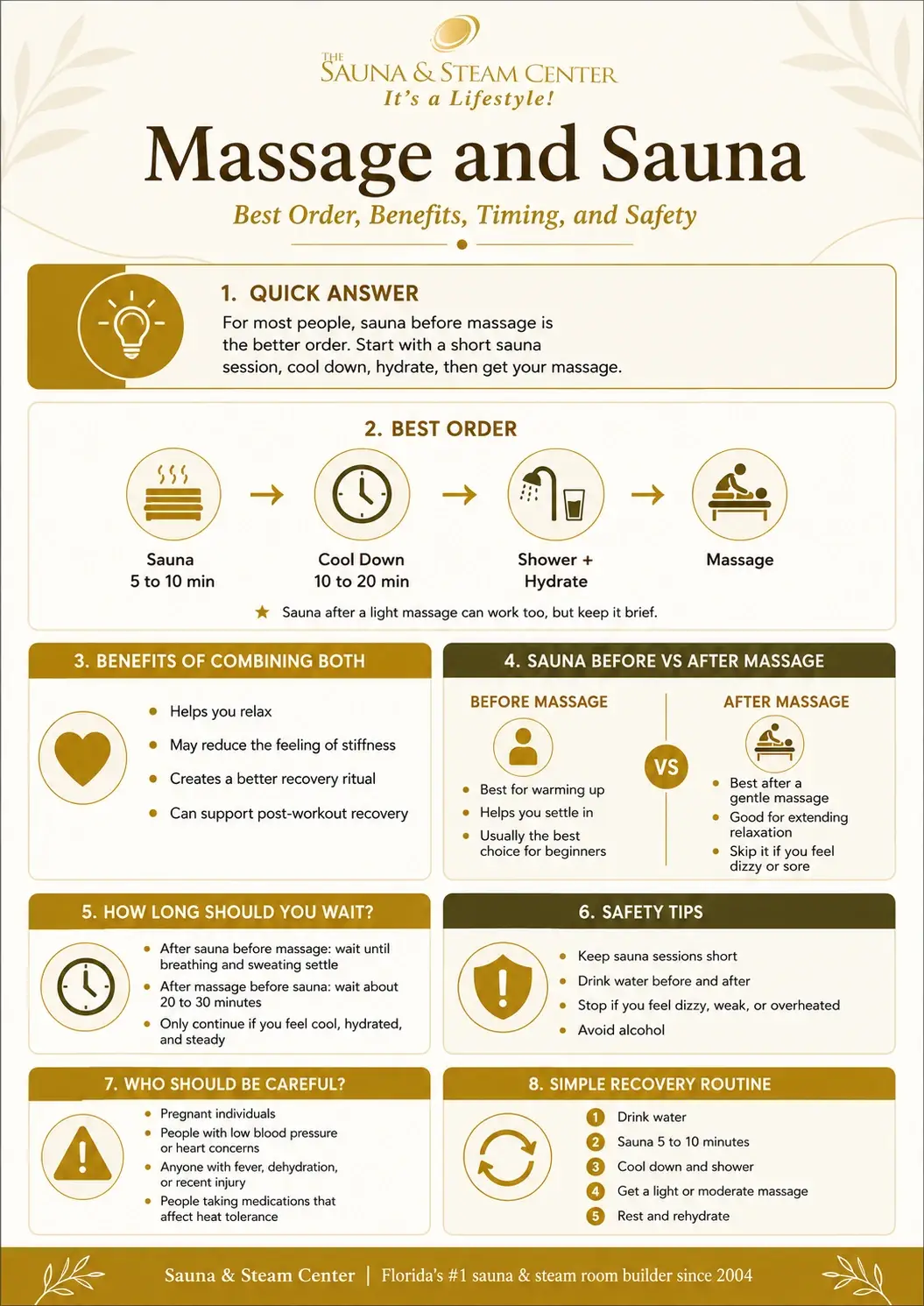
For most healthy adults, the most practical massage and sauna sequence is a short sauna session first, followed by a complete cool-down, shower, hydration, and then the massage. Using a sauna after a gentle massage can also be comfortable, but it adds more heat and circulatory stress, so it should be brief and skipped when you feel dizzy, dehydrated, unusually sore, weak, or overheated.
Massage and sauna can be combined during the same wellness or recovery session, but the order, intensity, and timing matter. Sauna heat may help you arrive at the massage table feeling warm and relaxed, while massage may support short-term comfort and reduce the perception of muscle soreness for some people.
This guide explains whether to use a sauna before or after a massage, how long to wait, what benefits are realistic, who should be careful, and how to plan a simple routine. New sauna users should also review our guide on how to use a sauna safely and comfortably before combining heat exposure with another recovery practice.
Direct research comparing sauna-before-massage with massage-before-sauna is limited. The sequence recommendations in this article are conservative practical guidance based on the known effects of heat, massage research, general safety guidance, and real-world comfort considerations. Stop immediately if you develop dizziness, nausea, chest discomfort, confusion, unusual weakness, or difficulty cooling down.
Key Takeaways
- For most healthy adults, a short sauna session before massage is the most practical starting sequence.
- Cool down fully, stop heavy sweating, shower, and drink water before getting on the massage table.
- There is no universal medically established waiting period between sauna and massage.
- Use shorter heat exposure and moderate massage pressure when combining both on the same day.
- Skip the combination and seek individualized advice when you have cardiovascular concerns, symptomatic low blood pressure, pregnancy, a suspected blood clot, an acute injury, illness, or medication that affects heat tolerance.
Should You Use a Sauna Before or After a Massage?
Use the sauna before the massage when your goal is to arrive feeling warm, calm, and less stiff. Begin with approximately 5 to 10 minutes of comfortable heat, then leave the sauna, cool down, drink water, take a quick shower, and begin the massage only after your breathing, balance, and heart rate feel normal.
Sauna after massage is optional. It is most suitable after a gentle relaxation massage when you feel alert, hydrated, cool, and physically steady. It is usually better to skip immediate heat after deep-tissue massage, sports massage, hot stone massage, extensive trigger-point work, a demanding workout, or any session that leaves you tender or lightheaded.
Sauna first is the better default for most people. Massage first can still work, but the post-massage sauna should be treated as a brief optional add-on, not a required second treatment.
Can You Combine Massage and Sauna in One Session?
Yes. Massage and sauna can be used during the same visit when you tolerate heat well, have no relevant medical restrictions, and reduce the intensity of each practice. Sauna creates passive heat exposure that increases skin temperature, sweating, and cardiovascular demand. Massage uses manual pressure and movement to support relaxation, comfort, and recovery.
The practices are different, but they can complement each other. The safest approach is not to maximize both. A long, very hot sauna followed by the deepest massage available can create more dehydration, fatigue, and tenderness than a person expects.
For a broader explanation of supported benefits and common exaggerations, read our guide to sauna benefits and realistic expectations.
How Do Massage and Sauna Affect Your Body?
A sauna and a massage create different forms of physical stress. Heat raises skin temperature, increases sweating, changes circulation, and often increases heart rate during the session. Massage applies mechanical pressure to muscles and soft tissues and may affect perceived tension, soreness, relaxation, and short-term range of motion.
What Happens During Sauna Heat?
Blood vessels near the skin widen as your body attempts to release heat. Heart rate commonly rises, and blood pressure may change during and after the session. These responses help explain why some people feel calm and warm afterward, while others can feel lightheaded, tired, or unsteady if the session is too hot, too long, or completed while dehydrated.
What Happens During Massage?
Massage can support relaxation and may modestly reduce perceived post-exercise soreness. However, pressure that is too intense can leave treated areas tender. A person who is already overheated or dehydrated may also find it harder to relax comfortably on the table.
- Heat can make the body feel warmer and less stiff before hands-on treatment.
- Massage may help some people feel less sore, but it does not repair every injury.
- Combining both can increase fatigue, sweating, and changes in blood pressure.
- The goal should be comfort and recovery, not the maximum possible amount of heat or pressure.
What Does the Evidence Say About Massage and Sauna?
Massage and sauna have been studied separately far more often than they have been tested as one combined sequence. Systematic reviews suggest that massage can reduce perceived delayed-onset muscle soreness after strenuous exercise, although effects on strength, performance, and biological markers are less consistent. Heat therapy may also reduce soreness in some settings, but results depend on timing, temperature, duration, and the type of heat used.
Sauna studies show clear short-term cardiovascular responses, including increased heart rate and changes in blood pressure. This supports the need for cooling time and caution when another relaxing or physically demanding treatment follows. It does not prove that sauna makes massage more effective, accelerates healing, or creates a superior recovery outcome for every person.
How We Evaluated the Information
We gave the most weight to systematic reviews, meta-analyses, PubMed-indexed research, and safety guidance from organizations such as the National Center for Complementary and Integrative Health and the American College of Obstetricians and Gynecologists. We treated spa traditions, anecdotal experiences, and claims about detoxification or guaranteed healing more cautiously.
A reasonable heat-first sequence is based on physiology, comfort, and risk management, not on a large body of trials directly comparing both orders. Treat the timing recommendations as conservative starting points and adjust them according to your response and professional guidance.
5 Potential Benefits of Combining Massage and Sauna
1. A More Relaxed Starting Point
Quiet heat can help create a transition away from work, exercise, or daily stress. People who need time to mentally settle into a massage may find a short sauna session useful, provided they cool down completely before treatment.
2. A Warm, Less Stiff Feeling Before Massage
Heat increases skin temperature and may temporarily change how tight or stiff the body feels. This can improve comfort at the beginning of the appointment, but it should not be confused with diagnosing or healing an injury.
3. A Structured Recovery Ritual
A planned sequence of heat, cooling, showering, hydration, and massage can encourage people to slow down and give recovery more attention. The structure may be as valuable as any single treatment.
4. Short-Term Relief From Perceived Soreness
Research suggests massage may modestly reduce delayed-onset muscle soreness, while heat can feel soothing in certain recovery settings. The combination may improve comfort, but it does not replace sleep, hydration, food, appropriate training load, physical therapy, or injury care.
5. Extended Relaxation After a Gentle Session
Experienced sauna users may enjoy a brief sauna after a light relaxation massage. This option has a narrower margin for error because massage may already leave you deeply relaxed and heat can add fatigue, sweating, or lightheadedness.
How Long Should You Wait Between a Sauna and Massage?
There is no universal research-backed waiting period that applies to everyone. Your recovery signs matter more than the clock. Do not move into the next treatment simply because a preset number of minutes has passed.
Waiting After Sauna Before Massage
After a short sauna session, many healthy adults may need approximately 10 to 20 minutes to cool down, shower, hydrate, and stop heavy sweating. Longer or hotter sessions may require considerably more time. Begin the massage only when your breathing feels normal, your balance is steady, and you no longer feel overheated.
Waiting After Massage Before Sauna
After a gentle massage, approximately 20 to 30 minutes is a conservative practical minimum, not a medical rule. Wait longer or skip the sauna after deep-tissue work, hot stone massage, sports massage, strong trigger-point work, significant tenderness, dizziness, recent injury treatment, or use of topical products that may react poorly to heat.
Sauna Before Massage vs. Sauna After Massage
The main difference is whether heat prepares you for the massage or adds another physical demand after treatment. For beginners, heat first generally offers more control because you can cool down and reassess before getting on the table.
| Option | How It Feels | Best For | Important Consideration |
|---|---|---|---|
| Sauna before massage | Warm, quiet preparation before hands-on treatment | Relaxation, a stiff feeling, and most first-time combinations | Allow enough time to cool down, hydrate, and shower |
| Sauna after massage | Extends the calm feeling after a gentle session | Experienced users after light relaxation massage | May add dehydration, fatigue, tenderness, or low blood pressure symptoms |
| Separate-day routine | Less total stress in a single visit | Deep-tissue work, demanding workouts, sensitive users, or uncertain tolerance | Requires more scheduling but provides the greatest recovery margin |
When Sauna Before Massage Is Better
Choose sauna first when you tolerate heat well, feel stiff at the beginning of massage, have enough time to cool down properly, and want a predictable sequence. Keep the heat comfortable rather than trying to sweat as much as possible.
When Massage First May Be Better
Choose massage first when the massage is the priority and the sauna is optional. This can work after gentle relaxation massage, but it is better to skip the heat when the treatment is intense, you feel sleepy or unstable, or the therapist used products that should be removed before heat exposure.
Massage and Sauna for Post-Workout Recovery
Combining an intense workout, a long sauna session, and a deep massage can create too much physical stress in one afternoon. After a moderate training day, a short sauna followed by a full cool-down and light massage may feel comfortable. After a heavy leg day, endurance event, competition, illness, or workout completed in hot weather, separating the treatments is often more sensible.
A Practical Post-Workout Sequence
- Complete your normal exercise cool-down.
- Wait for breathing and heart rate to settle.
- Replace fluids lost through sweat.
- Use a short, comfortable sauna session only if you feel stable.
- Cool down fully, shower, and reassess before massage.
- Choose light or moderate pressure instead of automatically requesting deep work.
For a closer review of exercise timing and heat exposure, see our guide to using a sauna after the gym. People considering contrast therapy should also review our guide to sauna and cold plunge benefits before adding a third recovery stressor.
How to Prepare for a Massage and Sauna Session
Preparation should reduce avoidable stress and make it easy to stop when your body is not responding well. Confirm the facility’s rules and tell the massage therapist that you plan to use or have already used the sauna.
- Drink water normally throughout the day instead of trying to correct dehydration immediately before the appointment.
- Eat a light meal or snack when you have not eaten for several hours.
- Avoid alcohol and recreational drugs before the session.
- Use a timer and begin with approximately 5 to 10 minutes of comfortable heat.
- Cool down, stop heavy sweating, shower, dry off, and drink water.
- Tell the therapist how long you used the sauna and request lighter pressure if you feel unusually warm or tired.
- Stand slowly after treatment and do not drive until you feel alert and steady.
Never try to push through dizziness, nausea, chest discomfort, confusion, severe headache, unusual weakness, or difficulty cooling down. Leave the heat, move to a cooler area, rest, and seek medical help when symptoms are severe or do not improve.
Sample Massage and Sauna Recovery Routines
These are conservative examples for generally healthy adults. Adjust them according to sauna type, temperature, massage intensity, personal experience, and advice from qualified professionals.
Routine 1: General Relaxation
- Drink water before beginning.
- Use the sauna for 5 to 10 minutes.
- Cool down for approximately 10 to 20 minutes.
- Shower and dry off.
- Receive a 45- to 60-minute light or moderate massage.
- Hydrate and recover at room temperature.
Best for: First-time combinations, stress relief, and a calm spa experience.
Routine 2: Tight Muscles Without an Acute Injury
- Use 5 to 8 minutes of comfortable sauna heat.
- Cool down fully and shower.
- Tell the therapist which areas feel restricted.
- Use moderate pressure rather than the deepest available pressure.
- Skip the post-massage sauna.
Best for: General neck, shoulder, back, or leg tightness that is not linked to a recent injury.
Routine 3: Massage First With Optional Heat
- Receive a gentle relaxation massage.
- Recover at room temperature for at least 20 to 30 minutes.
- Drink water and confirm that you feel alert and steady.
- Shower when massage products need to be removed.
- Use the sauna for no more than 5 to 10 minutes when first testing the routine.
- Cool down fully before leaving.
Best for: Experienced sauna users after a light massage.
Routine 4: Separate-Day Recovery
- Schedule deep-tissue or sports massage on one day.
- Evaluate soreness, hydration, and energy afterward.
- Use the sauna the following day only when you feel recovered and have no concerning symptoms.
Best for: Deep massage, demanding workouts, sensitive users, and anyone unsure about combining treatments.
Evidence at a Glance
This table separates findings supported by research from practical recommendations that are reasonable but not directly proven by studies of the exact combined routine.
| Claim, Feature, or Factor | Strength or Importance | Best Way to Understand It |
|---|---|---|
| Massage can reduce perceived post-exercise soreness | Moderate evidence | Benefits are more consistent for soreness than for strength or performance recovery |
| Sauna changes heart rate and blood pressure | Well supported | Heat creates real cardiovascular demand and should be followed by cooling and reassessment |
| Sauna before massage is the best order for everyone | Limited direct evidence | It is a practical default based on comfort and risk management, not a universal medical rule |
| Massage and sauna detoxify the body | Unsupported as commonly claimed | Sweating is primarily a temperature-control process and should not be marketed as a cure or cleanse |
| Cooling, showering, and hydration between treatments | Essential practical guidance | These steps reduce discomfort and help you assess whether you are ready for the next treatment |
Risks, Limitations, and Common Myths
What Is Well Supported
Sauna heat increases sweating and creates measurable cardiovascular changes. Massage can promote relaxation and may reduce perceived muscle soreness. Both can be useful comfort practices when performed appropriately.
What Is Mixed or Conditional
Recovery benefits depend on the person, massage technique, heat dose, hydration, exercise load, timing, and health status. A routine that feels restorative after a light workout may feel exhausting after intense exercise or deep-tissue treatment.
What Is Overstated or Unproven
The combination has not been proven to remove toxins, cure injuries, melt fat, prevent every type of soreness, or replace medical treatment. Heat can temporarily change body weight through fluid loss, but that is not the same as meaningful fat loss.
Possible Side Effects
- Dehydration, headache, cramps, or darker urine
- Dizziness, fainting, or symptoms related to low blood pressure
- Overheating, nausea, confusion, or unusual weakness
- Increased tenderness after intensive massage
- Skin irritation from oils, lotions, essential oils, medication patches, or topical pain products
The most useful benefits are relaxation, warmth, comfort, and a structured recovery ritual. More heat and more pressure do not automatically produce better results.
Who Should Use Caution or Ask a Healthcare Professional?
Seek individualized guidance before combining massage and sauna when a health condition, medication, pregnancy, recent procedure, injury, or history of heat intolerance could change your response. A licensed massage therapist should also be informed about relevant conditions before treatment begins.
- Unstable or uncontrolled cardiovascular disease
- Frequent fainting or symptomatic low blood pressure
- A suspected or diagnosed blood clot
- Pregnancy or recent childbirth
- Recent surgery, fracture, acute injury, or significant swelling
- Fever, infection, vomiting, diarrhea, or active dehydration
- Reduced sensation or a condition that affects sweating or temperature regulation
- Open wounds, burns, or active skin infection
- A history of heat illness
- Medication that affects blood pressure, hydration, sweating, alertness, or heat tolerance
Pregnancy
Pregnancy requires individualized guidance because overheating and massage positioning or technique may require special precautions. Review our guide to sauna use during pregnancy and speak with your prenatal healthcare professional before using a sauna.
Medication and Topical Products
Some medications affect sweating, blood pressure, hydration, alertness, or heat tolerance. Heat may also affect certain transdermal patches, and massage products can irritate skin when exposed to high temperatures. Ask the prescribing clinician, pharmacist, therapist, or facility staff instead of guessing.
What Our Experience Since 2004 Has Taught Us
Our first-hand expertise is in sauna design, installation, service, and room planning, not massage therapy. In residential and commercial wellness projects, the quality of the complete space often determines whether a massage and sauna routine feels convenient, safe, and easy to repeat.
The Cooling Area Matters as Much as the Sauna
A sauna should not open directly into a cramped path where the user must immediately navigate steps, slippery flooring, or furniture. A nearby room-temperature area with a stable seat, towel storage, drinking water, and a clear walking route makes cooling down more practical.
Shower Access Improves the Routine
A nearby shower makes it easier to remove sweat before massage and to remove oils or topical products before any optional post-massage heat. This is especially useful in home gyms, spa rooms, and commercial wellness spaces.
South Florida Requires Climate-Aware Planning
South Florida humidity, outdoor heat, heavy rain, and year-round air-conditioning use affect material selection, ventilation, moisture management, electrical planning, and the location of cooling areas. Indoor and outdoor projects should be designed around the full routine rather than the sauna cabin alone.
Sauna & Steam Center has served South Florida since 2004 and reports more than 500 residential and commercial installations. The company also maintains an A+ BBB rating. Project-specific claims, service details, and current credentials should remain consistent with the company’s verified website and business listings.
How to Plan a Home Recovery Space for Massage and Sauna
A home recovery area should support heating, cooling, showering, hydration, privacy, and safe movement. The right sauna type and room layout depend on available space, electrical service, preferred heat experience, climate exposure, and how often massage or exercise will be part of the routine.
- Is there enough room outside the sauna to cool down comfortably?
- Can users reach a shower without crossing slippery or obstructed flooring?
- Is the massage area separated enough from heat, moisture, and foot traffic?
- Are ventilation, electrical clearances, drainage, and manufacturer requirements addressed?
- Will the layout still be easy to clean, inspect, and service years from now?
| Your Main Goal | What to Prioritize | Recommended Next Step |
|---|---|---|
| Compact home wellness corner | Efficient footprint, nearby shower, safe cooling chair, and electrical compatibility | Compare compact traditional and infrared options |
| Home gym recovery room | Cooling space, hydration station, slip-resistant flooring, and separation from exercise equipment | Plan the entire traffic path before choosing the sauna size |
| Luxury residential or commercial spa | Privacy, ventilation, durable finishes, accessibility, service access, and user flow | Use a coordinated custom design and installation plan |
Compare heat experiences in our infrared vs. traditional sauna guide. For budget planning, use our sauna cost calculator, review our home sauna cost breakdown, and learn about sauna installation in South Florida.
Create a Complete Recovery Space
Plan a Sauna Around Your Wellness Routine
Sauna & Steam Center can help you compare prebuilt and custom sauna options while planning electrical requirements, ventilation, flooring, shower access, cooling space, and long-term service needs. The goal is a room that works comfortably for sauna use, exercise, massage, and everyday recovery.
Frequently Asked Questions About Massage and Sauna
Is it better to get a massage before or after a sauna?
For most healthy adults, sauna before massage is the more practical default sequence. Use a short 5-to-10-minute sauna session, cool down fully, shower, drink water, and begin the massage only after your breathing, balance, and heart rate feel normal. Sauna after massage can work after a gentle session, but it should be brief and skipped if you feel dizzy, dehydrated, unusually sore, weak, or overheated.
Can I go directly from the sauna to the massage table?
No. Allow time to cool down, stop heavy sweating, take a shower, drink water, and confirm that you feel steady before getting on the table. Moving directly from strong heat to massage can be uncomfortable and may increase lightheadedness.
How long should I use the sauna before a massage?
A conservative starting point is 5 to 10 minutes at a comfortable temperature. The goal is to become pleasantly warm, not exhausted or intensely sweaty. Leave immediately if you feel dizzy, nauseated, weak, confused, or uncomfortable.
How long should I wait after a massage before using a sauna?
There is no universal rule, but approximately 20 to 30 minutes after a light massage is a conservative practical minimum. Wait longer or skip the sauna after deep-tissue work, sports massage, hot stone massage, dizziness, or significant tenderness. Enter only when you feel cool, alert, hydrated, and physically steady.
Can I use a sauna after a deep-tissue massage?
It is often better to avoid immediate sauna use after an intense deep-tissue session. Rest, hydrate, and evaluate how your body feels. Schedule the sauna for another day when the treatment leaves you unusually tender, tired, or lightheaded.
Does sauna make massage more effective?
Heat may help you feel warmer, more relaxed, and less stiff before massage, but direct research proving that sauna makes massage more effective is limited. It is better viewed as a comfort and preparation strategy than as a guaranteed performance or healing enhancer.
Can massage and sauna help with muscle soreness?
Massage may modestly reduce delayed-onset muscle soreness and perceived fatigue. Heat may also feel soothing in some recovery settings, but neither treatment replaces sleep, hydration, nutrition, appropriate training load, physical therapy, or injury care.
Should I shower between the sauna and massage?
Yes. A quick shower after the sauna removes sweat, improves comfort for the therapist, and gives you another opportunity to assess whether you feel steady before beginning the massage.
Can I combine massage, sauna, and a cold plunge?
Combining all three increases the complexity and physical stress of the routine. Beginners should test each practice separately first. People with blood pressure or cardiovascular concerns should not rapidly alternate between extreme heat and cold without individualized medical guidance.
Can I drink alcohol before a massage and sauna session?
No. Alcohol can worsen dehydration, impair judgment, and make it harder to recognize overheating or instability. Reschedule the sauna portion when you have been drinking.
Can I use an infrared sauna before a massage?
Yes, provided you tolerate infrared heat and follow the same precautions. Use a short 5-to-10-minute session, cool down fully, hydrate, shower, and leave immediately if you experience dizziness, nausea, unusual weakness, or discomfort.
Can you get a hot stone massage and then use a sauna?
Hot stone massage already introduces substantial heat. Using a sauna immediately afterward may add fatigue, dehydration, and circulatory stress. When using both during one visit, the more conservative sequence is a short sauna first, a complete cool-down, and then the hot stone massage after discussing the plan with the therapist.
Conclusion: Use Sauna First, Then Cool Down Before Massage
Massage and sauna can create a comfortable recovery experience when each practice is used in moderation. For most healthy adults, the best starting sequence is a short sauna session first, followed by a complete cool-down, shower, hydration, and then a light or moderate massage.
Sauna after massage is optional and should be brief. Skip it after intensive bodywork, demanding exercise, dehydration, dizziness, unusual tenderness, illness, or any situation in which heat could create additional risk.
Pay attention to your response rather than trying to reach a specific amount of heat, sweat, pressure, or time. For a home setup, plan the cooling area, shower access, flooring, ventilation, electrical service, and massage space as one complete system.
References
- Massage Alleviates Delayed Onset Muscle Soreness After Strenuous Exercise: A Systematic Review and Meta-Analysis
- Effect of Sports Massage on Performance and Recovery: A Systematic Review and Meta-Analysis
- Heat and Cold Therapy Reduce Pain in Delayed Onset Muscle Soreness: A Systematic Review and Meta-Analysis
- Acute and Short-Term Efficacy of Sauna Treatment on Cardiovascular Function: A Meta-Analysis
- The Effect of Heat Therapy on Blood Pressure and Peripheral Vascular Function: A Systematic Review and Meta-Analysis
- National Center for Complementary and Integrative Health: Massage Therapy, What You Need To Know
- National Center for Complementary and Integrative Health: Massage Therapy for Health, What the Science Says
- American College of Obstetricians and Gynecologists: Can I Use a Sauna or Hot Tub Early in Pregnancy?