
Is Sauna Good for a Fever? Sauna, Steam Room & Sick-Day Safety
Editorial disclosure: This article is educational, not medical advice, and has not been medically reviewed. Published research and official health guidance are separated from our practical sauna-industry observations.
Quick Answer: Is Sauna Good for a Fever?
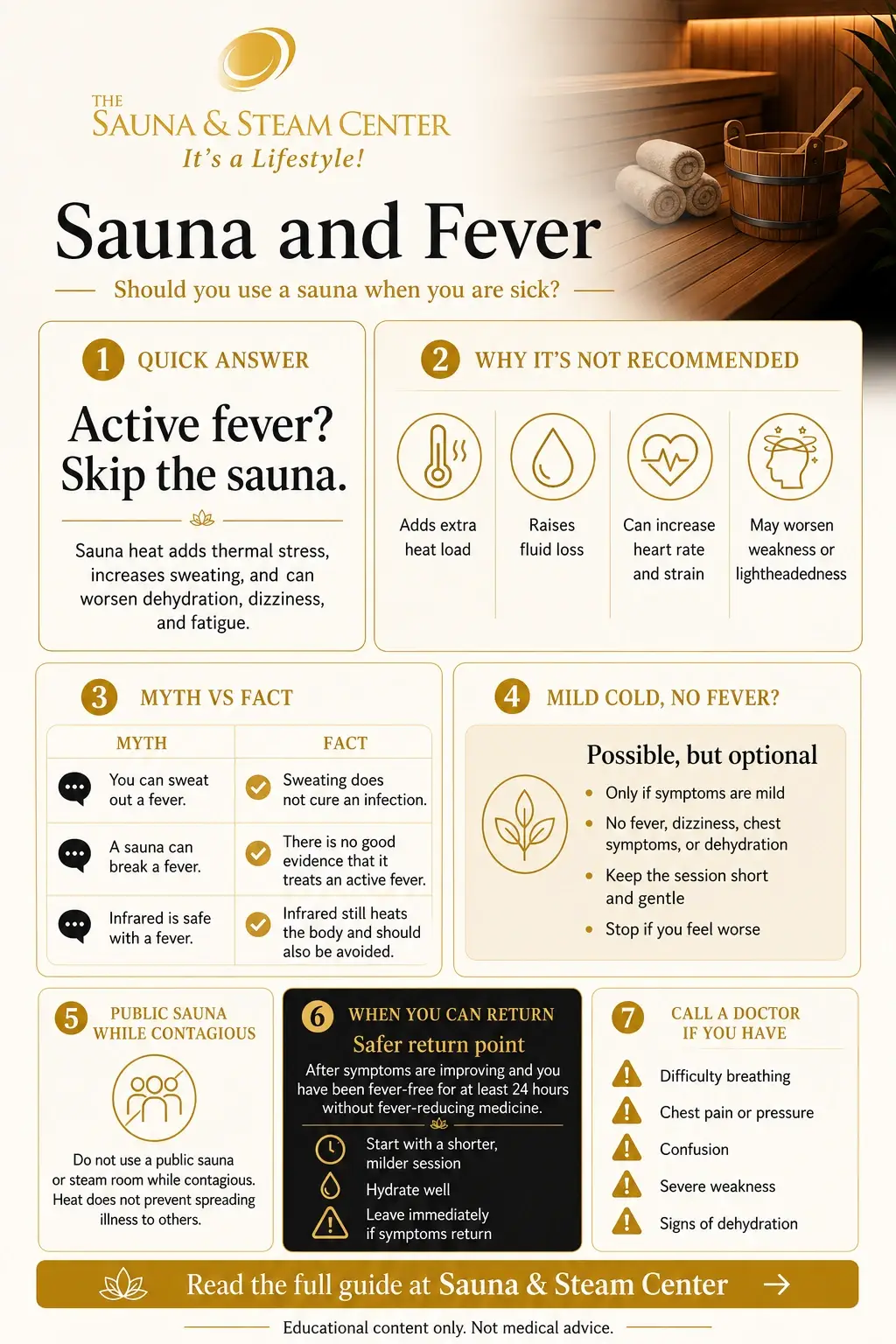
No. A sauna is not a good treatment for an active fever. Fever already raises your body’s temperature set point, while sauna heat adds more thermal stress, sweating, cardiovascular demand, and fluid loss. That can make dehydration, weakness, dizziness, or fainting more likely. A sauna does not reliably “break” a fever, sweat out an infection, or cure a cold or flu. If you are sick but do not have a fever, a brief mild home session may feel comfortable for some people, but it has not been shown to shorten the illness. Steam rooms may temporarily ease dryness or congestion, but they are also not appropriate during active fever, dehydration, breathing difficulty, or significant weakness.
Feeling chilled, congested, or achy can make a hot room sound comforting. The important distinction is whether you have an actual fever, are merely feeling cold, or have mild upper-respiratory symptoms without fever. Those situations do not carry the same level of risk. This guide explains what sauna heat does during illness, what the research says about colds and steam, when to stay out, and how to return cautiously after recovery.
Important: Seek urgent medical care for difficulty breathing, chest pain or pressure, confusion, seizures, inability to stay awake, severe weakness, not urinating, or symptoms that improve and then return or worsen, according to CDC emergency warning-sign guidance. [2]
Sauna When Sick: Quick Answers
| Search Question | Best Evidence-Aware Answer |
|---|---|
| Is sauna good for fever? | No. Active fever is a reason to avoid sauna heat. |
| Sauna for fever? | Do not use sauna as a fever treatment. Rest, fluids, and appropriate medical care are safer. |
| Does sauna help with fever? | No reliable evidence shows that sauna shortens a fever or treats its cause. |
| Sauna with a fever? | Avoid it. Sauna adds heat and fluid loss when your body is already under stress. |
| Sauna when sick? | Skip it if you have fever, dizziness, dehydration, chest symptoms, vomiting, diarrhea, or major weakness. |
| Steam room when sick? | Steam may temporarily ease dryness or congestion, but it is not a cure and should be avoided with fever or significant illness. |
| Can a sauna make you sick? | Sauna does not cause viral infection, but excessive heat or dehydration can make you feel ill, dizzy, nauseated, or faint. |
| What does Mayo Clinic say about fever, illness and dehydration? | Mayo Clinic advises fluids and rest for fever and recognizes dehydration as a concern during illness. That supports avoiding extra heat stress while febrile. |
Key takeaways
- Do not use a sauna during an active fever. Added heat and sweating can increase physical strain and fluid loss.
- A sauna is not a treatment for infection. It has not been shown to cure a cold, influenza, COVID-19, or another fever-causing illness.
- Feeling temporarily clearer is not the same as recovering faster. Warmth or humidity may briefly feel soothing, but controlled research has not shown that hot sauna air meaningfully reduces overall cold severity.
- Infrared is not an exception. Lower air temperature does not remove whole-body heat exposure or sweating.
- Stay out of public facilities while contagious. Heat does not prevent you from exposing other people.
- A practical return point is after symptoms are improving and you have been fever-free for at least 24 hours without medication. Restart with a shorter, milder session and stop if you feel weak, dizzy, nauseated, or unusually short of breath.
Can you use a sauna with a fever?
No. The safest general recommendation is to skip the sauna while you have an active fever or feel feverish. CDC materials commonly use 100.4°F, or 38°C, as a practical fever threshold, although temperature varies by measurement method and individual baseline. [4], [6]
A fever is not simply “being hot.” It is a regulated response in which the hypothalamus raises the body’s temperature set point, often because of infection. A sauna adds environmental heat on top of that process. The heat does not tell the immune system to end the fever, and it does not remove the underlying cause.
During acute illness, you may already be losing fluid from fever, sweating, poor intake, vomiting, or diarrhea. Sauna use creates more sweating and may lower blood pressure after the session, which can contribute to weakness, lightheadedness, or fainting. MedlinePlus identifies fever and heavy sweating as causes of dehydration and lists dark urine, reduced urination, thirst, headache, dizziness, and rapid heartbeat among warning signs. [5]
Bottom line: A fever is a reason to recover in a comfortable environment, not to add deliberate heat stress.
What is the difference between a fever and sauna-induced heat?
Fever and sauna exposure can both raise body temperature, but they begin through different mechanisms. During a fever, the brain resets the body’s internal temperature target upward. During sauna exposure, external heat challenges the body to shed heat through increased skin blood flow and sweating. A non-fever temperature rise caused by heat exposure is described as hyperthermia. [6]
That distinction matters because a sauna does not reproduce a controlled medical fever. The body must work to protect its core temperature in a hot room. Heart rate rises, blood vessels near the skin dilate, and sweat production increases. A meta-analysis of sauna treatment studies reported average acute increases in body temperature and heart rate, although the exact response depends on room conditions, duration, individual heat tolerance, hydration, and health status. [11]
People sometimes describe sauna exposure as an “artificial fever.” That phrase may be useful as a loose analogy, but it can be misleading. It should not be interpreted to mean that sauna heat safely boosts an existing fever or treats the infection causing it.
How can sauna heat affect the body when you are sick?
It adds to fluid loss
Saunas promote sweating. Fever can also increase fluid needs, while sore throat, nausea, fatigue, or poor appetite may reduce how much you drink. Combining those factors can move you toward dehydration more quickly than sauna use when healthy.
It increases cardiovascular demand
Heat exposure increases skin circulation and heart rate. In healthy people, these responses are usually temporary and tolerated. During illness, however, fever may already raise heart rate and breathing rate. Adding a hot-room session can make the same activity feel substantially harder, especially if you are weak, dehydrated, taking medications that affect blood pressure, or living with heart or lung disease. A controlled sauna study found measurable acute changes in blood pressure, vascular function, and blood markers after a 30-minute session, demonstrating that sauna use is a real physiological stressor rather than passive rest. [10]
It may worsen dizziness or fatigue
Illness often reduces exercise tolerance and balance. Heat-related vasodilation and fluid loss can increase the chance of lightheadedness when standing. Being alone in a sauna while weak or dizzy also creates a practical safety concern because a person may have difficulty exiting promptly.
It can make symptom tracking harder
After a sauna, temporary warmth, sweating, fatigue, and an elevated pulse can overlap with illness symptoms. This can make it harder to judge whether your condition is improving, whether fever has returned, or whether you are developing heat illness.
Mayo Clinic Fever and Dehydration Guidance: What Matters for Sauna Use
One of your GSC query clusters is specifically looking for Mayo Clinic sauna dehydration illness fever advice. Mayo Clinic’s general fever guidance emphasizes rest and drinking plenty of fluids, while its dehydration guidance explains that illness, fever, vomiting, diarrhea, and heavy sweating can all contribute to fluid loss.
That does not mean Mayo Clinic publishes a sauna-specific fever protocol. The practical connection is that an active fever or illness can already increase fluid needs, and sauna heat adds additional sweating and cardiovascular stress.
Do not write “Mayo Clinic says sauna is dangerous with fever” unless the source says that directly. The more accurate approach is: Mayo Clinic advises hydration and rest during fever/illness, and sauna physiology shows additional heat and fluid stress. Together, those support avoiding sauna while febrile.
Sauna and fever evidence at a glance
| Claim | What the evidence or guidance shows | Practical conclusion |
|---|---|---|
| A sauna can break a fever | No reliable clinical evidence shows that sauna exposure ends an active fever or treats its cause. | Do not use sauna as a fever treatment. |
| You can sweat out a cold or flu | Sweat regulates temperature and fluid balance. It does not remove enough respiratory virus from the body to cure infection. | Prioritize rest, fluids, testing when appropriate, and evidence-based treatment. |
| Hot sauna air reduces cold severity | A randomized controlled trial involving 157 participants found no significant overall reduction in common-cold symptom severity from inhaling hot dry sauna air. [7] | Possible comfort should not be confused with faster recovery. |
| Regular sauna use may prevent colds | A small 1990 controlled trial reported fewer cold episodes among regular sauna users, but included only 50 volunteers and called for further research. It did not test sauna use during a fever. [8] | Interesting but limited prevention evidence does not justify sauna use while acutely ill. |
| Steam reliably treats a cold | A Cochrane review found inconsistent results for heated, humidified air and insufficient evidence for routine treatment. [9] | Humidity may feel soothing for some people, but it is not a cure. |
| Infrared sauna is safe with fever because the air is cooler | Infrared cabins still deliver whole-body heat and promote sweating. No good evidence establishes active fever use as safe. | Skip infrared sauna during fever too. |
Does a sauna help break a fever, sweat out an illness, or kill a virus?
Can a sauna break a fever?
There is no good evidence that it can. A fever usually resolves as the immune response and the underlying illness change. Deliberately heating the body does not reliably reset the hypothalamus to normal. It may instead make you feel hotter, thirstier, weaker, or more uncomfortable.
Can you sweat out a fever?
No. Sweating is one way the body releases heat. It is not a process that flushes an infection from the bloodstream or respiratory tract. The temporary weight lost through heavy sweating is primarily fluid, not removal of the illness. This is similar to the misconception addressed in our guide on sauna and weight loss research: sweat loss and lasting health outcomes are not the same thing.
Can sauna heat kill a cold, flu, or COVID-19 virus inside the body?
No evidence supports that claim. Sauna room temperatures may be high, but the body tightly regulates core temperature. Heating yourself enough to inactivate viruses throughout the body would also risk serious heat injury. Respiratory viruses replicate inside living tissues, and treatment decisions should follow current medical guidance, not an attempt to “cook” the virus.
CDC guidance states that the common cold has no cure and generally improves with time. For people who may have flu or COVID-19, timely testing and antiviral treatment can matter, especially for those at higher risk, because treatment works best when started early. [3]

Can a Sauna Make You Sick?
A sauna does not cause a viral cold or flu, but too much heat can make you feel sick. Excessive heat exposure can contribute to dehydration, dizziness, nausea, headache, weakness, low blood pressure, or heat illness, especially when the user is already sick, dehydrated, hungover, exhausted, or taking medications that affect heat tolerance.
| What You Feel | Possible Sauna-Related Reason | What to Do |
|---|---|---|
| Nausea | Heat stress, dehydration, low blood pressure | Leave, cool down, hydrate if appropriate |
| Dizziness or faintness | Vasodilation, fluid loss, standing too quickly | Sit or lie down in a cool area and stop the session |
| Headache | Heat, dehydration, illness, or other causes | Stop the sauna and reassess before returning |
| Weakness | Illness, dehydration, overheating | Do not continue heat exposure |
| Fever after sauna | Could reflect illness, heat-related temperature elevation, or both | Cool down and recheck later; seek care if symptoms are concerning |
If symptoms are severe, persistent, or include confusion, collapse, chest pain, breathing difficulty, or inability to stay awake, seek urgent medical care.
Can you use a sauna with a mild cold but no fever?
A mild cold without fever is a lower-risk situation than an active fever, but using a sauna is still optional, not necessary. If you have only mild nasal symptoms, are well hydrated, are not dizzy or unusually fatigued, and have no concerning medical condition, a brief home session may feel comfortable. Research does not show that it will shorten the illness.
Do not use the absence of a measured fever as the only test. Skip the sauna if you feel feverish, have chills, body aches, chest congestion, shortness of breath, vomiting, diarrhea, significant weakness, or reduced fluid intake. Some infections do not produce fever, and fever-reducing medicine can temporarily hide one.
For a mild, no-fever illness, use a conservative approach:
- Choose a private home sauna rather than a shared facility.
- Drink fluids before the session and keep water available afterward.
- Use a lower setting than your normal routine.
- Keep the session short, such as 5 to 10 minutes rather than pushing toward your usual maximum.
- Do not combine it with exercise, alcohol, a cold plunge, or another demanding heat session.
- Leave immediately if you feel dizzy, nauseated, weak, overheated, breathless, or worse than when you entered.
CDC symptom-care guidance places the emphasis on rest, fluids, appropriate over-the-counter symptom relief, and early clinical contact for people at higher risk. Steam from a shower or a clean humidifier may offer comfort without the whole-body thermal load of a sauna. [3]
Is an infrared sauna safe with a fever?
No. Infrared sauna use should also be avoided during an active fever. Infrared cabins usually operate at a lower air temperature than traditional Finnish-style saunas, but infrared energy still warms the body and typically causes sweating. Lower room temperature does not make active fever use risk-free.
The relevant question is not only how hot the air feels. It is whether the session raises thermal strain, increases fluid loss, and asks the cardiovascular system to work harder while the body is already dealing with illness. Those concerns apply to infrared, traditional, portable, and full-spectrum systems.
For a broader review of contraindications and heat-related concerns, see our evidence-aware guide to infrared sauna risks and safety. Product type can change the experience, but it does not turn sauna use into medical treatment.
Steam Room When Sick: Does It Help?
A steam room may feel more soothing for nasal or throat dryness, but it is not a safer choice during fever.
If you searched steam room when sick, the answer depends on symptoms. Moist heat may temporarily make the nose or throat feel less dry, but it does not cure a cold. Avoid steam rooms when you have fever, dehydration, significant weakness, chest symptoms, breathing difficulty, or dizziness. For normal use when healthy, see our dedicated steam room guide.
Steam rooms expose the whole body to hot, humid conditions. High humidity reduces sweat evaporation, which is one of the body’s main cooling mechanisms. A person with fever, dehydration, dizziness, or breathing difficulty should avoid both environments.
Evidence for heated, humidified air in the common cold is mixed. Some people report temporary relief, but systematic-review findings have not shown consistent enough benefit to recommend steam as routine treatment. [9]
| Heat environment | Possible comfort | Main concern during illness | With active fever |
|---|---|---|---|
| Traditional sauna | Warmth may feel relaxing | High air temperature, sweating, cardiovascular strain | Avoid |
| Infrared sauna | Lower air temperature may feel gentler | Whole-body heating and fluid loss still occur | Avoid |
| Steam room | Humidity may temporarily ease dryness or congestion | Hot, humid air limits evaporative cooling and may feel difficult to breathe in | Avoid |
| Warm shower or humidifier | May provide localized comfort | Burn risk from overly hot water or unsafe steam practices | Often lower thermal load, but stop if it worsens symptoms |
When you are healthy and want to understand normal use, our steam room guide explains timing, hydration, and basic etiquette. It should not be used as permission to enter a steam room while febrile or contagious.
Should you use a public sauna while contagious?
No. Stay out of public saunas, steam rooms, gyms, spas, and shared wellness facilities while you may be contagious. A hot room does not sterilize the air you exhale, prevent respiratory droplets or aerosols, or protect other guests and staff.
CDC respiratory-virus guidance recommends staying home and away from others while symptoms are not improving or while you have had a fever within the past 24 hours without the use of fever-reducing medicine. After returning to normal activities, added precautions for the next five days can help reduce spread because some people remain contagious. [1]
Public-sauna etiquette during illness is therefore simple: postpone the visit. This remains true even if you believe the heat will make you feel better, even if the facility is quiet, and even if your symptoms seem mild.
When can you return to the sauna after being sick?
A practical minimum is when your symptoms are improving overall and you have been fever-free for at least 24 hours without fever-reducing medicine, following CDC guidance for resuming normal activities. This is a starting point, not a guarantee that your usual sauna routine is immediately appropriate. [1]
Wait longer if you still have substantial fatigue, poor hydration, dizziness, shortness of breath, vomiting, diarrhea, a racing heart, chest symptoms, or a medical condition that the illness has aggravated. If a clinician has diagnosed a significant infection or advised activity restrictions, follow that plan.
A cautious first session back
- Confirm recovery basics. You are eating and drinking normally, urinating normally, and able to complete ordinary daily activities without unusual weakness.
- Use a milder setting. Do not begin with your hottest preferred temperature. Our sauna temperature guide can help you compare normal operating ranges after you are well.
- Cut the usual duration. Start with approximately half your normal session, or even less if you were significantly ill.
- Skip contrast therapy. Avoid an immediate ice bath or cold plunge on the first session back. Rapid temperature shifts add another cardiovascular stressor.
- Do not try to “make up” missed sessions. Recovery is not improved by doubling heat exposure.
- Leave at the first warning sign. Stop for dizziness, nausea, headache, chills, weakness, palpitations, breathing difficulty, confusion, or a sudden return of symptoms.
Stop and reassess: If fever returns after you resume normal activity, CDC advises staying home and away from others again until symptoms are improving and you have once more been fever-free for at least 24 hours without fever-reducing medicine. [1]
What symptoms mean you should contact a doctor?
Contact a healthcare professional when symptoms are severe, persistent, worsening, or occurring in someone at higher risk. Early evaluation can also matter for flu and COVID-19 because prescription antiviral treatment works best when started within a limited time after symptoms begin. [3]
Seek emergency care now for
- Difficulty breathing or shortness of breath
- Persistent chest or abdominal pain or pressure
- Confusion, inability to wake or stay awake, or seizures
- Severe weakness, unsteadiness, or severe muscle pain
- Not urinating or other signs of serious dehydration
- Fever or cough that improves and then returns or worsens
These warning signs are included in current CDC respiratory-illness guidance. [2]
Call a clinician for advice when
- Fever lasts longer than four days
- Cold-like symptoms last more than 10 days without improvement
- You cannot keep up with fluids
- A chronic health condition is getting worse
- You are pregnant, immunocompromised, older, or otherwise at increased risk for severe respiratory illness
- You take medications that affect blood pressure, heart rate, fluid balance, or heat tolerance and are unsure when to resume sauna use
CDC advises prompt healthcare contact for people at higher risk who develop respiratory symptoms, even when the illness appears mild. [13], [3]
What our sauna experience since 2004 has taught us
Installer insight: The model, heater, controls, ventilation, room volume, and installation quality determine how a sauna produces and distributes heat. None of those choices makes sauna use during an active fever risk-free.
Infrared cabins may feel gentler because they commonly operate at lower air temperatures. Traditional rooms may deliver a more intense hot-air experience, especially on upper benches. Steam rooms create a different challenge because humidity limits evaporative cooling. Those differences matter for comfort and normal ownership, but the fever decision stays the same: pause heat exposure until you have recovered.
We also see a practical difference between a well-planned home sauna and an improvised heat setup. Reliable controls, appropriate heater sizing, safe clearances, proper electrical work, ventilation, and a door that opens easily all support normal use. They do not replace hydration, self-monitoring, or professional medical guidance when a person is ill.
Another common ownership mistake is treating every sauna session as a test of endurance. Consistent use is more likely when the room is comfortable, the heat is controllable, and the user leaves before feeling depleted. That principle is especially important during the first sessions after an illness.

How should health-conscious buyers think about a home sauna?
Choose a sauna as a wellness and relaxation environment, not as a device for treating fever or infection. A good home system can make regular sauna use more convenient when you are healthy and can help you avoid shared facilities when you simply prefer privacy. It should not be marketed or used as a substitute for diagnosis, medication, vaccination, rest, hydration, or urgent care.
When comparing a traditional and infrared sauna, focus on heat preference, available space, electrical requirements, room construction, ventilation, controls, maintenance access, and how many people will use it. Budget planning should include more than the cabin or heater. Review our home sauna cost breakdown for the factors that affect a complete project.
For an early budget range, use the project estimator linked below. Before construction or equipment selection, professional review can help identify electrical, ventilation, moisture, clearance, and service-access issues that are easy to miss.
Planning for healthy, everyday sauna use
Choose the right system for your space and heat preference
Sauna & Steam Center has helped homeowners and commercial properties plan, install, and maintain sauna and steam systems since 2004. We can help you compare traditional and infrared options, understand installation requirements, and design a system intended for comfortable use when you are well.
Frequently asked questions about sauna and fever
Is sauna good for fever?
No. An active fever is a reason to avoid sauna use because additional heat and sweating can increase thermal strain and fluid loss.
Does sauna help with fever?
No reliable evidence shows that sauna use shortens a fever or treats the illness causing it.
Is sauna good when sick?
It depends on symptoms. Avoid sauna if you have fever, dehydration, dizziness, vomiting, diarrhea, chest symptoms, breathing difficulty, or significant weakness. A mild cold without fever is a lower-risk situation, but sauna is still optional and not a cure.
Can a sauna make you sick?
Sauna does not cause viral infection, but excessive heat can cause or worsen nausea, dizziness, dehydration, weakness, and heat illness.
What about a steam room when sick?
Steam may temporarily ease dryness or congestion, but it does not shorten a cold. Avoid a steam room if you have fever, dehydration, breathing difficulty, dizziness, or major weakness.
What does Mayo Clinic recommend for fever and dehydration?
Mayo Clinic’s general guidance emphasizes rest and fluids during fever and recognizes dehydration as a risk during illness. It does not provide a universal sauna-with-fever protocol, so avoiding extra heat stress is the more conservative approach.
Can you use a sauna with a fever?
No. An active fever is a reason to avoid sauna use because external heat, sweating, fluid loss, and cardiovascular demand can add strain while your body is already fighting illness.
Does a sauna help break a fever?
No reliable evidence shows that sauna exposure breaks a fever. A fever resolves as the underlying illness and the body’s regulated temperature response change, not because you force additional sweating.
Can you sweat out a fever or cold?
No. Sweat helps regulate body temperature but does not flush enough virus from the body to cure a fever, cold, influenza, or COVID-19.
Can sauna heat kill a cold or flu virus?
No. Sauna use does not heat internal tissues to a virus-killing temperature without also risking heat injury. It should not replace testing, rest, fluids, or appropriate medical treatment.
Is an infrared sauna safe when you have a fever?
No. Infrared saunas use lower air temperatures than many traditional saunas, but they still heat the body and promote sweating. Avoid them during an active fever.
Is a steam room better than a sauna when you are sick?
Steam may temporarily feel soothing for dryness or congestion, but evidence for treating a cold is inconsistent. A steam room is not appropriate during fever, dehydration, breathing difficulty, or significant weakness.
Can you use a sauna with a mild cold but no fever?
Some otherwise healthy adults may tolerate a brief, mild home session when symptoms are minor and there is no fever, dizziness, dehydration, chest involvement, or unusual fatigue. It is optional and has not been shown to shorten the cold.
Can a sauna make a fever higher?
A sauna adds external heat and can raise measured body temperature during or shortly after exposure. It may worsen overheating, dehydration, dizziness, or discomfort even though fever and heat-induced hyperthermia are different processes.
When can you return to the sauna after being sick?
Wait until symptoms are improving and you have been fever-free for at least 24 hours without fever-reducing medicine. Return with a shorter, milder session and stop if symptoms return.
Should you use a public sauna while contagious?
No. Stay home while sick and avoid exposing other guests or staff. Heat does not prevent respiratory-virus transmission.
The practical answer
Do not use a sauna to treat an active fever. The most defensible approach is to rest, maintain fluids, monitor symptoms, seek timely care when needed, and wait until recovery is clearly underway. A mild cold without fever may be different for some healthy adults, but any session should be private, short, comfortable, and stopped immediately if symptoms worsen.
Once you are well, sauna use can return to its proper role: a controlled heat and relaxation practice, not an infection cure. Start below your normal intensity, pay attention to hydration and balance, and let your recovery determine the pace.
References
- CDC: Preventing Spread of Respiratory Viruses When You Are Sick
- CDC: About Respiratory Illnesses and Emergency Warning Signs
- CDC: Managing the Common Cold
- CDC: Fever Definition and Signs of Communicable Illness
- MedlinePlus: Dehydration Causes, Symptoms, and Treatment
- Merck Manual: Fever in Adults and the Difference Between Fever and Hyperthermia
- Pach et al.: Randomized Controlled Trial of Hot Dry Sauna Air for Common-Cold Symptoms
- Ernst et al.: Controlled Trial of Regular Sauna Bathing and Common-Cold Incidence
- Cochrane Review: Heated, Humidified Air for the Common Cold
- Laukkanen et al.: Acute Effects of Sauna Bathing on Cardiovascular Function
- Li et al.: Meta-Analysis of Acute and Short-Term Physiological Effects of Sauna Treatment
- Yokoyama et al.: Acute Heat Exposure-Related Illness and Sauna Use During Acute Illness
- CDC: Risk Factors for Severe Respiratory Illness