Last updated: May 29, 2026
Cold Plunge Sauna Setup: How to Build a Hot-and-Cold Wellness Space at Home
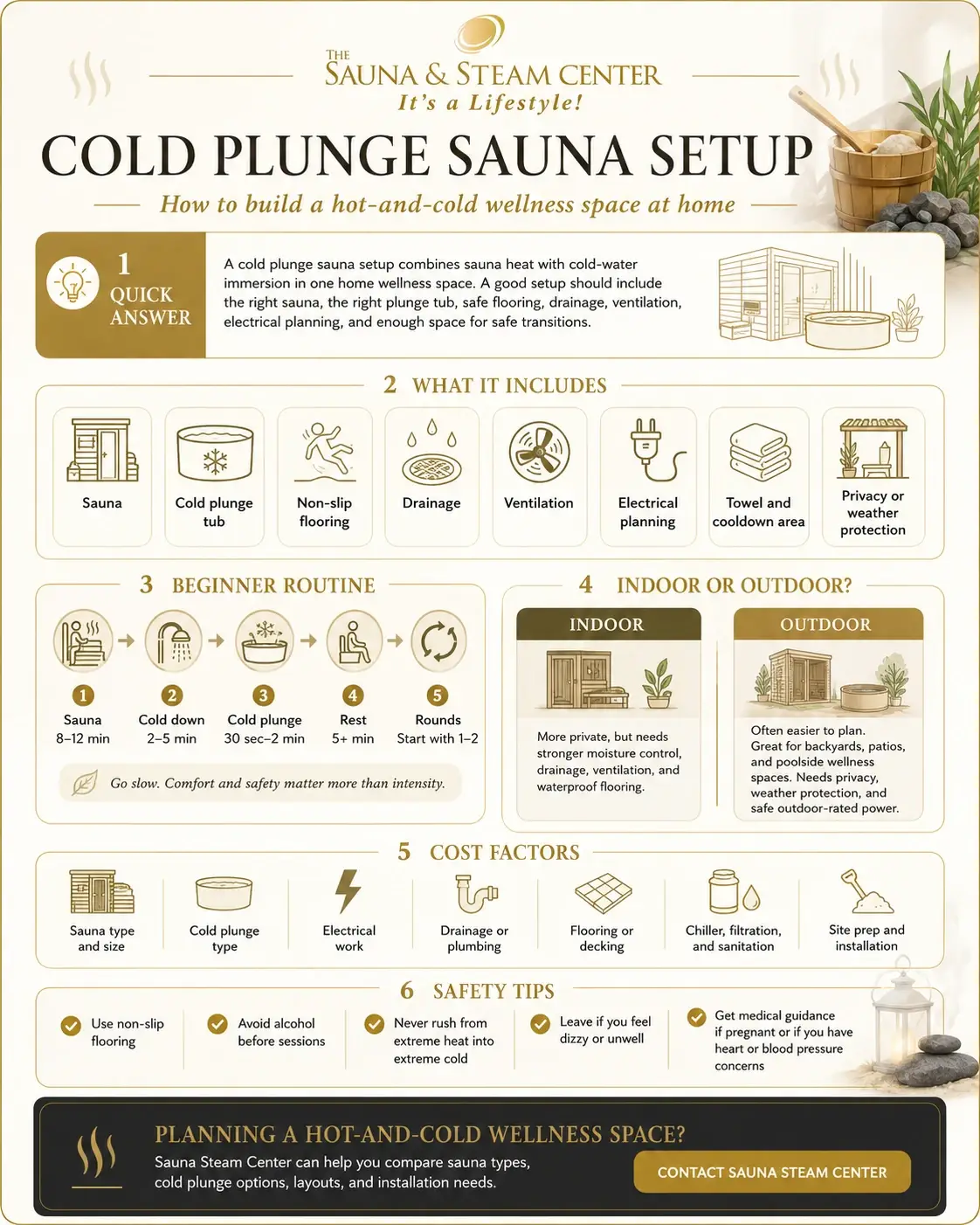
Quick answer: A cold plunge sauna setup combines sauna heat with cold-water immersion in one home wellness space. The goal is to move between heat, cool-down time, and cold exposure in a safe, comfortable, and repeatable way. A good setup should include the right sauna, the right plunge tub, safe flooring, drainage, ventilation, electrical planning, privacy, and enough space to move between hot and cold without slipping or rushing.
If you are searching for “plunge sauna,” you are probably looking for more than general benefits. You may be planning a backyard wellness area, a home gym recovery zone, or a spa-style retreat with both a sauna and cold plunge. This guide explains how to design the setup, what equipment you need, how much space to plan for, what it may cost, and how to use it safely.
Important note: Sauna and cold plunge use can affect heart rate, blood pressure, breathing, body temperature, and hydration. This article is for general planning and education, not medical advice. If you are pregnant, have heart disease, blood pressure concerns, fainting history, circulation problems, or take medications that affect heat, cold, sweating, or blood pressure, talk with a qualified healthcare professional before using hot-and-cold therapy.
Key Takeaways
- A cold plunge sauna setup is not a separate sauna type. It usually means a sauna paired with a cold plunge tub or cold-water immersion area.
- This article focuses on setup, layout, routine, cost, and buying decisions. For general benefits, read our sauna and cold plunge benefits guide.
- The best setup keeps the sauna and plunge close enough for easy transitions, but far enough apart to avoid water, slip, and electrical hazards.
- Outdoor setups are often easier to plan than indoor setups because drainage, ventilation, and space are usually simpler to manage.
- Beginners should start slowly. Do not treat heat or cold exposure like a toughness test.
- A well-designed plunge sauna setup can support relaxation, recovery routines, and home wellness, but it should not replace exercise, sleep, hydration, nutrition, or medical care.
What Is a Cold Plunge Sauna Setup?
A cold plunge sauna setup is a wellness space that combines a sauna with a cold plunge tub or cold-water immersion area. People often use the phrase “plunge sauna” to describe this kind of hot-and-cold setup, even though it is not technically a separate sauna category.
In simple terms, the sauna provides heat exposure. The cold plunge provides cold exposure. Together, they create a contrast routine that many people use for relaxation, recovery, and a spa-like home wellness experience.
A plunge sauna setup may include:
- A traditional sauna, infrared sauna, barrel sauna, or custom sauna
- A cold plunge tub, ice bath, chilled plunge, or built-in plunge pool
- Safe non-slip flooring
- Drainage and water management
- Electrical planning for sauna heaters, controls, lights, or chillers
- Ventilation and moisture control
- Towel hooks, robe storage, and a cooldown area
- Privacy screens, landscaping, or enclosure planning for outdoor spaces
The best setup is not always the largest or most expensive. The best setup is the one that feels safe, comfortable, easy to maintain, and realistic for how often you will use it.
How This Guide Is Different From a Benefits Article
Many people search for sauna and cold plunge information because they want to understand the benefits. That is useful, but this guide has a different purpose. This article is about how to plan the actual space.
If your main question is, “What are the benefits of sauna and cold plunge?” visit our dedicated guide here: Sauna and Cold Plunge Benefits.
This article answers the next set of questions:
- Where should the sauna and plunge go?
- How much space do I need?
- Should the setup be indoors or outdoors?
- What type of sauna should I choose?
- What type of cold plunge makes sense?
- How should beginners use hot-and-cold therapy safely?
- What mistakes should I avoid before buying?
How Does a Sauna and Cold Plunge Routine Work?
A basic hot-and-cold routine usually moves through three steps: heat, cool down, and cold exposure. Some people repeat this cycle more than once, while beginners may only do one round.
A simple flow looks like this:
- Sauna: Warm up in the sauna for a short, comfortable session.
- Cool down: Step out, breathe normally, and allow your body to settle.
- Cold plunge: Enter the cold water slowly and stay for a short time.
- Rest: Dry off, sit or stand safely, and let your body recover.
Some people prefer to end with cold because they like the alert feeling afterward. Others prefer to end with warmth or a neutral cooldown because it feels more relaxing. There is no single best routine for everyone. The safest routine is the one you can tolerate without dizziness, panic, overexposure, or discomfort.
Cold water can trigger a cold shock response, including rapid breathing, increased heart rate, and increased blood pressure. That is why beginners should start slowly and avoid sudden full-body immersion until they know how their body responds. The American Heart Association notes that sudden cold-water immersion can stress the heart and breathing, especially for people with underlying health risks. Source
Beginner Cold Plunge Sauna Routine
If you are new to hot-and-cold therapy, start conservatively. You can always build tolerance over time, but pushing too hard too soon can make the experience unsafe or unpleasant.
| Step | Beginner Starting Point | Goal |
|---|---|---|
| Sauna | 8 to 12 minutes | Warm up without overheating. |
| Cooldown | 2 to 5 minutes | Let breathing and balance feel steady. |
| Cold plunge | 30 seconds to 2 minutes | Introduce cold exposure without forcing it. |
| Rest | 5 minutes or more | Recover before deciding whether to repeat. |
| Rounds | 1 to 2 rounds | Keep the first sessions simple and controlled. |
Beginner rule: leave the sauna or plunge before you feel pushed to your limit. A good routine should feel controlled, not extreme.
Should you sauna before or after cold plunge?
Many people start with the sauna because heat makes the cold plunge feel more approachable. Others use cold first for alertness. For beginners, sauna first is often easier because the body is already warm before cold exposure. The key is to cool down briefly between steps and avoid rushing from extreme heat into extreme cold.
How many rounds should you do?
Beginners should usually start with one round. Once you know how your body responds, you may try two or three rounds. More rounds are not automatically better. Comfort, safety, and consistency matter more than intensity.
What Equipment Do You Need for a Cold Plunge Sauna Setup?
A complete setup is more than just a sauna and a tub. You need to think about movement, water, power, safety, and long-term maintenance.
Core equipment
- Sauna: Traditional, infrared, barrel, outdoor, indoor, custom, or prebuilt.
- Cold plunge: Ice bath, chilled plunge tub, portable plunge, or built-in plunge.
- Water system: Drainage, filtration, sanitation, or chiller depending on the plunge type.
- Electrical planning: Sauna heater, controls, lighting, and cold plunge chiller may all require safe power planning.
- Non-slip surface: Important around wet areas and transition zones.
- Ventilation: Especially important for indoor or enclosed setups.
- Storage: Towels, robes, sandals, cleaning supplies, and covers.
Helpful accessories
- Robe hooks
- Towel shelf
- Outdoor shower
- Privacy screen
- Step or handrail near the plunge
- Thermometer for sauna and water temperature
- Timer
- Cover for outdoor plunge tub
- Deck lighting or path lighting
Indoor vs. Outdoor Cold Plunge Sauna Setup
Both indoor and outdoor setups can work, but they require different planning. For many homeowners, outdoor setups are simpler because drainage, ventilation, and space are easier to manage. Indoor setups can feel more private and polished, but they usually require more careful moisture and construction planning.
| Setup Type | Best For | Main Planning Needs |
|---|---|---|
| Indoor setup | Home gyms, spa rooms, luxury bathrooms, wellness rooms | Moisture control, ventilation, drainage, waterproof flooring, electrical planning |
| Outdoor setup | Backyards, patios, pool areas, covered outdoor retreats | Weather protection, privacy, drainage, safe walking surface, outdoor-rated power |
| Garage gym setup | Fitness-focused recovery spaces | Floor drainage, ventilation, sauna clearance, chiller placement, storage |
| Poolside setup | Homes with existing outdoor water areas | Slip resistance, layout flow, privacy, electrical safety near water |
For South Florida homes, an outdoor setup can be especially attractive because it can pair well with patios, pools, covered terraces, and backyard wellness design. For more outdoor planning ideas, read our outdoor sauna Florida guide.
How Much Space Do You Need?
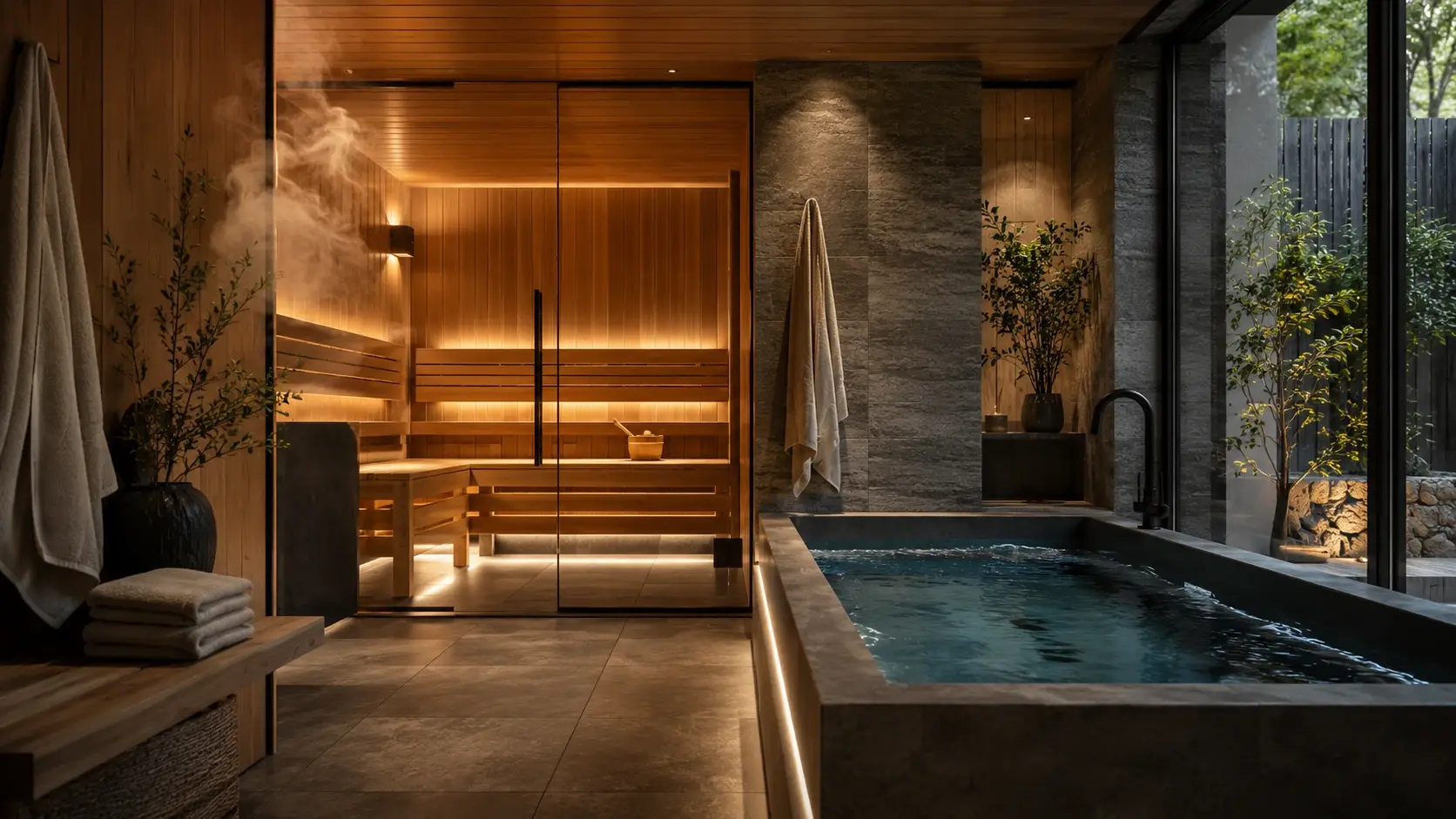
The space you need depends on the sauna size, plunge type, walking clearance, and whether the setup is indoors or outdoors. Do not plan only for the equipment footprint. Plan for safe movement around the sauna and plunge.
| Setup Size | What It May Include | Best For |
|---|---|---|
| Compact setup | 1-person sauna plus compact plunge tub | Small patios, garage gyms, tight wellness corners |
| Medium setup | 2-person sauna plus cold plunge and towel area | Couples, home gyms, patios, small backyard retreats |
| Large setup | Outdoor sauna, plunge tub, shower, seating, and privacy screen | Backyard wellness spaces and poolside retreats |
| Luxury setup | Custom sauna, built-in plunge, shower, lounge area, lighting, landscaping | High-end home spa or complete wellness retreat |
At minimum, make sure there is enough room to enter and exit the plunge safely, step out of the sauna without rushing, dry off, and sit down if needed.
How Much Does a Cold Plunge Sauna Setup Cost?
The cost of a cold plunge sauna setup can vary widely. A simple setup may use a compact sauna and portable plunge tub. A luxury setup may include a custom sauna, chilled plunge, drainage work, lighting, privacy features, decking, and an outdoor shower.
Cost factors include:
- Sauna type and size
- Cold plunge type
- Indoor or outdoor location
- Electrical work
- Plumbing or drainage
- Flooring or decking
- Water chiller, filtration, and sanitation
- Site preparation
- Delivery and installation
- Privacy screens, lighting, and accessories
| Budget Level | Typical Setup | What to Expect |
|---|---|---|
| Entry-level | Prebuilt or compact sauna plus basic plunge tub | Lower cost, simpler layout, fewer custom features |
| Mid-range | Quality home sauna plus chilled plunge or upgraded outdoor tub | Better comfort, stronger design, more reliable routine |
| Premium | Custom sauna, cold plunge, deck or tile work, lighting, privacy, shower | More polished home spa experience with better flow |
| Luxury | Full hot-and-cold wellness retreat | Custom design, high-end finishes, integrated home wellness space |
For sauna-specific pricing, visit our guides on how much a sauna costs and in-home sauna cost.
What Type of Sauna Works Best With a Cold Plunge?
The best sauna depends on the kind of heat you enjoy and the setup you are building. A cold plunge can pair with several sauna types.
| Sauna Type | Why It Works | Best Fit |
|---|---|---|
| Traditional sauna | Creates strong heat contrast before cold exposure | Classic hot-and-cold routines |
| Infrared sauna | Feels gentler and may be easier for some users to tolerate | Frequent home use and lower-temperature sessions |
| Outdoor sauna | Pairs naturally with backyard plunges and showers | Outdoor wellness spaces |
| Barrel sauna | Compact footprint and strong outdoor appeal | Backyards, patios, and rustic-modern designs |
| Custom sauna | Designed around your layout, size, and finish preferences | Luxury home spas and permanent wellness rooms |
If you are deciding between heat styles, read our infrared vs. traditional sauna comparison.
What Type of Cold Plunge Works Best?
The right cold plunge depends on budget, maintenance preference, space, and how often you plan to use it.
| Cold Plunge Type | Pros | Considerations |
|---|---|---|
| Basic ice bath tub | Simple and lower cost | Requires ice and more manual temperature control |
| Portable cold plunge | Flexible placement and easier entry point | May have fewer premium features |
| Chilled plunge tub | Better temperature control and convenience | Higher cost and chiller maintenance |
| Built-in plunge pool | Luxury look and permanent design | Requires more planning, construction, and maintenance |
| Outdoor plunge tub | Pairs well with backyard saunas | Needs cover, drainage, weather planning, and sanitation |
Best Cold Plunge Sauna Layout Ideas
A good layout should feel natural. You should be able to move from the sauna to the cooldown area to the plunge without stepping over clutter or crossing slippery surfaces.
Popular layout ideas
- Backyard sauna and cold plunge: Great for outdoor wellness retreats with privacy screens and landscaping.
- Garage gym recovery zone: Works well for athletes who want sauna, plunge, weights, and recovery tools nearby.
- Poolside hot-and-cold area: Ideal for homes that already have outdoor water features.
- Covered patio setup: Good balance of outdoor feel and weather protection.
- Indoor spa room: Premium option for homes with proper drainage, waterproofing, ventilation, and electrical planning.
- Luxury backyard retreat: Sauna, plunge, outdoor shower, seating, lighting, and privacy features in one designed space.
Should the sauna and cold plunge be next to each other?
They should be close enough for easy transitions, but not so close that water splashes into electrical areas or creates a slip hazard at the sauna entrance. A short, clear walking path is better than placing everything too tightly together.
Best Flooring and Drainage for a Cold Plunge Sauna Setup
Flooring is one of the most important parts of the design. Water around a cold plunge can create slip risk, and sauna users may feel lightheaded if they overdo heat exposure. The walking surface should be stable, non-slip, and easy to drain or dry.
Good flooring options include:
- Textured outdoor tile
- Composite decking
- Sealed concrete with non-slip finish
- Outdoor pavers
- Rubber flooring for garage gym areas
- Waterproof indoor flooring designed for wet areas
Avoid:
- Slippery polished stone near the plunge
- Untreated wood that may warp or become slick
- Poor drainage around the plunge
- Loose rugs or mats that can shift underfoot
- Running extension cords near wet areas
For indoor setups, drainage and moisture control should be planned before equipment is installed. For outdoor setups, make sure water drains away from the sauna, home foundation, and walking paths.
Cold Plunge Sauna Safety Concerns
A hot-and-cold routine can feel refreshing, but both heat and cold exposure place stress on the body. The goal is to make the experience restorative, not extreme.
Main safety concerns
- Dizziness: Heat, cold, dehydration, and fast transitions can make some people lightheaded.
- Cold shock: Sudden cold immersion can trigger rapid breathing, gasping, increased heart rate, and blood pressure changes.
- Overheating: Staying too long in the sauna can cause weakness, nausea, or faintness.
- Hypothermia risk: Long cold exposure can lower body temperature too much.
- Slips and falls: Wet flooring around the plunge is a real design risk.
- Alcohol use: Alcohol increases risk because it can affect judgment, hydration, balance, and heat tolerance.
- Heart and blood pressure stress: Both heat and cold can affect circulation and cardiovascular workload.
Cleveland Clinic notes that cold plunges may offer benefits such as temporary sore muscle relief, but they also carry risks including hypothermia, skin or nerve damage, breathing difficulty, and cardiovascular stress. Source
Who should get medical guidance first?
- Pregnant people
- People with heart disease or recent cardiac events
- People with uncontrolled high blood pressure
- People with very low blood pressure or fainting history
- People with circulation problems
- People with seizure history
- People with kidney disease or fluid-balance concerns
- People taking medications that affect sweating, hydration, heat tolerance, cold tolerance, heart rate, or blood pressure
Harvard Health also cautions that the evidence for cold plunge benefits is limited and that cold plunges may be risky for people with underlying heart problems. Source
Maintenance Checklist
A cold plunge sauna setup should be enjoyable to use, but it also needs regular care. Maintenance should be part of your buying decision.
Sauna maintenance
- Wipe benches after use
- Allow the sauna to ventilate and dry
- Clean floors regularly
- Check heater area and stones as recommended
- Keep towels and water away from heater controls
- Follow manufacturer instructions for your sauna type
Cold plunge maintenance
- Check water quality regularly
- Clean tub surfaces
- Replace or clean filters as recommended
- Maintain sanitation system if included
- Check chiller performance if using a chilled plunge
- Cover the plunge when not in use
- Drain and refill according to manufacturer guidance
Common Cold Plunge Sauna Setup Mistakes
Many buying mistakes happen before installation. Good planning prevents frustration later.
Avoid these mistakes:
- Placing the sauna and plunge too far apart
- Placing them too close without water and electrical safety planning
- Forgetting drainage
- Using slippery flooring
- Not planning space to sit, dry off, or cool down
- Choosing a sauna type you do not enjoy using
- Buying a cold plunge without understanding maintenance
- Ignoring privacy for outdoor setups
- Not planning weather protection
- Trying extreme routines too soon
- Using alcohol before or during sessions
- Forgetting lighting for evening use
Cold Plunge Sauna Buying Checklist
Before buying, use this checklist to narrow down your plan.
Ask yourself:
- Will this setup be indoors, outdoors, in a garage, or poolside?
- Do I prefer traditional sauna heat or infrared heat?
- How many people will use the sauna at once?
- Do I want a basic plunge, portable plunge, chilled plunge, or built-in plunge?
- Where will water drain?
- What electrical work may be needed?
- Is the walking surface non-slip?
- Is there a safe cooldown area?
- Will I need privacy screens, fencing, or landscaping?
- How much maintenance am I willing to do?
- Will I use this several times per week?
- Do I want a simple setup or a luxury wellness retreat?
FAQ About Cold Plunge Sauna Setups
What is a plunge sauna?
A plunge sauna usually means a sauna paired with a cold plunge tub or cold-water immersion area. It is not a separate sauna type. It is a hot-and-cold wellness setup.
Is a plunge sauna the same as a sauna and cold plunge?
Yes, in most searches, people use “plunge sauna” to mean a sauna and cold plunge setup. The phrase usually refers to the combination of heat exposure and cold-water immersion.
What are the benefits of a cold plunge sauna setup?
Possible benefits include relaxation, recovery support, stress relief, a stronger home wellness routine, and a spa-like experience at home. For the full benefits discussion, read our sauna and cold plunge benefits guide.
Should you sauna before or after a cold plunge?
Many beginners start with the sauna first, cool down briefly, and then use the cold plunge. This can make the cold feel more approachable. The safest order depends on your tolerance and health status.
How long should you stay in the sauna before a cold plunge?
Beginners may start with 8 to 12 minutes in the sauna. Regular users may stay longer depending on heat level and tolerance, but longer is not automatically better.
How long should you cold plunge after sauna?
Beginners often start with 30 seconds to 2 minutes. Cold tolerance varies. Leave the plunge if you feel panicked, numb, dizzy, weak, or unwell.
How many rounds should beginners do?
One round is enough for beginners. Once you know how your body responds, you may try two or three rounds. Keep the routine controlled and comfortable.
Can you put a cold plunge next to a sauna?
Yes, but the layout must be safe. Keep the path short and clear, use non-slip flooring, and avoid placing water too close to electrical equipment or controls.
Can you build a cold plunge sauna setup outdoors?
Yes. Outdoor setups are popular for backyards, patios, pool areas, and covered terraces. Plan for privacy, drainage, weather protection, lighting, and outdoor-rated electrical work.
Can you build a cold plunge sauna setup indoors?
Yes, but indoor setups require more planning. Moisture control, ventilation, waterproof flooring, drainage, and electrical safety are very important.
How much space do you need for a cold plunge sauna setup?
A compact setup may fit a small sauna and plunge tub, while a luxury setup may include a sauna, plunge, shower, seating, storage, and privacy features. Always plan for safe movement around wet areas.
How much does a cold plunge sauna setup cost?
Cost depends on the sauna type, plunge type, installation, drainage, electrical work, flooring, and accessories. Simple setups cost less, while custom hot-and-cold wellness retreats can cost much more.
What type of sauna is best for a cold plunge setup?
Traditional saunas create a stronger heat contrast, while infrared saunas may feel gentler. Outdoor and barrel saunas work well for backyard setups. Custom saunas work best for luxury permanent designs.
Is a cold plunge sauna setup safe?
It can be safe for many healthy adults when used carefully, but both sauna heat and cold immersion create stress on the body. People with heart, blood pressure, pregnancy, fainting, or circulation concerns should get medical guidance first.
What flooring is best around a sauna and cold plunge?
Good options include textured tile, composite decking, sealed non-slip concrete, outdoor pavers, and waterproof wet-area flooring. Avoid slippery surfaces and poor drainage.
Is a cold plunge sauna setup worth it for a home gym?
It may be worth it if you train often and want a dedicated recovery zone. A garage gym or home gym setup should include ventilation, drainage, non-slip flooring, and enough space to cool down safely.
Is a cold plunge sauna setup worth it for a backyard?
It can be a strong backyard upgrade if you want a private wellness retreat. Outdoor setups can pair well with patios, pools, showers, landscaping, and privacy screens.
Conclusion
A cold plunge sauna setup can be a powerful home wellness upgrade when it is planned correctly. The goal is not just to buy a sauna and a tub. The goal is to create a safe, comfortable, easy-to-use space where heat, cold, recovery, and relaxation work together.
To get the best result, think through the full experience: sauna type, cold plunge style, layout, flooring, drainage, electrical needs, privacy, maintenance, and how you will actually use the space. A simple, well-planned setup is usually better than an impressive setup that feels inconvenient or unsafe.
If you are ready to design a hot-and-cold wellness space at home, Sauna Steam Center can help you compare options and plan a setup that fits your space, routine, and lifestyle.
Contact Sauna Steam Center to start planning your cold plunge sauna setup.
References