Steam Room Design and Construction: Commercial Build Guide
Editorial disclosure:
Sauna & Steam Center designs, installs and services residential and commercial steam room and sauna systems. Construction requirements, electrical work, plumbing, HVAC, waterproofing, accessibility and permitting can vary by equipment, building type and jurisdiction. Final construction should follow current manufacturer instructions, project specifications, applicable codes and licensed-trade requirements.
Steam room design and construction is the complete process of planning, engineering, waterproofing, building, equipping and finishing a steam room that can handle repeated exposure to heat, humidity and condensation. For a commercial steam room, the design must coordinate room size, bench layout, waterproofing, vapor control, drainage, ceiling geometry, generator sizing, electrical service, plumbing, controls, lighting, ventilation, accessibility, cleaning access and long-term maintenance before construction begins.
Quick answer: What does commercial steam room design and construction require?
A properly planned commercial steam room requires a steam-rated enclosure, continuous waterproofing and vapor management, appropriate drainage, condensation control, correctly sized steam equipment, coordinated plumbing and electrical work, a ventilation strategy for the steam room and adjacent spaces, durable finishes, safe controls, service access and a layout sized for the expected number of users.
Important:
A steam room should not be designed as a normal tiled shower with a steam generator added afterward. The enclosure, mechanical system, waterproofing, vapor control, drainage and ventilation strategy should be coordinated as one system before tile and finish materials are installed.
Steam Room Design and Construction: Quick Answers
| Search Question | Direct Answer |
|---|---|
| steam room design and construction | Includes room layout, sizing, waterproofing, vapor management, ceiling slope, drainage, generator sizing, electrical and plumbing coordination, ventilation, finishes, controls, lighting, accessibility, service access and commissioning. |
| steam room design | Steam room design determines the room dimensions, benches, door location, ceiling geometry, finishes, generator location, steam outlet, controls, drainage, lighting and moisture-management strategy before construction begins. |
| commercial steam room | A commercial steam room is designed for frequent shared use in hotels, gyms, spas, wellness centers, clubs and condominium amenities, requiring more attention to durability, maintenance, cleaning, recovery performance and service access. |
| steam room construction details | Important construction details include substrate selection, continuous waterproofing and vapor control, sealed penetrations, sloped ceilings, floor drainage, bench construction, door details, tile systems and equipment access. |
| commercial steam room design | Commercial design coordinates occupancy, room size, traffic flow, accessibility, durable materials, generator recovery, HVAC, maintenance and cleaning requirements for repeated daily use. |
| steam room design requirements | Requirements typically include a suitable enclosure, moisture and vapor control, drainage, steam-rated finishes, properly sized equipment, electrical and plumbing service, safe controls, ventilation planning and maintenance access. |
| steam room ventilation requirements | Ventilation should control humidity migration into adjacent areas and support proper drying while following the steam equipment manufacturer’s instructions, the project HVAC design and applicable building requirements. |
| steam room ventilation design | Ventilation design should consider door location, adjacent locker rooms or corridors, exhaust strategy, air conditioning, dehumidification where applicable and how the room dries after use without compromising normal steam operation. |
| steam room size | Steam room size should be based on expected occupancy, bench layout, circulation, accessibility and available space. Finished cubic volume also affects steam generator sizing. |
Key Takeaways
- A commercial steam room should be designed as a complete moisture-management and mechanical system, not simply as a tiled enclosure.
- Steam room design requirements include waterproofing, vapor control, drainage, generator sizing, electrical and plumbing coordination, ventilation, service access and durable finishes.
- Steam room size should be based on expected occupancy and layout, while finished cubic volume also influences steam-generator sizing.
- Construction details around corners, benches, penetrations, ceilings, drains and doors are critical because these areas experience repeated moisture exposure.
- Commercial steam room design must account for heavier use, cleaning, faster recovery requirements and long-term maintenance.
- Steam room ventilation design should focus on controlling moisture migration into surrounding areas and supporting drying without simply exhausting steam indiscriminately during operation.
- Ceiling shape, drainage and condensation control affect both guest comfort and long-term building performance.
- Hotels, gyms, spas, wellness centers and luxury condominiums should plan equipment access before the enclosure is finished.
- South Florida projects require especially careful coordination because the surrounding climate is already warm and humid.
What Is Commercial Steam Room Design?
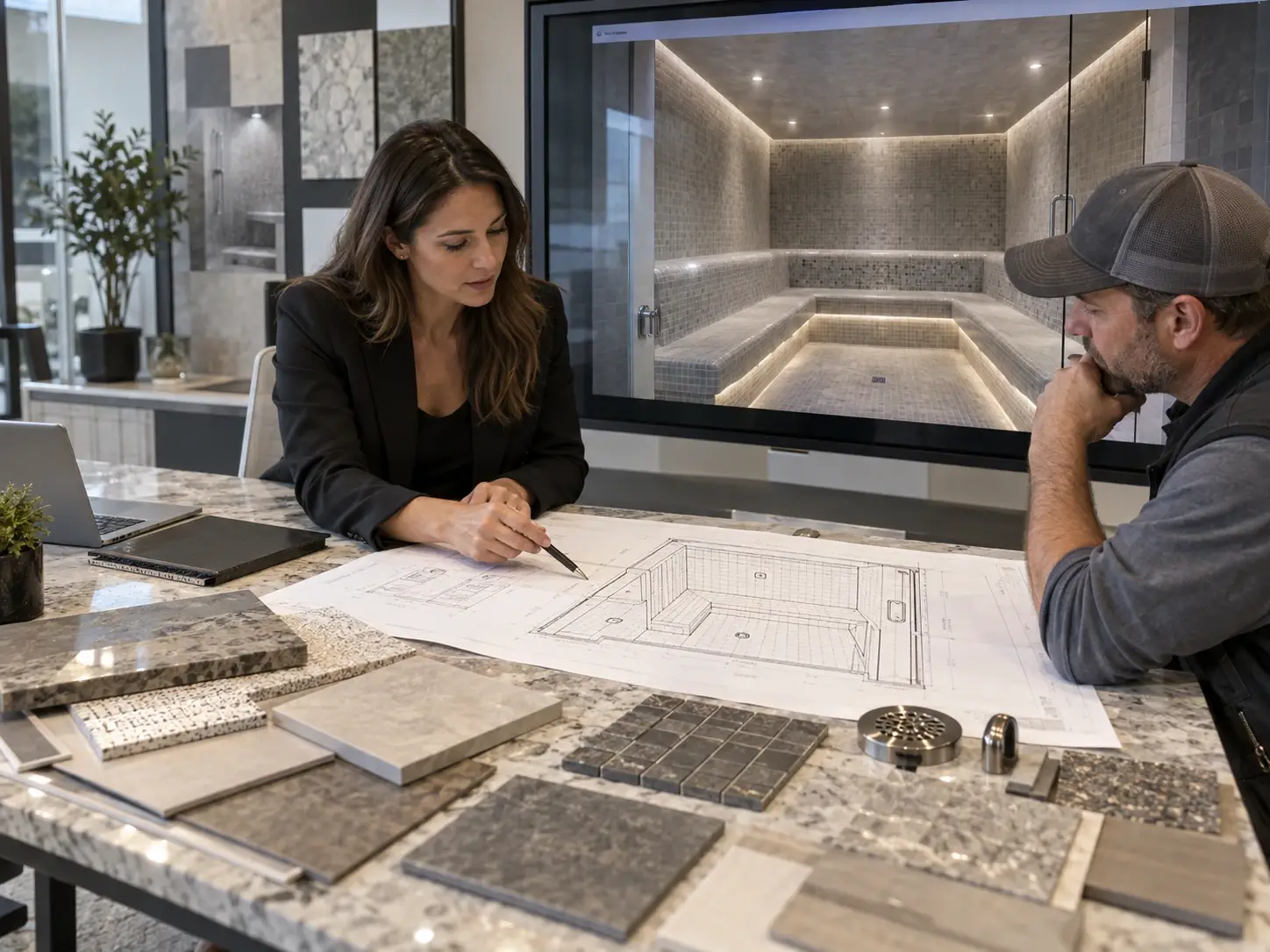
Commercial steam room design is the architectural and technical planning behind a steam room intended for repeated shared use. It coordinates the enclosure, mechanical equipment, finishes, plumbing, electrical systems, ventilation and user experience before construction begins.
A successful design must do more than create an attractive room. It should produce a comfortable steam environment, protect surrounding construction from moisture, provide practical maintenance access and support the frequency of use expected in the facility.
What Does Commercial Steam Room Design Include?
- Steam room dimensions and finished volume
- Expected occupant capacity
- Bench size, depth and layout
- Door location and circulation
- Accessibility requirements
- Ceiling height and geometry
- Waterproofing system
- Vapor-management strategy
- Floor and bench drainage
- Steam generator sizing and location
- Steam outlet location
- Control placement
- Electrical requirements
- Water supply and plumbing
- Lighting
- Glass and door design
- Ventilation and adjacent-space HVAC coordination
- Finish materials
- Cleaning access
- Generator and valve service access
For properties evaluating both dry-heat and steam amenities, read our
Commercial Sauna Installation Guide for Hotels, Gyms and Spas
.
Steam Room Design Requirements
Steam room design requirements extend beyond ordinary bathroom construction because a steam room intentionally produces sustained heat, vapor and condensation.
The exact requirements depend on the selected steam system, project specifications and local building requirements, but the following design categories should be resolved before construction.
| Design Requirement | What Should Be Planned |
|---|---|
| Room enclosure | Walls, ceiling, benches, door and penetrations designed as a complete steam enclosure. |
| Waterproofing | A continuous waterproofing assembly appropriate for repeated steam exposure. |
| Vapor control | A steam-room assembly designed to reduce unwanted vapor movement into surrounding construction. |
| Ceiling | Geometry that helps manage condensation and reduces uncomfortable dripping onto users. |
| Drainage | Floor and bench slopes that support drainage, cleaning and drying. |
| Generator | Steam equipment selected according to corrected room volume, materials and commercial use. |
| Plumbing | Water supply, steam line, drainage and equipment connections coordinated before walls close. |
| Electrical | Generator power, controls, lighting and other electrical components coordinated with the manufacturer and electrician. |
| Ventilation | A strategy for humidity in surrounding spaces and drying of the room consistent with the equipment and HVAC design. |
| Materials | Steam-compatible tile, grout, glass, waterproofing and other finishes suited to commercial cleaning. |
| Accessibility | Door, circulation, seating and related accessibility requirements reviewed for the specific facility. |
| Service access | Generator, valves, controls and other serviceable components remain accessible after construction. |
Design rule:
Resolve the room construction, moisture strategy, generator, plumbing, electrical system, drainage and ventilation before selecting the final decorative finishes.
Steam Room Size: How Big Should a Commercial Steam Room Be?
There is no single correct steam room size for every hotel, gym, spa or condominium. The room should be sized around expected occupancy, user comfort, bench layout, circulation, accessibility and the amount of floor area available for the wellness program.
What Determines Commercial Steam Room Size?
- Expected number of simultaneous users
- Peak traffic periods
- Bench configuration
- Required circulation
- Accessibility
- Door location
- Ceiling height
- Maintenance and cleaning access
- Relationship to showers and locker rooms
- Available mechanical and generator space
How is steam room size used for generator sizing?
The finished length, width and height determine the basic cubic volume of the room. Generator selection may then need to account for other factors such as glass, dense finish materials, ceiling height, insulation and expected commercial usage. Follow the selected manufacturer’s sizing method rather than selecting equipment from floor area alone.
Do Not Oversize the Room Without Considering Performance
A larger commercial steam room is not automatically better. Increasing room volume also increases the amount of space and surface area that must be heated and filled with steam.
The ideal size balances guest capacity with heating performance, construction budget, cleaning requirements and available floor area.
Who Needs Commercial Steam Room Design and Construction?
Hotels and Resorts
Hotels and resorts use commercial steam rooms as part of spa, fitness and luxury amenity programs. The space needs to feel premium while remaining intuitive for guests and practical for engineering and housekeeping teams.
Gyms and Fitness Clubs
High-use gym steam rooms require durable finishes, effective drainage, convenient cleaning access and equipment designed around repeated use and recovery.
Spas and Wellness Centers
Spa projects often place greater emphasis on lighting, materials, bench comfort, aromatherapy options, transitions to showers and the overall emotional experience of the space.
Luxury Condominiums
Luxury residential developments can use steam rooms as part of a broader wellness amenity package. These projects often require coordination among developers, architects, engineers, contractors, interior designers, property management and specialty installers.
Country Clubs and Private Clubs
Private clubs may require steam rooms designed for repeated member use while matching the finish quality of surrounding locker rooms and wellness areas.
Architects, General Contractors and Designers
A steam-room specialist can help the broader design team identify technical details that may not appear in a typical bathroom or shower project.
Planning a Commercial Steam Room Before Construction
A successful project begins before tile, stone or decorative finishes are selected. Ownership and the design team should first define how the room will be used and how the technical systems will support that use.
Define the User Experience
A hotel guest, fitness-club member, spa customer and condominium resident may expect different experiences. The room design should reflect the intended users rather than applying the same layout to every project.
Determine Occupancy
Estimate how many people may use the room simultaneously during normal and peak periods. This influences steam room size, bench layout, circulation, generator performance and cleaning requirements.
Plan the Mechanical Space
The steam generator needs a suitable location with the plumbing, electrical service, drainage and service clearances required by the manufacturer.
The generator should not become an afterthought once walls and ceilings are already closed.
Coordinate the Project Team
Commercial steam room construction may involve:
- Owner or developer
- Architect
- Interior designer
- General contractor
- Steam-room specialist
- Waterproofing contractor
- Tile contractor
- Electrician
- Plumber
- HVAC contractor
- Building management
Questions to Resolve Before Construction
- How many people should the room accommodate?
- What are the finished room dimensions?
- How will benches be arranged?
- Who is specifying the steam-room waterproofing and vapor-control assembly?
- How will the ceiling manage condensation?
- How will floors and benches drain?
- How will the steam generator be sized?
- Where will the generator be located?
- How will technicians access it later?
- Where will steam enter the room?
- Where will the control be installed?
- How will plumbing and electrical service reach the equipment?
- How will humidity be controlled in surrounding spaces?
- How will the room be cleaned?
- What accessibility requirements apply?
- Who will commission and test the finished system?
Steam Room Construction Details That Matter Most
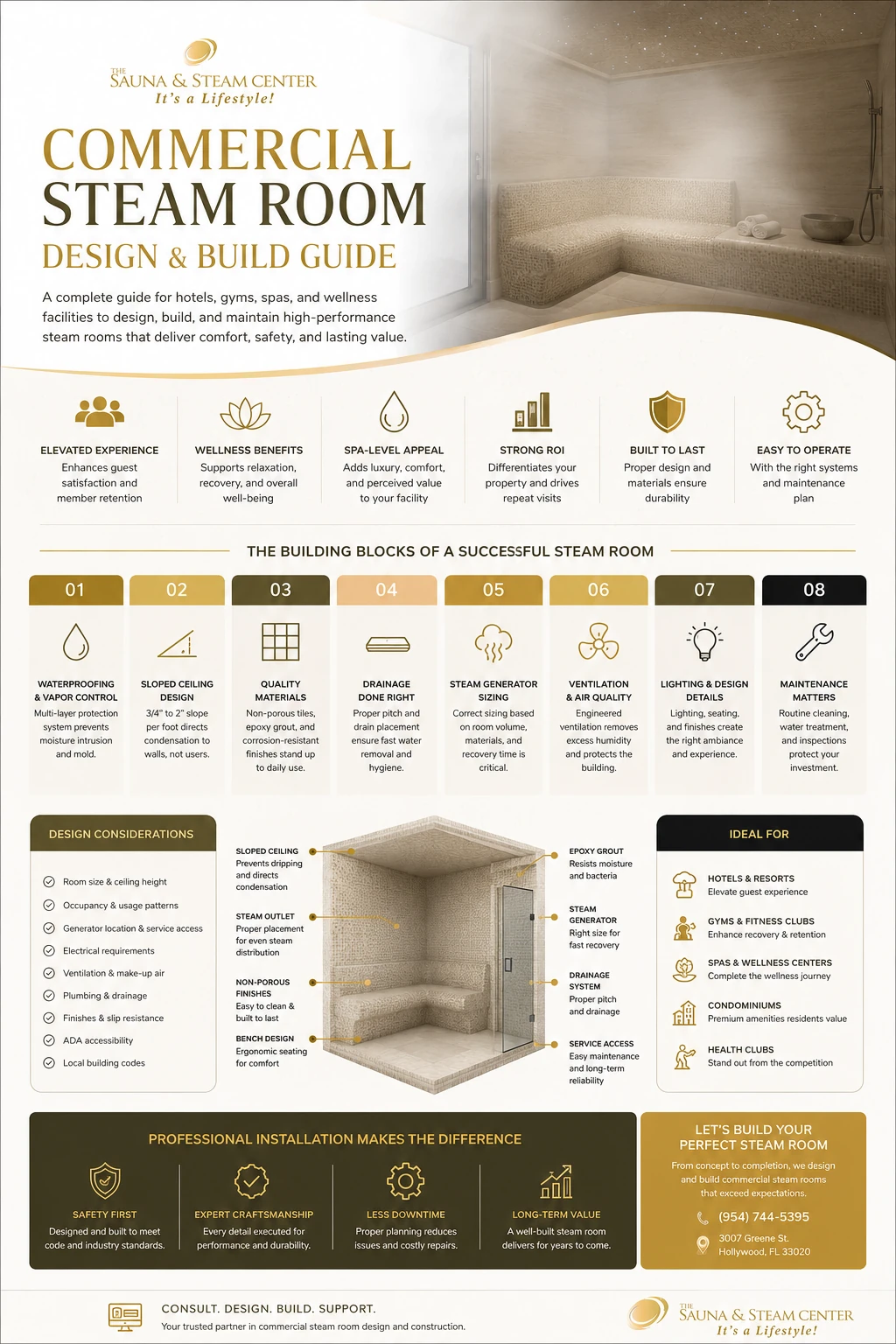
Steam room construction details determine how effectively the finished enclosure manages liquid water, steam vapor, condensation, cleaning and repeated temperature changes.
The following areas deserve particular attention during design and construction.
Wall and Ceiling Assemblies
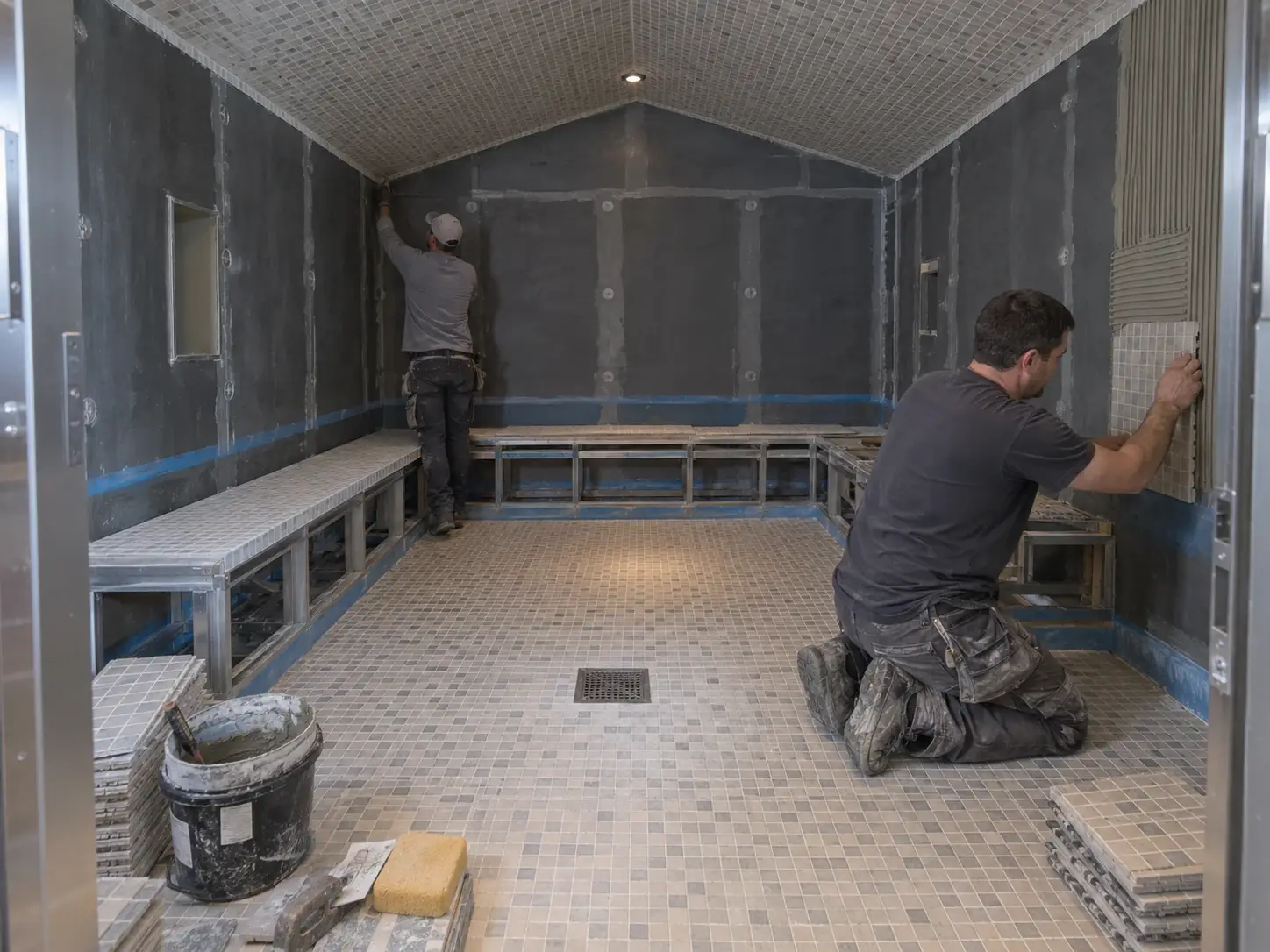
Walls and ceilings should use an assembly suitable for steam-room exposure. The waterproofing and vapor-management strategy should remain continuous across surfaces, corners and transitions.
Penetrations
Controls, lighting, steam outlets, plumbing, fasteners and other penetrations interrupt the enclosure. These details should be planned and sealed according to the selected system instead of being improvised after tile installation.
Benches
Commercial benches should balance comfort, drainage, durability and cleanability. Bench geometry should also avoid unnecessary areas where water can remain trapped.
Ceiling Geometry
Steam condenses when it contacts cooler surfaces. Ceiling geometry should help condensation move toward appropriate surfaces instead of repeatedly dripping onto guests.
Floor Construction and Drainage
The finished floor should support drainage and routine cleaning without unnecessary pooling. Drain location should be coordinated before the waterproofing and tile system are installed.
Door and Glass Details
The door affects user circulation and moisture containment. Glass can create a more open appearance, but large glass areas can also influence heat loss and therefore equipment sizing.
Generator and Valve Access
Serviceable components should remain accessible after construction. Hiding equipment behind permanently finished construction can make routine service unnecessarily expensive.
Construction detail rule:
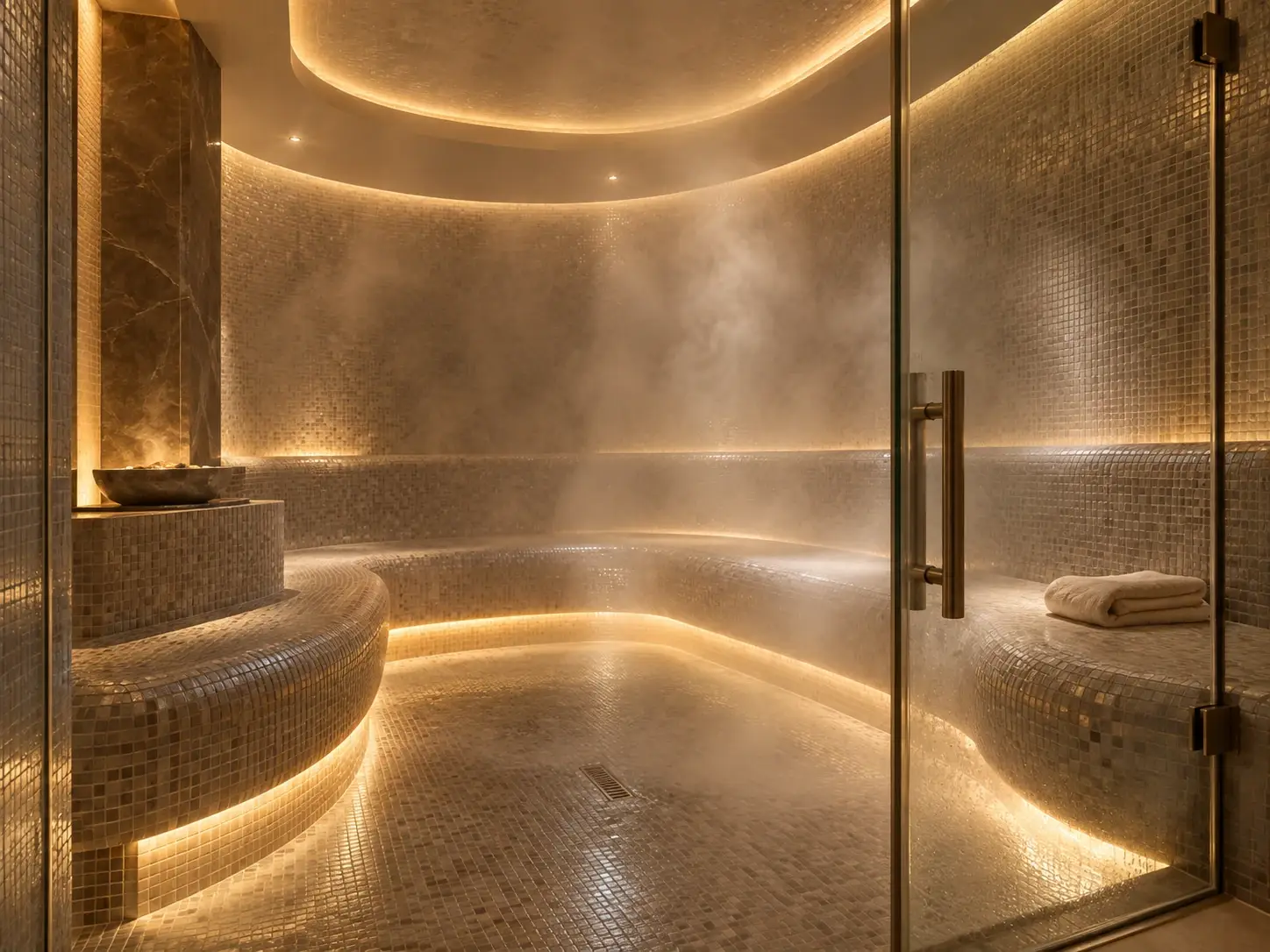
The most expensive steam room details to correct are often the ones hidden behind finished tile. Resolve penetrations, membranes, drains, equipment access, plumbing routes and electrical requirements before the finish system is installed.
Commercial Steam Room Construction Process: Step by Step
The exact process varies by project, but a professional commercial steam room build typically follows this sequence.
- Define occupancy and intended use.
Determine expected users, operating frequency and how the room connects to showers, locker rooms, saunas, cold plunges or relaxation areas. - Finalize steam room size and layout.
Coordinate room dimensions, benches, circulation, door location, accessibility and ceiling geometry. - Select the steam generator early.
Use the manufacturer’s sizing method and account for room volume, finishes, glass and commercial usage. - Plan the generator location.
Provide required utilities, drainage and future service access. - Coordinate plumbing and electrical systems.
Resolve water supply, steam line, drains, electrical service, controls and lighting before walls close. - Construct the enclosure.
Build the walls, ceiling and benches using assemblies appropriate for the specified steam-room system. - Install waterproofing and vapor management.
Create continuity across walls, ceiling, benches, corners and penetrations. - Complete floor and bench slopes.
Plan surfaces so cleaning water and condensation can move toward appropriate drainage points. - Install tile or approved finishes.
Use finishes and installation materials suitable for steam exposure and the commercial cleaning program. - Install steam equipment and controls.
Complete the generator, steam outlet, controls and accessories according to manufacturer instructions. - Coordinate ventilation and HVAC.
Confirm how moisture will be managed in adjacent spaces and how the steam area will dry after operation. - Commission the steam room.
Test steam production, controls, condensate behavior, drainage, doors, lighting and equipment access before turnover.
Why sequencing matters:
Once a commercial steam room is tiled and finished, correcting hidden construction problems becomes significantly more disruptive. Technical coordination should happen before final finishes.
Commercial Steam Room Waterproofing and Vapor Management
Waterproofing is one of the most important elements of steam room design and construction. A steam room produces both liquid water and water vapor, which means the enclosure must manage more than splash exposure.
Waterproofing vs Vapor Control
Waterproofing helps prevent liquid water from moving into the building assembly. Vapor control addresses water vapor that can move through or around construction materials.
Commercial steam rooms must account for both.
Areas That Need Careful Detailing
- Walls
- Ceiling
- Benches
- Inside and outside corners
- Wall-to-floor transitions
- Drains
- Controls
- Lighting penetrations
- Steam outlet penetrations
- Doors and thresholds
Why Commercial Use Matters
Hotels, gyms and spas may operate steam rooms for many hours and clean them repeatedly. The enclosure therefore needs to be designed for sustained exposure rather than occasional residential use.
Steam Room Ceiling Slope, Drainage and Condensation Control
Condensation is normal inside a steam room. Good design controls how that condensation behaves.
Why Ceiling Design Matters
A properly designed ceiling can help condensation move toward walls instead of collecting overhead and repeatedly dripping onto users.
Floor Drainage
Commercial steam-room floors should support effective drainage and routine cleaning. The location of drains and finished slopes should be coordinated early in construction.
Bench Drainage
Bench surfaces should consider runoff, cleaning and guest comfort rather than creating large flat areas where moisture can remain.
Door and Threshold
The entrance should support moisture containment while maintaining safe and convenient access. Door, threshold and adjacent-floor details all influence long-term performance.
Best Materials for Commercial Steam Room Design
Commercial steam room materials should be selected for moisture resistance, durability, heat exposure, cleaning requirements and the design quality expected by the facility.
| Material or Component | Why It Matters | Commercial Consideration |
|---|---|---|
| Porcelain tile | Durable, low-absorption and available in many finishes. | Often well suited to commercial wet environments when installed as part of an appropriate steam-room system. |
| Steam-rated waterproofing | Protects the underlying assembly from moisture exposure. | The membrane and complete assembly should be approved for the intended steam application. |
| Grout | Joint performance affects appearance and maintenance. | Select a system appropriate for moisture, cleaning products and commercial use. |
| Tempered glass | Creates openness and a premium appearance. | Glass can increase heat loss and may affect generator sizing. |
| Natural stone | Can provide a luxury appearance. | Porosity, maintenance and thermal characteristics should be considered before selection. |
| Slip-resistant flooring | Supports safer movement in wet conditions. | Surface texture should balance traction with cleaning requirements. |
| Commercial lighting | Supports visibility and atmosphere. | Fixtures and installation details should be suitable for the intended wet and humid environment. |
The maintenance team should be involved in material decisions whenever possible. A beautiful finish that is difficult to clean or maintain may not be the best choice for a heavily used commercial steam room.
Commercial Steam Generator Sizing
The steam generator is the mechanical heart of the room. Correct sizing affects heat-up time, steam production, user comfort and recovery between sessions.
What Affects Steam Generator Size?
- Finished room length
- Finished room width
- Finished ceiling height
- Total cubic volume
- Glass area
- Tile and stone
- Other dense materials
- Insulation
- Ceiling configuration
- Commercial operating schedule
- Expected recovery performance
Should a steam generator be sized using cubic feet alone?
Room volume is the starting point, but generator selection may also require adjustments for finish materials, glass, ceiling height and other project conditions. Commercial projects should follow the sizing methodology of the selected steam-equipment manufacturer.
Why Commercial Recovery Matters
A generator serving a heavily used gym, resort or spa may operate under different conditions from a private residential steam shower. The system should be selected for the real operating environment.
Steam Room Ventilation Requirements
Steam room ventilation requirements are frequently misunderstood because the steam room itself is intentionally humid. The goal is not simply to remove steam as quickly as possible while the room is operating.
Instead, the design should coordinate the steam enclosure with surrounding HVAC so that humidity remains controlled, nearby rooms remain comfortable and the enclosure can dry appropriately after use.
Commercial Ventilation Planning Should Consider:
- Humidity migration when the door opens
- Locker-room ventilation
- Spa or corridor HVAC
- Air conditioning loads
- Exhaust serving surrounding wet areas
- Dehumidification where the broader facility design requires it
- Room drying after operating hours
- Generator manufacturer requirements
- Applicable mechanical and building requirements
Do not assume a standard bathroom exhaust fan should simply be installed inside the steam enclosure.
Ventilation strategy should be coordinated with the steam equipment manufacturer, HVAC designer and applicable project requirements. Excessive exhaust during operation can work against the intended steam environment.
Steam Room Ventilation Design for Hotels, Gyms and Spas
Steam room ventilation design should look beyond the enclosure itself. The surrounding locker room, corridor, spa, lounge or mechanical space also needs to remain comfortable when the steam-room door opens repeatedly throughout the day.
Control Humidity Migration
Every time a commercial steam-room door opens, warm humid air can move into surrounding spaces. Door placement and adjacent HVAC should account for this normal operating condition.
Plan for Drying
The room should have a practical path to dry between operating periods. Drying strategy may involve the enclosure design, door position, surrounding HVAC and procedures followed by facility staff.
Coordinate With the HVAC Engineer Early
The HVAC professional should know:
- Where the steam room is located
- Its expected operating hours
- Expected user volume
- How often the door may open
- Which rooms are adjacent
- How the locker room or spa is conditioned
- How moisture will be exhausted or removed from the broader area
Why South Florida Requires Extra Attention
In South Florida, the surrounding outdoor environment already carries significant heat and humidity for much of the year. Commercial steam rooms add another concentrated moisture source, making building-envelope and HVAC coordination especially important.
Design and Construction of a Sauna and Steam Room in the Same Wellness Area
Hotels, clubs, luxury condominiums and wellness centers frequently install a sauna and commercial steam room within the same amenity area.
These two heat-room systems can complement each other, but they should not be built using identical construction details.
| Design Factor | Sauna | Steam Room |
|---|---|---|
| Environment | High heat with comparatively lower humidity | Warm, saturated high-humidity environment |
| Interior finish | Typically sauna-safe wood | Typically tile, stone or another approved steam-room finish |
| Moisture strategy | Designed for sauna heat, insulation, vapor management and ventilation | Continuous waterproofing, vapor management, drainage and condensation control |
| Heating equipment | Traditional sauna heater or infrared system | Steam generator |
| Condensation | Less significant than in steam rooms | Major design factor |
| Shared planning | Showers, towel storage, locker-room circulation, cooling spaces, accessibility, mechanical rooms and service access can be coordinated across the complete wellness area. | |
For combined projects, review our
Commercial Sauna Installation Guide
alongside this commercial steam room guide.
Common Commercial Steam Room Construction Problems
Many steam-room problems originate in planning and construction rather than in the concept of steam itself.
Insufficient Waterproofing or Vapor Management
Steam-room moisture can affect wall and ceiling assemblies when the enclosure is not properly designed and detailed.
Poor Ceiling Design
Uncontrolled condensation may drip onto users and reduce the quality of the experience.
Incorrect Generator Sizing
A generator that is not suited to the corrected room load can result in slow performance or an inconsistent steam environment.
Poor Drainage
Standing water makes cleaning more difficult and can contribute to staining, odors and maintenance concerns.
No Service Access
Generators, valves and controls eventually require maintenance. Equipment installed where technicians cannot reach it can create unnecessary downtime and repair costs.
Weak Ventilation Coordination
A steam room can operate correctly while still causing discomfort in adjacent spaces if the broader HVAC and moisture strategy was ignored.
Bottom line:
The best time to prevent a commercial steam-room problem is during design, before waterproofing, tile and equipment installation make changes expensive.
Commercial Steam Room Design for a Better Guest Experience
Technical performance is essential, but commercial steam room design should also create an environment that feels intentional and premium.
Lighting
Soft or indirect lighting can create a calmer atmosphere than harsh overhead illumination.
If your wellness project is exploring color-based lighting, see our
Chromotherapy Color Chart Guide
.
Bench Comfort
Bench depth, height, layout and surface geometry influence comfort. Commercial seating must also remain practical for routine cleaning.
Steam Outlet Placement
The steam outlet should be positioned according to manufacturer instructions and coordinated with seating so users are not unnecessarily exposed to concentrated hot steam.
Controls
Control placement should be easy to understand while supporting the operating strategy chosen by the property.
Transition to Other Wellness Amenities
Showers, hydration, towels, cool-down areas, saunas and cold plunges can extend the overall wellness experience.
For properties exploring contrast therapy, read our
Sauna and Cold Plunge Guide
Commercial Steam Room Maintenance and Service Access
Commercial steam rooms require ongoing cleaning and equipment maintenance. The design should make those tasks easier rather than hiding critical components behind decorative finishes.
Routine Maintenance May Include:
- Cleaning benches
- Cleaning floors and walls
- Cleaning glass and touch points
- Inspecting drains
- Checking grout, sealants and transitions
- Following manufacturer generator maintenance procedures
- Inspecting controls and accessories
- Monitoring moisture outside the enclosure
- Maintaining visible user instructions and safety signage
Service Access Should Be Designed Before Construction
Plan access to:
- Steam generator
- Water connections
- Valves
- Drain connections
- Electrical components
- Controls
- Other serviceable equipment
Ownership consideration:
Commercial steam room design should account for the people who will clean and service the room after the project is complete. A visually beautiful room that is difficult to maintain can become expensive to operate.
Commercial Steam Room Design and Construction in South Florida
South Florida hotels, spas, gyms, luxury condominiums and wellness facilities operate in a climate where humidity management already requires careful building design.
For commercial steam rooms in Miami-Dade, Broward and Palm Beach, project teams should pay particular attention to:
- Waterproofing
- Vapor management
- HVAC coordination
- Adjacent-space humidity
- Drainage
- Corrosion-resistant material selection where appropriate
- Equipment access
- Commercial cleaning requirements
- Long-term serviceability
Sauna & Steam Center has served South Florida wellness projects since 2004, helping clients plan and build sauna, steam room and other wellness environments for residential and commercial applications.
For smaller residential projects, see our
Home Steam Room Planning Guide
.
Planning a Commercial Steam Room?
Design the Room Correctly Before Construction Begins
Sauna & Steam Center can help hotels, gyms, spas, luxury condominiums, clubs and wellness facilities plan commercial steam rooms around the room dimensions, expected use, steam equipment, waterproofing, drainage, controls, electrical requirements, plumbing, ventilation and long-term service needs.
Send us your plans, room dimensions, project location and intended use so we can help evaluate the next steps.
Frequently Asked Questions About Steam Room Design and Construction
What does steam room design and construction include?
Steam room design and construction includes room sizing, layout, waterproofing, vapor control, ceiling geometry, drainage, steam generator sizing, controls, lighting, electrical and plumbing coordination, ventilation, accessibility, finish materials, service access and final commissioning.
What are the main steam room design requirements?
The main design requirements include a steam-rated enclosure, waterproofing, vapor management, drainage, condensation control, properly sized steam equipment, plumbing and electrical service, suitable finishes, ventilation planning and access for maintenance.
What are the most important steam room construction details?
Important construction details include wall and ceiling assemblies, membrane continuity, penetrations, corners, benches, floor slopes, drains, ceiling geometry, door details, steam outlet placement and equipment service access.
How is commercial steam room design different from residential design?
Commercial steam rooms usually have higher occupancy, longer operating hours, more frequent cleaning and greater recovery requirements. Design therefore places additional emphasis on durability, maintenance, equipment performance and service access.
What size should a commercial steam room be?
Commercial steam room size should be based on expected occupancy, bench layout, circulation, accessibility and available floor area. Finished room volume also influences steam generator sizing.
How is a steam generator sized?
Steam generator sizing starts with finished room volume and may require adjustments for ceiling height, glass, stone, tile, insulation and other construction conditions. Commercial operating patterns should also be considered according to the equipment manufacturer’s sizing guidance.
What are steam room ventilation requirements?
Steam room ventilation should be coordinated with the equipment manufacturer, HVAC design and applicable project requirements. The broader system should manage humidity migration into adjacent spaces and support drying without unnecessarily removing steam during normal operation.
How should steam room ventilation be designed?
Ventilation design should consider the steam-room door, surrounding locker rooms or spa areas, exhaust strategy, air conditioning, humidity control and how the room dries after operating periods. Commercial projects should coordinate this with the HVAC professional early in design.
Does a commercial steam room need a sloped ceiling?
Sloped or otherwise appropriately designed ceilings are commonly used to help manage condensation so droplets are less likely to fall directly onto users. Final geometry should follow the selected project system and professional design requirements.
What materials are used in commercial steam rooms?
Commercial steam rooms commonly use porcelain tile, steam-rated waterproofing assemblies, appropriate grout systems, tempered glass and other moisture-tolerant finishes. Materials should be evaluated for steam exposure, durability and commercial cleaning.
Can a sauna and steam room be constructed together?
Yes. A sauna and steam room can share a larger wellness area, but they require different enclosure assemblies, heating equipment and moisture strategies. Their showers, cooling areas, circulation and service spaces can be coordinated as part of the overall project.
Can an existing hotel, gym or spa add a commercial steam room?
Often yes, but the proposed area should first be evaluated for room size, drainage, plumbing, electrical service, ventilation, waterproofing, generator location, structural conditions and maintenance access.
Why is service access important in commercial steam room construction?
Steam generators, valves, controls and related components require maintenance. Planning access before construction can reduce downtime and avoid opening finished walls or ceilings during future repairs.
Conclusion: Steam Room Design and Construction Should Be Planned as One System
Steam room design and construction involves much more than choosing attractive tile and adding a steam generator. A successful commercial steam room coordinates room size, waterproofing, vapor management, drainage, ceiling design, generator performance, plumbing, electrical service, ventilation, materials and maintenance from the beginning.
For hotels, gyms, spas, clubs, condominiums and wellness centers, these details determine whether the room is comfortable for guests and practical for the property to operate.
Bottom line:
Start with the technical requirements first. Determine the room size and occupancy, design the enclosure and moisture strategy, size the steam equipment, coordinate plumbing, electrical and ventilation, preserve service access and then select the finishes that create the desired guest experience.
Planning a project in South Florida?
Contact Sauna & Steam Center
to discuss your commercial steam room design and construction requirements.
References
Tile Council of North America: Steam Room Tile Installation Guidance
ADA.gov: 2010 ADA Standards for Accessible Design
U.S. Environmental Protection Agency: A Brief Guide to Mold, Moisture and Your Home
U.S. Department of Energy: Ventilation
Occupational Safety and Health Administration: Electrical Safety