
Last updated: May 29, 2026
Sauna Benefits: What a Sauna Can Really Do for Your Body, Mind, and Home Wellness Routine
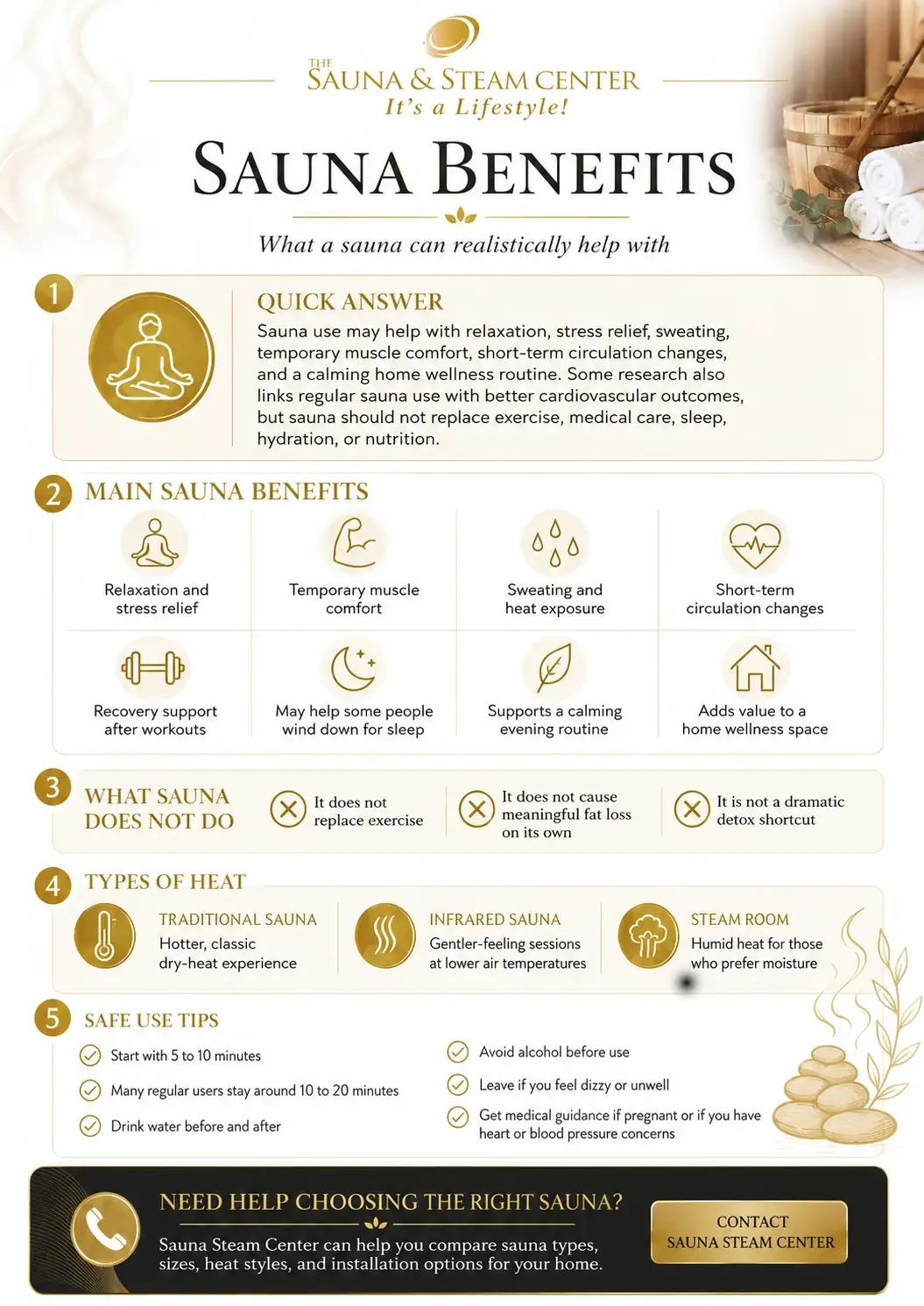
Quick answer: The most realistic sauna benefits include relaxation, stress relief, sweating, temporary muscle comfort, short-term circulation changes, and a calming routine that can support recovery and sleep habits. Some research also links regular sauna use with better cardiovascular outcomes, but those findings should be understood carefully. A sauna can support a healthy lifestyle, but it does not replace exercise, medical care, sleep, hydration, or nutrition.
If you are searching for sauna benefits because you are thinking about buying a home sauna, this guide is written for you. We are not a medical institution, so we will not make medical promises. Instead, we will explain what sauna use may help with, what claims are overstated, how to use a sauna safely, and how to choose the right sauna experience for your home.
Important note: This article is for general education and home sauna planning. It is not medical advice. If you are pregnant, have heart disease, blood pressure concerns, fainting episodes, heat sensitivity, or take medications that affect sweating or hydration, ask a qualified healthcare professional before using a sauna.
Key Takeaways
- The clearest sauna benefits are relaxation, stress relief, sweating, and temporary comfort for tight or sore muscles.
- Sauna heat can raise heart rate, widen blood vessels, and increase sweating during a session.
- Research on long-term heart-health benefits is promising, but much of it is observational, so it should not be treated as proof that sauna alone prevents disease.
- Sauna weight loss is mostly water loss from sweating, not true fat loss.
- Sauna “detox” claims are often overstated. Your liver and kidneys do most detox work.
- For home use, the best sauna is the one that fits your space, heat preference, budget, and routine well enough that you actually use it.
What Is a Sauna?
A sauna is a heated room or enclosed cabin designed for short sessions of heat exposure. People use saunas to relax, sweat, warm the body, and create a quiet wellness routine. Traditional saunas heat the air. Infrared saunas use infrared light to warm the body more directly at lower air temperatures. Steam rooms use humid heat, which feels different from the dry heat of most saunas.
The word “sauna benefits” can mean many things. Some benefits are easy to feel right away, like relaxation and warmth. Others, such as long-term cardiovascular support, are more complex and should be discussed with care. The most honest way to think about sauna use is this: a sauna may be a helpful wellness tool, but it is not a cure or shortcut.
What Happens to Your Body in a Sauna?
When you sit in a sauna, your body responds to heat. Your skin temperature rises, blood vessels widen, heart rate may increase, and sweating begins as your body works to cool itself. These changes explain why many people feel warm, flushed, calm, or sleepy after a sauna session.
Common short-term effects include:
- More sweating
- A faster heart rate
- Warmth in the skin and muscles
- A relaxed or sleepy feeling after cooling down
- Temporary relief from stiffness for some people
- A calmer post-workout or end-of-day routine
These effects are real, but they should be understood in context. A sauna may help you feel better, but it should not be used as a replacement for medical care, exercise, or basic recovery habits.
12 Realistic Sauna Benefits
1. Sauna can help you relax
Relaxation is one of the clearest sauna benefits. A warm, quiet space can help you slow down, breathe easier, and step away from work, screens, and noise. For many home sauna owners, this is the main reason they use it regularly.
This benefit does not need to be exaggerated. If a sauna helps you unwind at the end of the day, that is already meaningful value.
2. Sauna may help reduce stress
Sauna use can support stress relief because it creates a calm ritual. Heat, quiet, privacy, and a predictable routine can make the body feel more settled. Some people use their sauna as a daily reset after work, while others use it after exercise or before bed.
For home use, this is one of the strongest practical benefits because it is easy to repeat. You do not need to schedule a spa visit or drive to a gym. The routine is available when you are.
3. Sauna may help sore muscles feel better temporarily
Heat often helps tight or sore muscles feel warmer and more comfortable. This is why many people enjoy a sauna after training, yard work, or long hours sitting at a desk.
A sauna does not repair muscles by itself, and it does not replace sleep, hydration, protein, stretching, or smart training. But as part of a recovery routine, it can make the body feel looser and more relaxed.
For more detail on post-workout timing, read our guide to using a sauna after the gym.
4. Sauna increases sweating
Sweating is one of the most obvious effects of sauna use. Your body sweats to help regulate temperature. Many people enjoy the refreshed feeling they get after sweating, cooling down, and drinking water.
Still, sweating should not be confused with deep detox or fat loss. Sweat loss is mostly fluid loss, which is why hydration matters before and after a session.
5. Sauna creates short-term circulation changes
Heat causes blood vessels near the skin to widen. Your heart rate may also rise during a sauna session. This can create a warm, flushed feeling and may explain why sauna use feels restorative for many people.
These short-term changes are one reason researchers study sauna bathing. But they do not mean sauna is the same as exercise. Exercise trains muscles, bones, balance, endurance, and cardiovascular fitness in ways sauna cannot fully copy.
6. Sauna may support heart-health goals as part of a healthy lifestyle
Some research links regular sauna bathing with better cardiovascular outcomes. This is promising, but it should be understood carefully. Many studies are observational, which means they can show a connection but cannot always prove that sauna use alone caused the benefit.
The practical takeaway is simple: sauna may fit well into a heart-conscious lifestyle for some people, but it should not replace movement, medical care, blood pressure management, or guidance from a healthcare professional.
7. Sauna may help some people sleep better
Some people find that sauna use helps them wind down before bed. This may be because the session creates a relaxing routine, followed by a cooling-down period that feels calming.
This effect is personal. If a sauna makes you feel too hot, thirsty, or energized, try using it earlier in the evening or shortening the session.
8. Sauna may help with temporary stiffness
Warmth can make stiff areas feel more comfortable. People who feel tight after travel, desk work, cold weather, or exercise may enjoy the loosened feeling that comes after heat exposure.
This is a comfort benefit, not a medical treatment claim. If stiffness is severe, new, or linked to a health condition, get medical advice.
9. Sauna can create a healthier evening routine
A sauna can help replace less helpful evening habits. Instead of scrolling, snacking, or staying mentally “on,” a sauna session gives you a simple reason to slow down. That can make your overall routine feel more intentional.
This matters because wellness is often easier when the habit is enjoyable. A home sauna can turn relaxation into something you actually look forward to.
10. Sauna may support post-workout recovery habits
After exercise, sauna use may help some people transition into rest. The warm environment can feel soothing, and the quiet time can make recovery feel more complete.
For best results, treat sauna as one piece of recovery. Sleep, hydration, nutrition, and proper training still matter most.
11. Sauna may improve your home wellness space
A home sauna can make your house feel more restorative. For many buyers, the benefit is not only physical. It is also lifestyle-based. A sauna creates a dedicated place to relax, recover, and take care of yourself without leaving home.
This is where a home sauna has an advantage over occasional spa use. The benefit becomes easier to repeat.
12. Sauna can be a long-term wellness ritual
The best wellness habits are the ones you continue. If you enjoy sauna bathing, it can become a consistent ritual for stress relief, recovery, warmth, and quiet time.
That is why the right sauna choice matters. If the heat style, size, and setup fit your life, you are more likely to use it often enough to feel the value.
Sauna Benefits: Evidence Strength Table
Not all sauna benefits are supported equally. Some are easy to feel right away. Others are promising but still need more research. This table gives a practical overview.
| Sauna Benefit | How Strong Is the Claim? | Best Way to Understand It |
|---|---|---|
| Relaxation | Strong practical benefit | Most people can judge this for themselves after a few sessions. |
| Stress relief | Strong practical benefit | Works best when sauna becomes a quiet, repeatable routine. |
| Sweating | Clear short-term effect | Sweating is expected, but hydration is important. |
| Temporary muscle comfort | Realistic short-term benefit | Heat may help tight or sore muscles feel better temporarily. |
| Short-term circulation changes | Clear short-term effect | Heat can widen blood vessels and raise heart rate during use. |
| Heart-health support | Promising but not a guarantee | Best viewed as a complement to healthy habits, not a treatment. |
| Sleep support | Personal and routine-dependent | May help some people wind down, especially with evening use. |
| Weight loss | Often overstated | Scale drops are mostly water loss, not fat loss. |
| Detox | Usually overstated | Sweating is not a replacement for liver and kidney function. |
Why Sauna Benefits Matter More When You Own One at Home
Many articles explain sauna benefits in general. But if you are thinking about buying a sauna, the real question is different: will this improve your daily life enough to justify the space, cost, and setup?
For home sauna buyers, the biggest benefits often come from convenience and consistency. A sauna at home is easier to use before bed, after training, on cold mornings, or whenever you need a quiet reset.
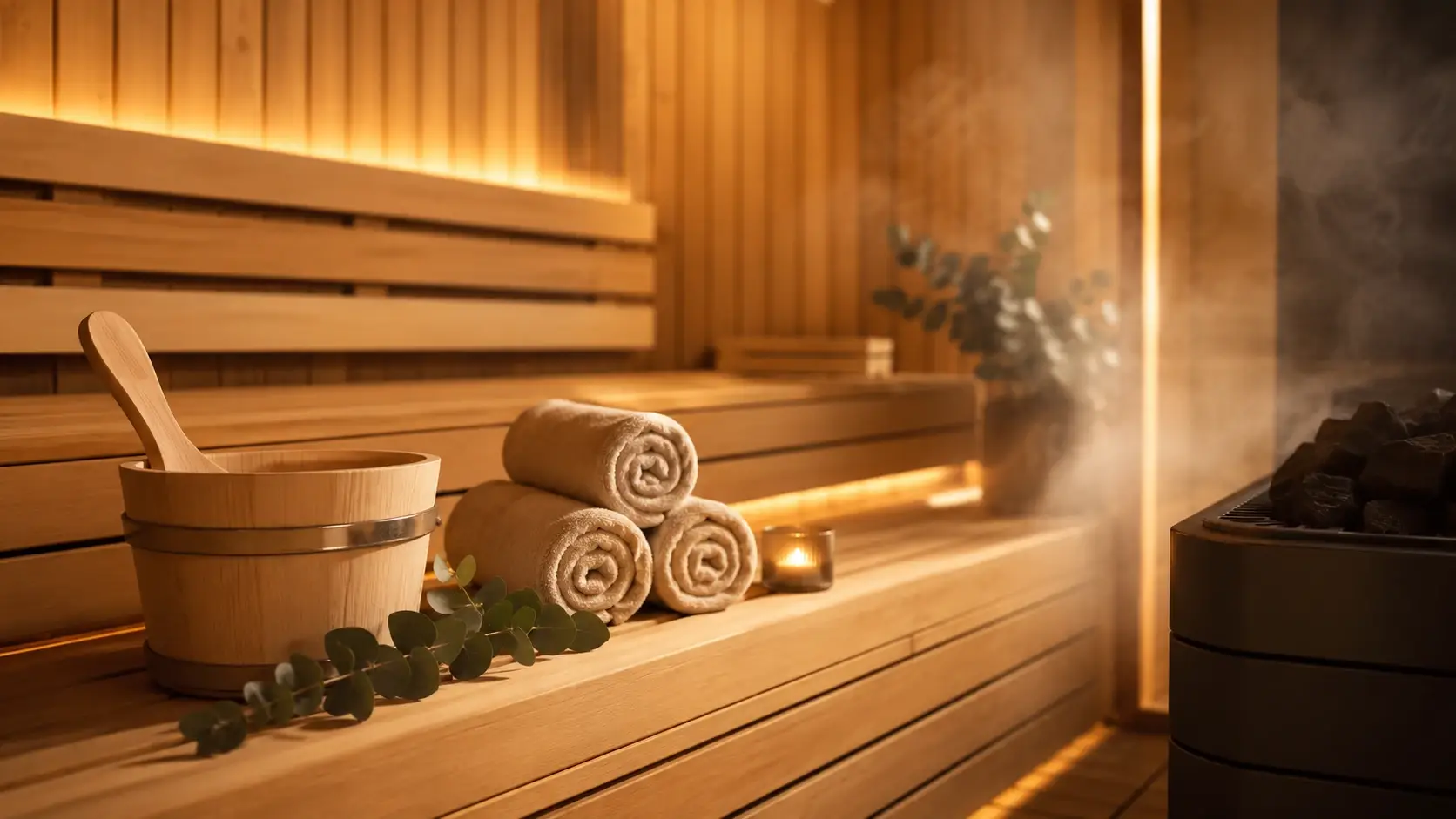
A home sauna may be worth it if you want:
- A private place to relax
- A repeatable recovery habit
- A warm space during colder months
- A wellness upgrade that does not require leaving home
- A calming routine after work or exercise
- A spa-like feature for your home
The best sauna value does not come from miracle claims. It comes from choosing a sauna you enjoy enough to use consistently.
Traditional Sauna vs. Infrared Sauna vs. Steam Room
The benefits you feel can depend on the type of heat you prefer. A traditional sauna, infrared sauna, and steam room can all feel restorative, but the experience is not the same.
| Type | How It Feels | Best For | Home Buyer Note |
|---|---|---|---|
| Traditional sauna | Hotter air, usually dry heat | People who want the classic sauna experience | Great for strong heat lovers and traditional sauna routines. |
| Infrared sauna | Lower air temperature with direct radiant heat | People who prefer a gentler-feeling session | Often appealing for frequent home use and easier tolerance. |
| Steam room | Humid, moist heat | People who prefer humidity over dry heat | Different from a sauna and usually requires different installation planning. |
Traditional sauna
A traditional sauna heats the air around you. It usually feels hotter and more intense than infrared. This is a strong choice if you want a classic sauna experience with high heat and a familiar spa-like feel.
Infrared sauna
An infrared sauna uses infrared light to heat the body more directly. Many people like infrared because the air temperature is usually lower than in a traditional sauna, which can make sessions feel easier to tolerate.
To compare options in more detail, read our infrared sauna benefits guide and our infrared vs. traditional sauna comparison.
Steam room
A steam room uses moist heat instead of dry heat. If you like humid warmth, steam may feel better than a dry sauna. If you are deciding between sauna and steam, read our guide to the benefits of steam.
How to Use a Sauna Safely
Sauna use is often well tolerated by healthy adults, but heat exposure should be respected. Safe use is especially important if you are new to saunas.
Simple sauna safety tips
- Start with 5 to 10 minutes if you are new.
- Many regular users stay around 10 to 20 minutes, depending on heat level and tolerance.
- Drink water before and after your session.
- Avoid alcohol before using a sauna.
- Leave the sauna if you feel dizzy, nauseated, weak, lightheaded, or uncomfortable.
- Cool down gradually after your session.
- Do not use sauna time as a toughness test.
- Do not use a sauna when you are sick, feverish, dehydrated, or hungover.
Beginner sauna routine
| Experience Level | Suggested Session | Goal |
|---|---|---|
| First time | 5 to 10 minutes | Learn how your body responds to heat. |
| Beginner | 10 to 15 minutes | Build comfort without overdoing it. |
| Regular user | 10 to 20 minutes | Create a repeatable relaxation or recovery routine. |
Important: Longer is not automatically better. A safe sauna session should leave you feeling restored, not drained.
Who Should Be Careful With Sauna Use?
Some people should get medical guidance before using a sauna. Heat can affect heart rate, blood pressure, sweating, and hydration.
Ask a healthcare professional first if you:
- Are pregnant or trying to avoid overheating during pregnancy
- Have unstable heart disease or a recent heart attack or stroke
- Have uncontrolled high blood pressure
- Have very low blood pressure or a history of fainting
- Have heart failure, valve disease, or another serious cardiovascular condition
- Take medications that affect sweating, hydration, blood pressure, or heat tolerance
- Have kidney disease or fluid-balance concerns
- Feel sick, feverish, dehydrated, hungover, or unusually weak
If you feel unwell during a sauna session, leave the sauna, cool down, and hydrate. If symptoms are serious or do not improve, seek medical help.

Sauna Myths and Overstated Claims
Myth 1: Sauna detoxes your body
Sauna makes you sweat, but sweating is mainly a cooling response. Your liver and kidneys do most of the body’s detox work. A sauna may help you feel refreshed, but it should not be marketed as a dramatic detox shortcut.
Myth 2: Sauna burns fat
A sauna session can make the scale drop temporarily because you lose water through sweat. That is not the same as losing body fat. Once you rehydrate, the water weight usually returns.
For a deeper explanation, read our guide: Do saunas help you lose weight?
Myth 3: Sauna replaces exercise
Sauna can raise heart rate, but it does not replace exercise. Movement builds strength, endurance, balance, bone health, and cardiovascular fitness in ways passive heat exposure cannot fully match.
Myth 4: Daily sauna use is necessary
Daily use may work for some healthy adults, but it is not required. A few comfortable sessions per week may be enough for relaxation, recovery support, and routine-building.
Myth 5: More heat always means more benefits
Higher heat and longer sessions can increase the risk of dehydration, dizziness, or overheating. The best sauna routine is controlled, comfortable, and repeatable.
How to Choose the Right Home Sauna
Once you understand the benefits, the next step is choosing a sauna that fits your home and your routine. This is where many buyers make mistakes. They choose based on big claims instead of comfort, space, and long-term use.
Before buying a home sauna, ask:
- Do I prefer intense traditional heat or gentler infrared heat?
- Will the sauna go indoors or outdoors?
- How many people will use it at once?
- What electrical requirements should I plan for?
- How much space do I have?
- How often will I realistically use it?
- Do I want a quick daily routine or a classic sauna ritual?
- How easy will it be to clean and maintain?
Choose by goal
| Your Main Goal | What to Prioritize |
|---|---|
| Relaxation | Comfortable seating, quiet design, easy access, and heat style you enjoy. |
| Post-workout recovery | Convenient placement, easy cooldown access, and enough room to sit comfortably. |
| Frequent home use | Simple controls, fast warm-up, manageable heat, and low-friction setup. |
| Classic sauna experience | Traditional heater, strong heat, quality materials, and proper ventilation. |
| Gentler heat tolerance | Infrared sauna options and lower air temperatures. |

FAQ About Sauna Benefits
What are the main benefits of a sauna?
The main sauna benefits are relaxation, stress relief, sweating, temporary muscle comfort, short-term circulation changes, and a calming routine that may support recovery and sleep habits.
Are saunas good for you?
Saunas can be good for many healthy adults when used safely. They may help with relaxation, comfort, and heat exposure. People with certain medical conditions should ask a healthcare professional before using one.
What does a sauna do to your body?
A sauna raises skin temperature, increases sweating, widens blood vessels near the skin, and may raise heart rate during use. These are normal heat-response effects.
How long should you stay in a sauna?
Beginners often start with 5 to 10 minutes. Many regular users stay around 10 to 20 minutes, depending on temperature, sauna type, and personal tolerance. Leave sooner if you feel dizzy, weak, nauseated, or uncomfortable.
Can you use a sauna every day?
Some healthy adults tolerate daily sauna use, but daily use is not necessary. A few comfortable sessions per week may be enough for relaxation and routine-building.
Does sauna help with sore muscles?
Sauna heat may help sore or tight muscles feel more comfortable temporarily. It works best as part of a recovery plan that also includes sleep, hydration, nutrition, and smart training.
Does sauna help you lose weight?
Sauna use may cause short-term water weight loss from sweating, but that is not the same as fat loss. Sauna should not be used as a main weight-loss method.
Does sauna detox your body?
Sauna makes you sweat, but sweating is not your body’s main detox system. Your liver and kidneys do most detox work. Strong sauna detox claims are usually overstated.
Is infrared sauna better than traditional sauna?
Neither is automatically better. Traditional saunas provide a hotter classic sauna feel. Infrared saunas usually feel gentler because they operate at lower air temperatures. The better choice is the one you enjoy and will use consistently.
Is a steam room the same as a sauna?
No. A sauna usually uses dry heat, while a steam room uses humid heat. Both can feel relaxing, but the experience, installation needs, and maintenance can be different.
Who should avoid or be careful with sauna use?
Pregnant people, people with unstable heart conditions, people prone to fainting, people with very low or uncontrolled high blood pressure, and people taking certain medications should get medical guidance before sauna use.
Is a home sauna worth it?
A home sauna may be worth it if you want a private, convenient way to relax, recover, and enjoy heat exposure regularly. The value depends on whether the sauna fits your space, heat preference, budget, and routine.
Conclusion
Sauna benefits are real, but they are best understood in a practical way. A sauna can help you relax, sweat, warm tight muscles, create a calming routine, and make home wellness easier to enjoy. It may also be linked with some promising long-term health outcomes, but it should not be treated as a cure, detox shortcut, fat-loss method, or replacement for exercise and medical care.
For home buyers, the smartest approach is to choose the sauna experience you will actually use. Think about your preferred heat style, available space, installation needs, and routine. When your sauna fits your life, the benefits become easier to feel and repeat.
Ready to choose a home sauna? Contact Sauna Steam Center for help finding the right fit.
References
- Harvard Health Publishing. Can regular sauna sessions support a healthy heart?
- Harvard Health Publishing. Sauna Health Benefits: Are saunas healthy or harmful?
- Mayo Clinic. Do infrared saunas have any health benefits?
- Hussain J, Cohen M. Clinical Effects of Regular Dry Sauna Bathing: A Systematic Review.
- Laukkanen T, Khan H, Zaccardi F, et al. Association Between Sauna Bathing and Fatal Cardiovascular and All-Cause Mortality Events.