Does a Sauna Help a Hangover? Risks, Recovery & Sauna After Drinking
Health information disclosure:
This article is educational and is not a substitute for medical care. Hangover symptoms vary widely, and alcohol poisoning can resemble an unusually severe hangover. If someone is difficult to wake, has trouble breathing, has a seizure, is repeatedly vomiting while confused or drowsy, or otherwise appears seriously ill, seek emergency medical help.
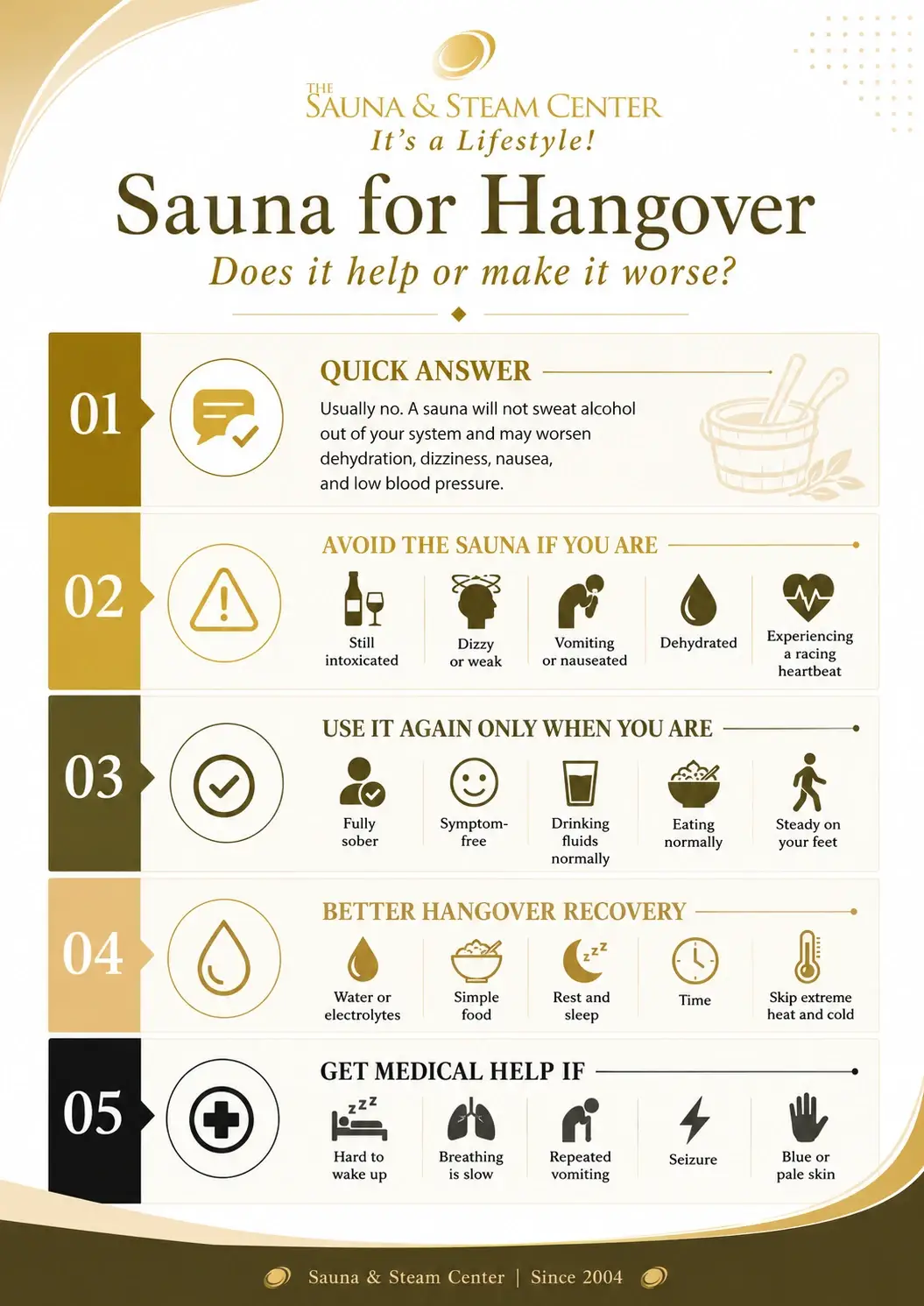
No. A sauna is not a proven hangover treatment, and using one while you still feel hungover can make some symptoms worse. Hangovers can involve mild dehydration, headache, nausea, weakness, dizziness, poor sleep, gastrointestinal irritation, and impaired coordination. Sauna heat adds sweating and cardiovascular stress, which can make you feel more lightheaded or unwell. Do not use a sauna while intoxicated or while you still have active hangover symptoms. Wait until you are fully sober, eating and drinking normally, steady on your feet, and feeling back to baseline.
The most common searches around this topic all ask the same practical question in slightly different ways: does a sauna help a hangover, is a sauna good for a hangover, and is sauna after drinking a good idea? The answer is more useful than a simple yes or no. A sauna may feel relaxing after you have fully recovered, but there is no good evidence that heat shortens a hangover or speeds alcohol clearance.
According to the National Institute on Alcohol Abuse and Alcoholism (NIAAA), hangover symptoms can include fatigue, weakness, thirst, headache, nausea, vertigo, sweating, and impaired decision-making and coordination. NIAAA also notes that there is no scientifically proven hangover cure other than time.
If you are actively hungover, the safest answer is to skip the sauna. If you are asking whether you can return to your normal sauna routine after drinking the night before, wait until the alcohol effects and hangover symptoms have fully resolved.
Sauna and Hangover: Quick Answers
| Search Question | Best Answer |
|---|---|
| Does a sauna help a hangover? | No proven benefit. Heat may worsen dehydration, dizziness, nausea, and weakness during an active hangover. |
| Does sauna help with hangover symptoms? | It may feel relaxing to some people, but that does not mean the hangover is resolving faster. |
| Do saunas help hangovers? | No clinical evidence shows that sauna use shortens a hangover or speeds alcohol metabolism. |
| Is a sauna good for a hangover? | Not while symptoms are active. Rest, time, fluids, and food as tolerated are safer. |
| Sauna after drinking? | Avoid sauna while intoxicated. Afterward, wait until you are fully sober and symptom-free before returning to heat. |
| Can you sweat alcohol out? | No. Sweat removes only a negligible amount of alcohol. The body primarily clears alcohol through metabolism. |
| Infrared sauna for a hangover? | Lower air temperature does not make infrared sauna a hangover treatment. It still adds heat and fluid loss. |
| Steam room for a hangover? | Also not a hangover treatment. Humid heat can still worsen nausea, lightheadedness, or heat intolerance. |
Does a Sauna Help a Hangover?
No evidence shows that sauna use cures a hangover or makes it end faster. The main problem is that hangover symptoms are caused by several processes at once, not by something you can simply “sweat out.”
NIAAA describes hangovers as a combination of effects that can include mild dehydration, disrupted sleep, gastrointestinal irritation, inflammation, and exposure to alcohol metabolites. Symptoms may persist for 24 hours or longer.
| Hangover Problem | What Sauna Heat Does | Likely Effect |
|---|---|---|
| Thirst / mild dehydration | Increases sweating | May make fluid deficit and thirst worse |
| Dizziness / lightheadedness | Heat can lower blood pressure in some situations | May increase faintness or instability |
| Nausea | Adds heat stress | May feel worse in some people |
| Weakness / fatigue | Adds cardiovascular and thermoregulatory demand | May leave you more tired |
| Alcohol clearance | Does not meaningfully accelerate metabolism | No proven shortening of hangover duration |
A sauna can be part of a normal wellness routine after recovery, but it should not be used as a hangover remedy.
Why Can a Sauna Feel Helpful During a Hangover Even If It Does Not Cure It?
Warmth and quiet can feel relaxing. If you already associate sauna use with comfort, stress relief, or a familiar routine, you may temporarily feel better while sitting still in a warm room.
That subjective comfort is real, but it should not be confused with faster recovery. A headache or sense of tension may briefly feel different in heat, while dehydration or lightheadedness can become more obvious when you stand up afterward.
Feeling relaxed is not the same as lowering blood alcohol concentration, reversing dehydration, or shortening a hangover.
Can You Sweat Alcohol Out in a Sauna?
No. Sweating more does not meaningfully speed alcohol clearance. The body clears most alcohol through metabolism, primarily in the liver. Only small amounts leave through breath, urine, and sweat.
This is why “detoxing” with heat is misleading. The sweat itself may make you feel as though something is being flushed out, but heavier sweating mainly increases fluid loss.
What sauna weight loss means after drinking
If the scale drops after a hot sauna session, that change is primarily water loss, not alcohol removal and not body-fat loss. Our separate guide on sauna and weight loss explains that distinction in more detail.
Can a Sauna Make a Hangover Worse?
Yes. Heat can amplify several symptoms that are already common during a hangover.
1. More fluid loss
Alcohol increases urination by suppressing vasopressin, which can contribute to mild dehydration. Adding heavy sweating on top of that may worsen thirst, headache, fatigue, and lightheadedness.
2. Dizziness and low blood pressure
Sauna heat causes blood vessels near the skin to dilate. A small clinical study of sauna bathing after heavy drinking found that the combination produced a larger drop in systolic blood pressure and increased the risk of hypotension, even though it did not increase premature ventricular beats in those healthy young male volunteers.
3. Nausea
Alcohol can irritate the stomach and contribute to nausea. Additional heat may make nausea, sweating, and discomfort harder to tolerate.
4. Poor coordination and judgment
NIAAA notes that attention, decision-making, and muscle coordination can remain impaired during a hangover. That matters in a hot environment where you need to judge how you feel, get up safely, and leave promptly if symptoms worsen.
Alcohol and sauna heat can increase the risk of low blood pressure, fainting, falls, burns, and poor decisions about session length and hydration.
Sauna After Drinking: How Long Should You Wait?
There is no single number of hours that guarantees sauna use is safe after drinking. The amount consumed, drinking duration, body size, food intake, medications, sleep, individual alcohol metabolism, and the presence of hangover symptoms all matter.
A better rule is to wait until all of the following are true:
- You are fully sober.
- You have stopped drinking alcohol.
- You have no dizziness or balance problems.
- You are not nauseated or vomiting.
- You can drink fluids normally.
- You can eat normally or at least tolerate food.
- You do not have a significant headache, weakness, or unusual fatigue.
- Your heart does not feel unusually fast or irregular.
- You feel back to your normal baseline.
Do not use the clock alone. If you still feel hungover, wait.
Is It Safe to Use a Sauna the Morning After Drinking?
Not if you still have hangover symptoms. Morning does not automatically mean the alcohol and its after-effects are gone. NIAAA notes that hangover symptoms often peak when blood alcohol concentration returns to about zero and may last 24 hours or longer.
If you wake up with thirst, headache, nausea, weakness, dizziness, poor coordination, or unusual fatigue, skip the sauna that morning.

Traditional Sauna vs. Infrared Sauna vs. Steam Room for a Hangover
None should be treated as a hangover cure. The heat delivery feels different, but all three can add thermal stress when you are already feeling unwell.
| Heat Environment | What Changes | Hangover Takeaway |
|---|---|---|
| Traditional sauna | Higher air temperature, low humidity | Can produce heavy sweating and worsen fluid loss or dizziness |
| Infrared sauna | Lower air temperature with radiant heat | Still heats the body and promotes sweating; not a hangover treatment |
| Steam room | Lower temperature with very high humidity | Humidity can make heat feel oppressive and may worsen nausea or lightheadedness |
If you are comparing these technologies for normal wellness use, see our infrared vs. traditional sauna guide and our steam room use guide.
What Actually Helps a Hangover?
Time is the only sure cure. Both NIAAA and Mayo Clinic emphasize that hangovers resolve as the body recovers rather than through a special detox treatment.
More useful recovery steps
- Rest: disrupted sleep is part of a hangover, and extra rest can help you recover.
- Fluids: sip water or other nonalcoholic fluids as tolerated.
- Food: bland or simple foods may be easier to tolerate if your stomach is upset.
- Avoid more alcohol: “hair of the dog” may delay rather than resolve the problem.
- Use pain relievers carefully: alcohol can interact with common over-the-counter medicines or increase stomach/liver risk. Ask a pharmacist or clinician if you are unsure what is safe for you.
- Avoid driving or risky activities: coordination, attention, and decision-making can still be impaired during a hangover.
They may be useful when you need to replace fluids and salts, but NIAAA notes that electrolyte disruption does not appear to explain hangover severity in most people, and electrolyte drinks are not a proven hangover cure.
How to Return to Sauna After a Hangover Has Fully Resolved
Once you are sober, symptom-free, hydrated, eating normally, and steady on your feet, return conservatively rather than jumping back into your hottest or longest session.
- Hydrate normally beforehand.
- Eat something if you have not been eating normally.
- Use a milder temperature than your maximum.
- Start with about 5 to 10 minutes.
- Remain seated if you feel at all uncertain.
- Stand slowly when leaving.
- Stop immediately if headache, nausea, dizziness, weakness, chest discomfort, or palpitations return.
- Skip alcohol during and immediately around the sauna session.
For normal sauna-session guidance unrelated to alcohol, see our how to use a sauna guide.
When You Should Definitely Skip the Sauna After Drinking
- You are still intoxicated.
- You feel dizzy, faint, confused, shaky, or unsteady.
- You are vomiting or cannot keep fluids down.
- You have severe weakness or unusual drowsiness.
- You have chest pain, shortness of breath, or a racing/irregular heartbeat.
- You have combined alcohol with sedatives, opioids, sleep medicines, or other substances that impair alertness.
- You have been advised by a clinician to avoid heat because of a medical condition or medication.
When Hangover Symptoms May Be an Emergency
An extreme “hangover” can actually be alcohol poisoning or another medical problem. Seek emergency help if a person:
- Cannot be awakened or cannot stay conscious
- Has slow, irregular, or difficult breathing
- Has a seizure
- Is repeatedly vomiting and becoming confused or less responsive
- Has blue, gray, very pale, or clammy skin
- Is choking on vomit
- Has severe chest pain, severe shortness of breath, or another life-threatening symptom
Do not put an unconscious or severely intoxicated person in a sauna, hot tub, cold shower, or cold plunge in an attempt to “sober them up.” Alcohol poisoning requires medical care.
Planning a Sauna for Regular Wellness Use?
Build a Sauna Routine Around Recovery, Not Quick Fixes
A sauna can be a valuable part of a consistent home wellness routine when used responsibly. Sauna & Steam Center can help you compare sauna types, heaters, controls, room layouts, installation requirements, and long-term service options.
Frequently Asked Questions About Sauna and Hangovers
Does a sauna help a hangover?
No proven evidence shows that sauna use shortens a hangover. During active symptoms, heat may worsen dehydration, dizziness, nausea, weakness, or lightheadedness.
Does sauna help with hangover symptoms?
A sauna may feel temporarily relaxing, but that does not mean the hangover is resolving faster. If you still feel hungover, skip the sauna and recover first.
Do saunas help hangovers?
No. Saunas do not meaningfully increase alcohol clearance and are not recognized as a hangover treatment.
Is a sauna good for a hangover?
Not during an active hangover. Time, rest, fluids, food as tolerated, and medical care when symptoms are severe are more appropriate.
Are saunas good for hangovers the next morning?
Only return to normal sauna use after you are fully sober and hangover symptoms have resolved. If you still have headache, nausea, dizziness, weakness, or poor balance, wait.
Can I use a sauna after drinking alcohol?
Do not use a sauna while intoxicated. After drinking, wait until you are fully sober, symptom-free, hydrated, eating normally, and steady on your feet.
Can you sweat alcohol out in a sauna?
No. Sweat eliminates only a negligible amount of alcohol. Sauna sweating does not meaningfully lower blood alcohol concentration or shorten a hangover.
Is an infrared sauna better for a hangover?
No. Infrared saunas use lower air temperatures than traditional saunas, but they still heat the body and increase sweating. They are not a hangover treatment.
Is a steam room better for a hangover?
No. High humidity does not speed alcohol metabolism, and the heat may worsen nausea, lightheadedness, or heat intolerance.
How long should I wait after drinking before using a sauna?
There is no universal safe number of hours. Wait until you are fully sober and all hangover symptoms have resolved rather than relying only on the clock.
Can a sauna help a hangover headache?
There is no evidence that sauna heat treats a hangover headache. Because heat can increase sweating and lightheadedness, it may make you feel worse.
Can I use a hot tub instead of a sauna while hungover?
A hot tub is also a heat exposure and adds risks such as dizziness, low blood pressure, impaired judgment, and drowning if someone loses consciousness. Avoid it while intoxicated or actively hungover.
References
National Institute on Alcohol Abuse and Alcoholism (NIAAA): Hangovers: Causes, Symptoms, Duration and Common Myths
Mayo Clinic: Hangovers: Diagnosis and Treatment
PubMed / Journal of Internal Medicine: Alcohol and Sauna Bathing: Effects on Cardiac Rhythm, Blood Pressure, Electrolytes and Cortisol
PubMed: The Sauna and Alcohol
Mayo Clinic: Alcohol Poisoning: Diagnosis and Treatment
Conclusion: A Sauna Does Not Cure a Hangover
If your question is “does a sauna help a hangover?”, the most useful answer is no. There is no evidence that sauna heat speeds alcohol clearance or reliably shortens hangover symptoms. During an active hangover, extra heat and sweating may make dehydration, nausea, weakness, dizziness, and low blood pressure harder to tolerate.
Wait until you are fully sober and back to normal before using a sauna again. Once recovered, return with a shorter, milder session and normal hydration rather than using heat as a detox strategy.