
Personal Sauna Guide: How to Choose the Right Sauna for Your Home
personal sauna is a private sauna designed for one person or a small household routine, usually installed inside the home, in a gym space, or in a covered outdoor area when the model allows it. For most buyers, the right personal sauna is not just the smallest option. It is the one that fits your space, heat preference, electrical setup, comfort needs, and real weekly routine. In simple terms, a personal sauna should be easy enough to use often, comfortable enough to enjoy, and practical enough to own long term.
In this guide, we will help you compare infrared, traditional, hybrid, indoor, outdoor, 1-person, and 2-person sauna options without overcomplicating the decision. We will also cover setup concerns, realistic wellness expectations, common mistakes, and examples of personal sauna models that may fit different types of homes. At Sauna Steam Center, we want you to feel clear before you buy, not overwhelmed by too many options.
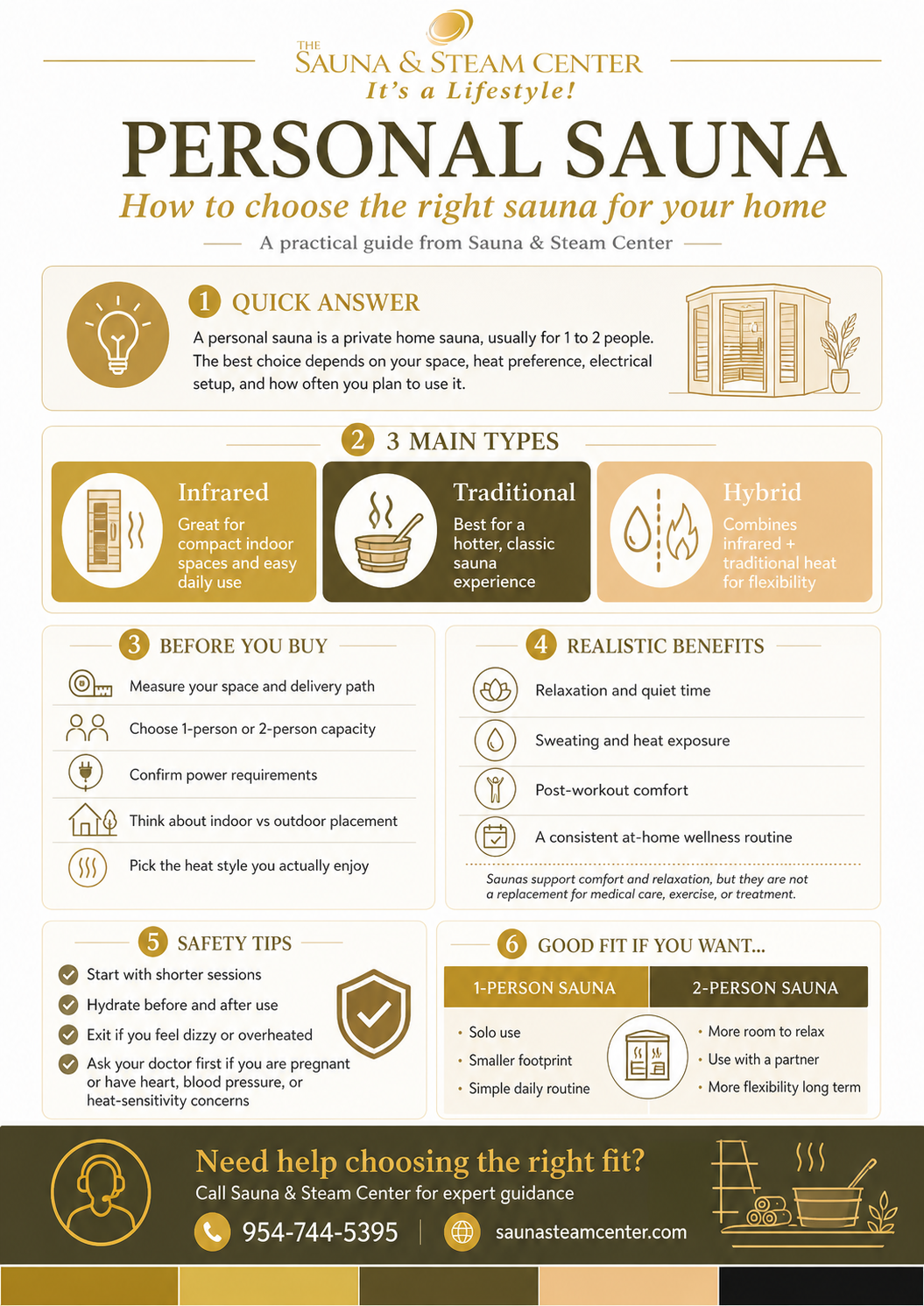
Quick Answer
A personal sauna is best for someone who wants a private, convenient heat routine at home for relaxation, sweating, quiet time, post-workout comfort, or a consistent wellness habit. If you want the most compact option, start with a 1-person infrared sauna. If you want a classic hotter-room sauna feel, compare compact traditional models. If your household has mixed preferences, a hybrid infrared plus traditional sauna may be the smarter fit.
Bottom line: the best personal sauna is the one you will actually use several times a week, not the one with the longest feature list.
Key Takeaways
- A personal sauna usually means a 1-person or 2-person private home sauna, but some buyers use the phrase for any home sauna meant for personal use.
- Infrared saunas are popular for compact indoor spaces because they can feel simple, quiet, and comfortable for routine use.
- Traditional saunas create hotter ambient air and a more classic sauna experience, but they may require more installation planning.
- Hybrid saunas are useful when one person prefers infrared and another wants traditional heat.
- Do not buy by seat count alone. Check comfort, power, placement, clearance, ventilation, delivery path, and long-term ownership expectations.
- Sauna benefits should be framed realistically, including relaxation, heat exposure, sweating, and comfort, not miracle health claims.
What Is a Personal Sauna?
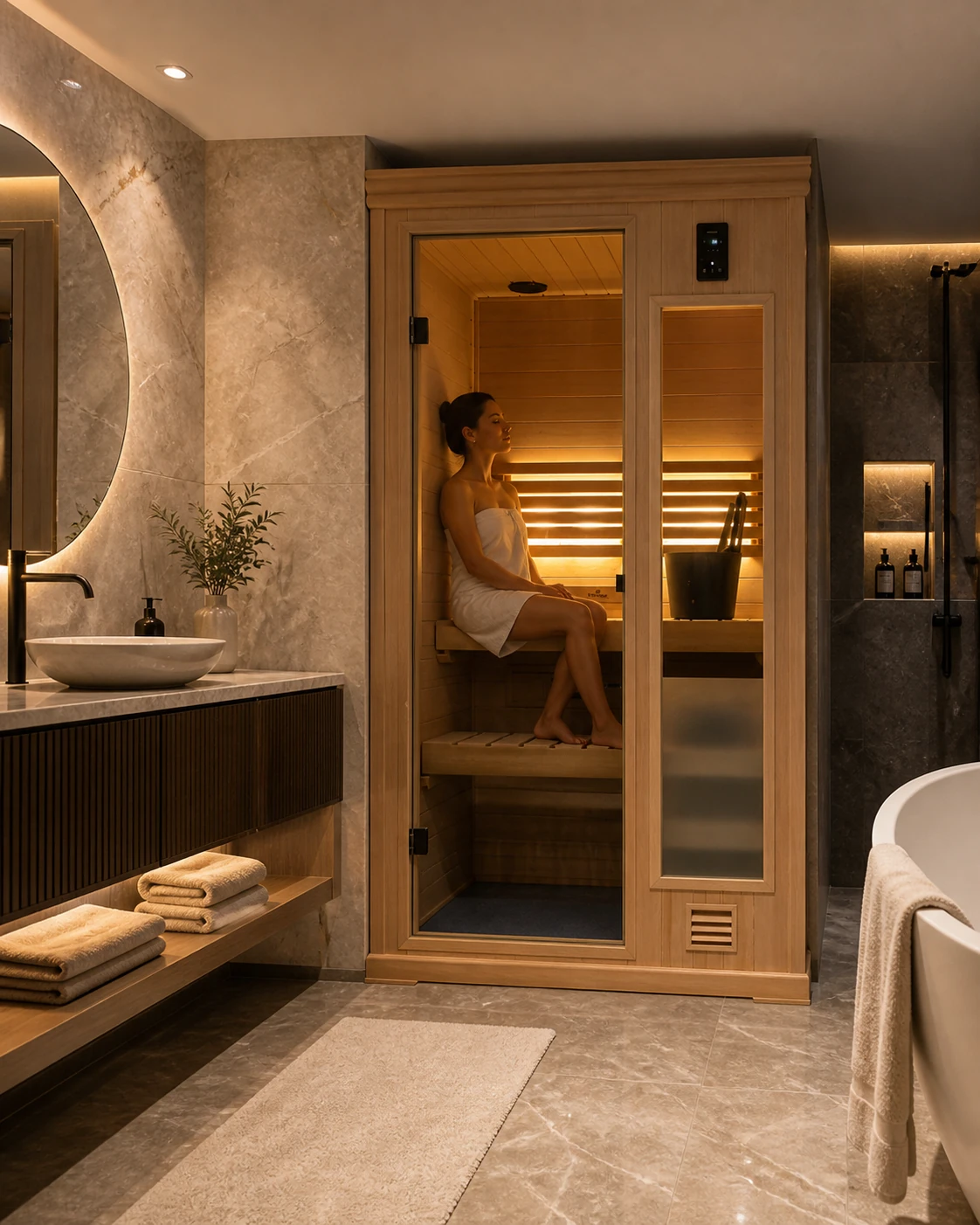
A personal sauna is a sauna built around private use rather than public spa use. It may be a compact 1-person infrared sauna, a 2-person traditional sauna, a hybrid sauna, a dry sauna room, or a small outdoor sauna depending on your space and goals.
Most people searching for a personal sauna are trying to answer one practical question: what sauna can I comfortably use at home without turning the project into a remodel I did not plan for?
That is why the best starting point is not a brand, wood type, or feature list. The best starting point is your routine. Will you use it after workouts? At night before bed? On weekends? With a partner? In a home gym? In a spare room? Those answers shape the right model faster than browsing dozens of saunas at random.
Why the Right Personal Sauna Matters
A personal sauna should make your routine easier, not add friction. If it is too small, too hot for your preference, too slow for your schedule, or placed in an inconvenient location, you may use it less than expected.
Many buyers begin with a simple idea: “I want a sauna at home.” Then the real questions come up. Should it be infrared or traditional? Can it plug into a standard outlet? Will it fit in a home gym, bathroom suite, spare bedroom, garage, or covered patio? Is one seat enough, or will two people use it together?
For a broader planning overview, our home sauna guide explains how homeowners typically think through heat type, placement, installation, and long-term use before choosing a model.
The best personal sauna is not automatically the biggest or most expensive one. It is the one that fits your life well enough to become part of your week.
Types of Personal Saunas
Infrared Personal Saunas
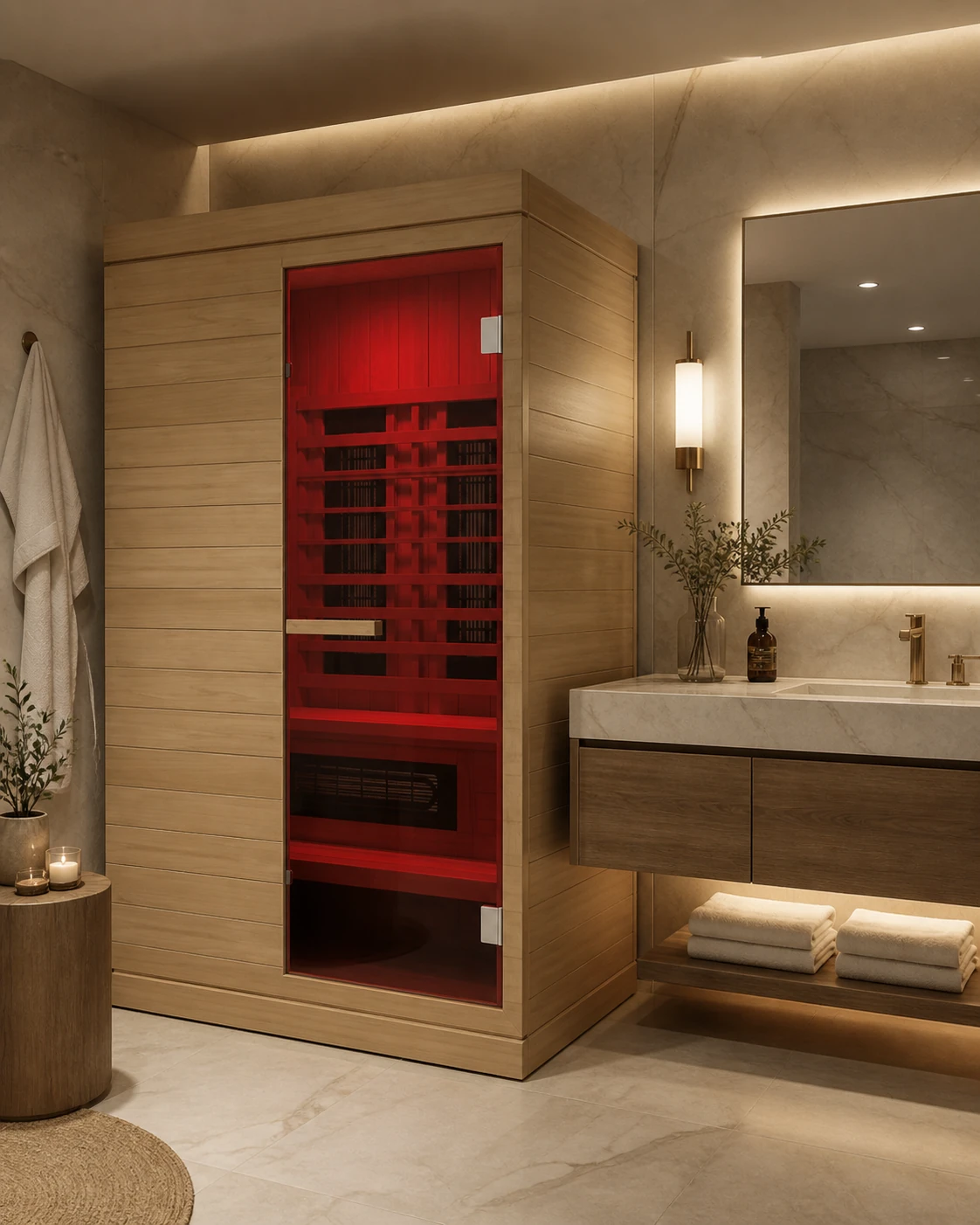
Infrared saunas use infrared emitters to warm the body directly rather than relying only on very hot room air. Many buyers like this style because it can feel approachable, quiet, and simple for regular indoor use.
Infrared can be a strong fit if you want:
- A 1-person or 2-person indoor sauna
- A lower ambient heat experience than many traditional saunas
- A compact footprint for a home gym, spare room, or wellness corner
- Modern features such as Bluetooth audio, lighting, and digital controls
If you are still deciding between heat styles, our guide to infrared vs traditional saunas explains the practical differences in feel, heat delivery, use case, and buying considerations.
Traditional Personal Saunas
Traditional saunas heat the room air with a sauna heater, usually with stones. This creates the classic sauna environment many people associate with Finnish-style bathing, higher air temperatures, and a more intense heat experience.
Traditional models may be a better fit if you want:
- A hotter, classic sauna feel
- A dedicated sauna room experience
- A compact indoor traditional sauna or an outdoor sauna setup
- A more familiar dry sauna environment
Planning matters more with traditional saunas. Heater size, power needs, ventilation, clearances, and placement should be reviewed carefully before you commit.
Hybrid Infrared Plus Traditional Saunas
Hybrid saunas combine infrared heat and traditional heat in one sauna. They are useful when two people in the same home want different experiences, or when you want flexibility as your preferences change.
Hybrid is often the “safe middle” for couples or families. One person may prefer a lower-temperature infrared session after work, while another may want a hotter traditional sauna on weekends.
Personal Sauna Models to Consider
The models below are useful examples of how different personal saunas can fit different buyers. Think of them as categories first, not just product names.
Best for One Person: FINSAUNA Radia IR 100
The FINSAUNA Radia IR 100 is a compact 1-person infrared sauna for buyers who want a private daily reset without taking over a room. It is a good match for someone who values a smaller footprint, simple controls, indoor placement, Bluetooth audio, LED lighting, and a clean routine.
This type of model works best when you know you will be the main user. You are not paying for extra seating you may rarely use, and the compact size can make placement easier.
Best Premium Solo Experience: Finnleo S-Series S-810
The Finnleo S-Series S-810 is another strong 1-person indoor infrared option. It is designed for the buyer who wants a compact sauna but still wants the experience to feel complete, comfortable, and premium.
This is the kind of personal sauna we would suggest for someone who says, “I want the smallest sauna that still feels substantial.”
Best Compact Traditional Feel: Finnleo Hallmark HM44
The Finnleo Hallmark HM44 is a compact 4 by 4 traditional indoor sauna designed to seat two. It is a strong fit for buyers who want traditional heat but do not want a large custom room project.
This model also shows why “personal” does not always mean one seat. A 2-person sauna can give one user more shoulder room, more comfort, and more flexibility, even if it is used solo most of the time.
Good 2-Person Personal Sauna Options
If you want a 2-person sauna, compare the difference between compact infrared, compact traditional, and hybrid options:
- ELLA H2 2 Person Indoor Sauna Kit: a cube-design option for buyers who like a modern indoor sauna look.
- Enhanced G920 2-Person Infrared Sauna: a Canadian Hemlock indoor plug-in infrared model for straightforward home use.
- FINSAUNA Radia IR 200: a 2-person infrared sauna for buyers who want more room than a solo model.
- FINSAUNA Radia TIR 200: a 2-person hybrid infrared plus traditional sauna for mixed heat preferences.
- Finnleo IS440 InfraSauna: a compact dual-heat option with infrared and traditional sauna capability.
When to Move Beyond a Personal Size
Some buyers start by searching for a personal sauna and realize they need more space. That is normal. If you want family use, guest use, stretching room, or a more open feel, a larger home sauna may be the better long-term choice.
The honest question is simple: how will you use the sauna six months from now? If the answer includes a spouse, guests, or family routines, do not rule out a slightly larger model too early.
Size, Space, and Placement
Before choosing a personal sauna, measure more than the wall where it will sit. You also need to think about door swing, walking clearance, ceiling height, nearby power access, floor surface, ventilation, and delivery path.
Common Indoor Locations
- Home gym
- Primary bathroom suite
- Spare bedroom
- Garage
- Wellness room
- Covered patio or enclosed outdoor area, depending on the model rating
If you are designing a workout space around heat recovery, this gym with sauna project can help you think through flow, placement, and how the sauna fits into the larger room experience.
Do You Need One Seat or Two?
A 1-person sauna is great for solo routines, smaller rooms, and efficient use of space. A 2-person sauna gives you more flexibility. Even if you use it alone most days, extra width can make the sauna feel more comfortable.
Our practical rule is simple: if the space and budget allow, compare both. Many buyers who plan to use the sauna daily prefer a little more room once they sit inside and imagine real use.
Indoor vs Outdoor
Indoor saunas are convenient because they are protected from weather and easy to access. Outdoor saunas can create a stronger retreat feeling, especially in a backyard or garden setting, but they require more planning around foundation, weather exposure, electrical runs, and access.
In South Florida, we also think about humidity, covered placement, material durability, and airflow. A personal sauna should be placed where it can perform well and stay practical to maintain.
Cost and Value Factors
The cost of a personal sauna depends on more than the cabinet price. The final value comes from the full project: sauna type, size, materials, heater system, electrical needs, installation, accessories, and support after purchase.
What Affects the Price?
- Size: 1-person models usually cost less than larger family-size saunas.
- Heat type: infrared, traditional, and hybrid systems have different components and installation needs.
- Electrical requirements: some models are plug-in, while others may require dedicated electrical work.
- Materials: wood species, glass, hardware, and finish quality affect appearance and durability.
- Controls and comfort features: WiFi controls, Bluetooth audio, lighting, and ergonomic benches can improve daily use.
- Installation complexity: access, site preparation, and outdoor placement can change the total project cost.
For a deeper pricing breakdown, our guide to how much a sauna costs explains the major cost drivers homeowners should understand before comparing models.
Think in Terms of Cost Per Use
A personal sauna becomes more valuable when it fits your routine. A lower-cost model that you rarely use is not automatically a good deal. A better-built sauna that you use several times a week may deliver more real value over time.
Ask yourself:
- Will I use this at least a few times per week?
- Is the sauna easy to access after work, after exercise, or before bed?
- Does the heat style match what I actually enjoy?
- Will this size still feel comfortable one year from now?
Realistic Benefits and Limits
Saunas are popular because they feel good, create a quiet pause, and help many people build a consistent relaxation routine. Still, benefits should be discussed carefully.
What Is Well Supported
- Sauna use causes sweating and temporary increases in heart rate.
- Heat exposure can feel relaxing and may help some people unwind.
- Many users report temporary muscle relaxation and a sense of calm after sessions.
- Heat can create short-term changes in circulation as the body works to cool itself.
What Is Mixed, Limited, or Individual
- Research on cardiovascular outcomes is promising in some populations, but it should not be treated as a guarantee for every person.
- Sleep, recovery, soreness, and stress benefits vary by user, session length, hydration, and overall health.
- Infrared sauna research is still developing, and claims should stay conservative.
What Is Overstated
- A sauna does not “detox” your body in the way many ads claim. Your liver and kidneys handle detoxification.
- Sweating can reduce water weight temporarily, but that is not the same as fat loss.
- A sauna should not replace exercise, medical care, physical therapy, or a treatment plan from your healthcare provider.
If weight loss claims are part of your research, we recommend reading our evidence-based guide on whether saunas help you lose weight before making the purchase for that reason alone.
Safety and Smart Use
A personal sauna is a heat environment, so safety matters. Most healthy adults can use saunas responsibly, but some people should speak with a healthcare professional first.
Use Your Sauna Conservatively at First
- Start with shorter sessions, such as 5 to 10 minutes.
- Build gradually only if you feel well.
- Hydrate before and after use.
- Exit if you feel dizzy, faint, nauseated, weak, confused, or unusually uncomfortable.
- Avoid alcohol before sauna use.
- Cool down gradually after your session.
Who Should Ask a Doctor First?
Ask your healthcare provider before sauna use if you are pregnant, have heart disease, uncontrolled high blood pressure, low blood pressure, a history of fainting, a recent heart attack or stroke, heat sensitivity, or take medications that affect sweating, hydration, or blood pressure.
This is not medical advice. It is practical buying and ownership guidance. Your doctor can help you decide what is appropriate for your health situation.
What Happens If You Push Too Hard?
Too much heat exposure can lead to dehydration, lightheadedness, overheating, fainting, or heat-related illness. Longer is not always better. A personal sauna should feel restorative, not like a test of endurance.
Common Buying Mistakes
Mistake 1: Buying the Smallest Model Without Considering Comfort
A 1-person sauna can be perfect, but it should not feel cramped. Think about posture, shoulder room, leg comfort, and whether you want to read, listen to music, stretch slightly, or sit upright.
Mistake 2: Choosing Heat Type Based Only on Reviews
Infrared and traditional saunas feel different. Neither is automatically better for everyone. If you want gentle daily heat, infrared may feel right. If you want a hotter classic room, traditional may be more satisfying.
Mistake 3: Ignoring Electrical Requirements
Some personal saunas are designed for plug-in convenience. Others require more electrical planning. Always confirm voltage, amperage, outlet type, dedicated circuit needs, and installation requirements before buying.
Mistake 4: Forgetting the Delivery Path
Measure doorways, stairs, hallways, elevators, corners, and the final room. A sauna that fits the room still has to reach the room.
Mistake 5: Buying for the First Week Instead of the First Year
The novelty will fade. The routine matters. Choose the sauna you will still use after the excitement wears off.
How to Choose Your Best Fit
Use this step-by-step process before you decide.
Step 1: Define the Main User
Is this mostly for you, you and a partner, or the whole household? If it is truly solo use, a 1-person infrared sauna may be enough. If two people may use it together, compare 2-person models first.
Step 2: Choose Your Heat Preference
Pick infrared if you want a compact, modern, daily-use feel. Pick traditional if you want hotter air and a classic sauna experience. Pick hybrid if your household is split.
Step 3: Confirm the Space
Measure the footprint, ceiling height, door swing, clearance, and delivery path. Also think about where towels, water, and cooling down will happen.
Step 4: Confirm Power and Installation
Before you fall in love with a model, confirm whether your home can support it easily. Power, placement, ventilation, and access should be checked before ordering.
Step 5: Build a Shortlist
Do not compare every sauna on the market. Compare two or three models that actually fit your space, budget, and heat preference. At Sauna Steam Center, we can help you narrow that list quickly and clearly.
FAQ About Personal Saunas
What is a personal sauna?
A personal sauna is a private sauna for home use, usually sized for one or two people. It can be infrared, traditional, hybrid, indoor, or outdoor depending on your space and goals.
Is a 1-person sauna worth it?
Yes, a 1-person sauna can be worth it if you will be the main user and want a compact routine. It is especially practical for home gyms, spare rooms, and wellness spaces where a larger sauna would not fit comfortably.
Is infrared or traditional better for a personal sauna?
Infrared is often better for buyers who want compact indoor convenience and a gentler heat feel. Traditional is often better for buyers who want hotter ambient air and a classic sauna experience. Hybrid models are best when you want both options.
Can a personal sauna plug into a regular outlet?
Some personal saunas are designed as plug-in models, but not all of them are. Always confirm the exact voltage, amperage, outlet type, and dedicated circuit requirements before buying.
How hot does a personal sauna get?
Temperature depends on the sauna type and model. Traditional saunas generally operate at higher ambient air temperatures than infrared saunas. Infrared models may feel intense even at lower air temperatures because the heat is delivered differently.
Can a sauna help with weight loss?
A sauna can cause sweating and temporary water-weight loss, but that is not the same as fat loss. It should not be used as a replacement for exercise, nutrition, or medical guidance.
How long should I stay in a personal sauna?
Start with shorter sessions, such as 5 to 10 minutes, and increase gradually only if you feel comfortable. Many users keep sessions moderate rather than trying to stay in as long as possible. Exit immediately if you feel dizzy, faint, nauseated, weak, or overheated.
Where should I put a personal sauna at home?
Common locations include a home gym, spare room, bathroom suite, garage, wellness room, or covered outdoor area if the model is suitable. The best location has enough clearance, proper power access, a safe floor surface, and a comfortable cooldown area nearby.
Conclusion
A personal sauna should make your home routine easier, not more complicated. The best model is the one that fits your space, your preferred heat style, your electrical setup, and your real usage habits.
If you want the most compact daily-use option, start with 1-person infrared models. If you want a classic sauna feel in a smaller footprint, compare compact traditional options. If your household wants flexibility, look at hybrid infrared plus traditional models.
For help narrowing your shortlist, call Sauna Steam Center at 954-744-5395. We will walk through your space, goals, and best-fit options so you can make a clear, confident decision.
References
- Harvard Health Publishing: Saunas and Your Health
- Cleveland Clinic: Get Your Sweat On, The Benefits of a Sauna
- Hussain J, Cohen M. Clinical Effects of Regular Dry Sauna Bathing: A Systematic Review
- JAMA Internal Medicine: Association Between Sauna Bathing and Fatal Cardiovascular and All-Cause Mortality Events
- CDC/NIOSH: Heat-Related Illnesses
- NHS: Pregnancy, Exercise, and Safety Considerations