How to Clean a Sauna: Complete Maintenance Guide for Florida Homes
Editorial disclosure: Sauna & Steam Center designs, installs, sells and services sauna equipment in South Florida. Our practical installation and maintenance perspective is supplemented by linked manufacturer instructions and moisture-control guidance. This is general educational information; your specific sauna and heater manuals take priority.

How Often Should You Clean a Sauna?
There is no single schedule for every sauna. Cleaning needs change with occupancy, how often you use the room, whether people sit on towels, climate exposure, and the manufacturer’s instructions. For example, Harvia’s family-sauna care guidance describes basic washing one to three times a year, but recommends wiping and drying after bathing. Heavily used or commercial rooms may need cleaning much more often.| When | What to do | What to watch for |
|---|---|---|
| After every session | Remove towels; wipe visible moisture from benches and touchpoints; ventilate and dry. | Persistent damp spots, condensation, unpleasant smell. |
| Weekly or as needed | Inspect and gently spot-clean bench surfaces, door handles and floor debris. | Body-oil marks, sweat residue, grit, slip hazards. |
| Monthly | Inspect under benches, around door seals, vents, lighting covers and accessible flooring; perform a more detailed clean if needed. | Loose hardware, damp corners, rust, poor airflow. |
| Seasonally | Check outdoor weather seals, wood condition, roof/drainage exposure and humidity-management habits. | Storm-related leaks, corrosion, swollen wood, pest entry. |
| At least annually for applicable stone heaters | Inspect stone condition and arrangement following the heater manual; arrange professional service if uncertain. | Cracked stones, debris, blocked airflow, unusual heater behavior. |
What Can You Use to Clean a Sauna Safely?
The right product depends on the material and manufacturer. Unfinished wood, glass, tile, stainless steel, heater stones and infrared panels should not be treated as one interchangeable surface.| Surface | Usually appropriate | Avoid |
|---|---|---|
| Wood benches and backrests | Lightly damp cloth, soft brush and approved sauna-wood cleaner at label dilution. | Bleach, ammonia, abrasive scrubbers, soaking and household furniture polish. |
| Sauna wood walls and ceilings | Dry dusting or minimal damp wiping as permitted by the sauna manual. | Spraying, pressure washing and unapproved sealants or coatings. |
| Tile or sealed, drainable flooring | Floor-compatible mild cleaner and a careful rinse where drainage allows. | Pooling water, slippery residue and cleaners incompatible with grout or stone. |
| Glass and door hardware | Glass-safe product applied to a cloth; manufacturer-approved cleaner for metal. | Overspray into hinges, wood edges, controls or the heater. |
| Heater exterior | Only the cooled heater’s approved exterior cleaning method. | Direct spraying, energized heater cleaning, chemicals on heating elements. |
| Infrared panels and electronics | Dry or slightly damp soft cloth only where the panel manual permits. | Steam cleaners, soaking, abrasive pads and spraying sensors or emitters. |
Is vinegar safe for sauna cleaning?
Do not assume vinegar is a universal sauna-wood cleaner. Acids can affect some finishes, coatings and materials. Harvia discusses diluted vinegar or citric acid for certain heater exterior limescale applications, which is different from approving vinegar on unfinished benches, heating elements or electronics. Check your exact product instructions before using acidic cleaners.Can you use bleach, disinfectant or essential oils?
For everyday wood care, avoid bleach, harsh household disinfectants, ammonia, solvent-heavy sprays and fragrance oils unless the sauna manufacturer specifically approves a product and method. Do not mix cleaners. If you suspect mold or widespread contamination, avoid masking odors with fragrances and arrange evaluation of the moisture problem first.Should you oil or seal sauna wood?
Some manufacturers, including Harvia, recommend appropriate paraffin oil treatment for certain benches. Others specify untreated surfaces or different care for factory-treated wood. Never apply ordinary deck stain, varnish, paint or furniture oil just because the bench looks dry. Follow the brand’s wood treatment instructions, test approved products in an inconspicuous area and allow the required drying/curing time.How to Clean Sauna Benches and Wood: Step by Step
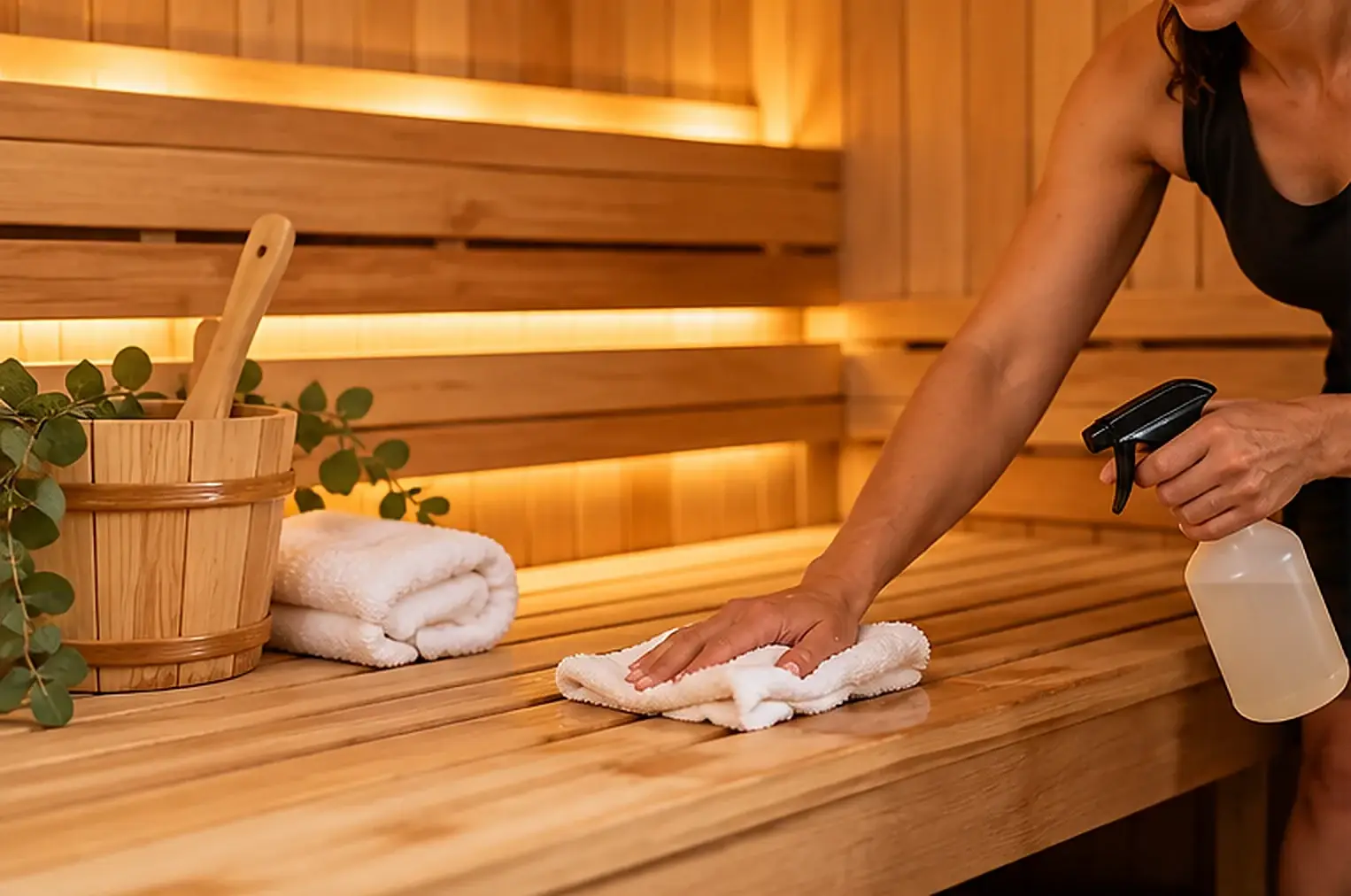
Turn everything off and let the sauna cool
Confirm the sauna is off. Wait for benches, heater enclosure, stones and surrounding surfaces to become completely cool before any cleaning. Keep water and chemicals away from electrical equipment.Clear and inspect the room
Take out towels, seat covers, buckets and removable floor mats. Look for loose fasteners, rough bench edges, standing water, staining, visible growth or unusual odors before you start. Do not scrub over damaged electrical components.Start with a light wipe
Remove dust and debris using a soft dry or lightly damp microfiber cloth. Wipe high-contact benches, backrests and headrests. For many light cleanups, warm water alone is adequate.Spot-clean with an approved product
When residue remains, follow the dilution and contact-time directions for a cleaner approved for your sauna wood. Use a soft brush with the wood grain. Avoid saturated sponges, strong scrubbing or chemical combinations.Remove residue and dry thoroughly
Wipe away cleaner with a clean damp cloth as directed, without flooding seams or joints. Dry visible water immediately. Open the room’s intended vents and follow the sauna manual’s drying procedure.Only reuse when fully dry and normal
Check the underside of benches, threshold and floor edges, not just the visible bench tops. If a smell persists or wood stays wet, fix the underlying cause before the next session.How do you remove sweat stains and dark marks?
Start with gentle cleaning, drying and a reassessment in good lighting. Some permanent discoloration is natural aging, not dirt. For persistent marks, light sanding may be allowed for certain dry, unfinished benches, but first confirm the wood is solid and the finish is compatible. Do not sand suspected mold, structural rot, factory coatings or areas near exposed electronics without professional guidance.Find Your Sauna Cleaning & Maintenance Plan
Answer seven quick questions to get care priorities and a suggested residential or commercial service plan. When you finish, the HubSpot contact form opens below your results.
Loading your sauna maintenance planner. If this message remains, please use our contact page.
This planner is educational, not an equipment diagnosis or a guaranteed service quote. Follow your manufacturer’s maintenance instructions and request qualified inspection for safety concerns.
Florida Sauna Maintenance: Humidity, Rain and Mold Prevention
Hollywood, Fort Lauderdale, Miami, Boca Raton, West Palm Beach and the Florida Keys all experience periods of warm, humid weather. Whether your sauna is indoors or outdoors, moisture can accumulate in concealed corners, under benches and around thresholds, especially when ventilation or weather protection is inadequate.Indoor saunas: manage the surrounding room too
After using an indoor sauna, dry its interior using the manufacturer’s vent, door and heater-drying instructions. Make sure the surrounding room has working air-conditioning or suitable humidity control. The EPA recommends keeping normal indoor relative humidity below 60%, ideally 30% to 50%, as a general mold-prevention measure. That target applies to the home environment, not to a hot sauna during use. In muggy weather, simply opening exterior doors or windows can introduce more moisture. A properly designed exhaust or ventilation path matters more than the assumption that outdoor air is always drier.Outdoor saunas: inspect after storms
For outdoor barrel and cabin saunas, check roof edges, door seals, drainage paths, fasteners and ground clearance after heavy rain or tropical weather. Keep splashback and landscape irrigation from soaking wall bases. Salt-air exposure near coastal properties may accelerate corrosion on susceptible hardware; record changes rather than covering corrosion with paint.Spot the difference between a stain and a moisture problem
Darkening around the wood grain can come from ordinary use, but persistent dampness, a recurring musty odor, soft or swollen wood, visible fuzzy growth or spreading stains call for closer inspection. If growth is suspected, stop using the area, address the moisture source and seek appropriate remediation guidance. A cleaning spray alone will not correct a leak or ventilation defect.Sauna Heater Stones, Electric Heaters and Infrared Panels
How often should sauna rocks be cleaned or replaced?
Heater stones gradually weaken under thermal cycling. Harvia recommends rearranging and checking stones at least annually, or more often with heavy use. Stones that crack, crumble or shed debris need replacement with compatible heater-approved stones, following the exact heater manual. Harvia’s guidance for a family sauna used about twice weekly also describes annual stone replacement as a useful benchmark, though intervals differ by usage and equipment. Safety: stones and heating elements must be completely cold and power disconnected where the manual requires before any servicing. Do not pour cleaners into the heater, pack stones tightly, bend elements or substitute landscape rocks. If you cannot identify the heater model or do not know its safe disassembly procedure, use a qualified service provider.How to clean the outside of an electric sauna heater
When the heater is fully cool, use only the exterior cleaning method approved by its manufacturer. Harvia describes specific limescale cleaners for some stainless-steel heater surfaces, but those instructions do not apply to internal elements, electrical compartments or every metal finish. Avoid spraying liquid directly onto the heater or controls.Infrared sauna cleaning is different
Most infrared saunas do not have a pile of traditional heater stones. Clean wooden seating gently, but treat panels, emitters, control modules, speakers and wiring according to their own manual. Unplugging or isolating power may be required. Never mist or scrub infrared elements as if they were bench wood.Wood-burning sauna inspection
Wood-burning stoves, flues and chimneys introduce additional inspection and fire-safety responsibilities. Have the stove, flue and chimney maintained by qualified professionals at the manufacturer-recommended intervals. Do not use the unit when structural damage, smoke leakage or draft problems are suspected.Why Does My Sauna Smell Musty? Troubleshooting Guide
| Symptom | Possible issue | Best next step |
|---|---|---|
| Musty smell that returns | Slow drying, trapped water, damp subfloor or hidden moisture. | Stop masking the smell; inspect airflow, threshold, under-bench areas and leaks. |
| Sweaty or sour bench odor | Absorbed residue or poor towel habits. | Clean gently with approved bench cleaner; dry well; use clean seat towels. |
| Dark or black spreading patches | Staining, fungal growth or water damage. | Stop using affected areas and assess the moisture source before treatment. |
| White deposits on cooled heater exterior | Mineral or limescale residue. | Follow the finish-specific manufacturer cleaning procedure. |
| Cracking or crumbling stones | Normal stone deterioration accelerated by use. | Arrange safe stone inspection/replacement per heater manual. |
| Burning smell, smoke, sparking, tripped breaker | Potential electrical or fire-safety problem. | Stop using the sauna; switch off safely and request qualified service. |
How do you get rid of a lingering sauna smell?
First identify whether the odor comes from perspiration, stagnant water, a drain, sauna stones, a new heater’s normal manufacturer-described first-use process or an equipment fault. Remove organic residue from approved surfaces, clean removable textiles separately and confirm the room dries. Never use scented oils to conceal a burning smell or suspected mold.Free Sauna Maintenance Checklist: Daily, Weekly, Monthly & Seasonal
Use this homeowner checklist to create a repeatable care routine. Check off tasks as you complete them, then download the list as a CSV for your home maintenance records. The separate printable PDF is also available for upload to your WordPress media library.Your Maintenance Checklist
After every session
Weekly or as needed
Monthly
Seasonal and annual
Your checks stay on this device where browser storage is available. CSV download works without an account.
Professional Sauna Cleaning & Annual Maintenance for Homes and Businesses

| Service option | Who may benefit | What to discuss with our team |
|---|---|---|
| One-time sauna cleaning | Homeowners, vacation rentals and facilities needing a reset | Wood and bench condition, compatible cleaners, accumulated residue, drying and ventilation |
| Annual sauna maintenance | Residential owners wanting a periodic condition review | Care of benches, heater stones where applicable, controls, visible wear and maintenance priorities |
| Scheduled recurring maintenance | Hotels, spas, condos, fitness clubs and high-use commercial saunas | Usage-based visit frequency, cleaning scope, equipment condition, reporting and coordination with facility staff |
When to Stop DIY Cleaning and Request Sauna Service
Routine cleaning is reasonable homeowner care. But a cleaning problem can become a repair issue when the cabin is not drying, water enters the structure, or the heater behaves abnormally. Sauna & Steam Center works on residential and commercial sauna repair and maintenance planning in South Florida.- Stop using the sauna immediately: burning smell, smoke, sparking, repeated breaker trips, damaged cables, exposed electrical parts or unexplained overheating.
- Request an evaluation: persistent musty smell after drying, water-stained or softened wood, leaks, corroded heater components, unusual heat-up time, control faults, broken stones or poor ventilation.
- Take photos before contacting service: heater brand and serial number, controller, wood damage, visible leak path and full sauna room, plus your city or ZIP code.
Florida Sauna Ownership Support
Keep Your Sauna Clean, Dry and Running Reliably
Have persistent odors, water damage, heater problems or an aging sauna in need of inspection? Tell our team what you are seeing. We can review your equipment information and help determine whether maintenance, repair or replacement planning is appropriate. Serving South Florida since 2004. Service scope and availability depend on your location, equipment, condition and manufacturer support.Frequently Asked Questions About Cleaning a Sauna
How do you clean sauna wood without damaging it?
Use a lightly damp cloth and, when needed, a soft brush with the grain and a manufacturer-approved sauna wood cleaner. Remove residue and dry thoroughly. Do not flood or pressure-wash porous wood.What is the best cleaner for sauna benches?
The best choice is the specific cleaner approved for your sauna’s wood, treatment and brand. Warm water may be enough for light wiping. Manufacturer-approved sauna cleaners are preferable to generic bathroom chemicals.Can I use vinegar or bleach to clean a sauna?
Do not use bleach or vinegar on sauna benches by default. Some acid-based products are allowed for specific heater exterior surfaces, not all wood or electronics. Check product-specific manufacturer directions.How often should a home sauna be deep-cleaned?
It depends on use and the manual. Harvia’s family-sauna instructions describe basic cleaning one to three times annually, along with after-use wiping and drying. High-use installations can need more frequent cleaning.How do you prevent mold in a Florida sauna?
Dry the cabin after every use, maintain vents and surrounding humidity control, check for leaks and persistent dampness, and inspect weather seals on outdoor units. Address the moisture source promptly if growth or recurring odors develop.Do sauna rocks need to be cleaned?
Traditional heater stones need periodic inspection and, for many heaters, annual rearrangement as specified by the manual. Replace crumbling stones with approved replacements. Never clean them while hot or energize a heater that has been dismantled.Can you clean an infrared sauna like a traditional sauna?
Clean compatible wood surfaces gently, but follow infrared manufacturer instructions for panels, emitters, control modules and electronics. Many infrared models have no heater stones. Avoid direct sprays and excessive moisture.When is a sauna odor a reason to call a professional?
Seek evaluation if the smell returns after proper cleaning and drying, if wood stays damp, if you see widespread growth or water damage, or if the odor resembles overheated wiring or burning electrical components. Stop using the sauna for electrical warning signs.Does Sauna & Steam Center offer professional sauna cleaning for homes?
Yes. Residential sauna owners can inquire about one-time cleaning, routine care and annual maintenance. Cleaning methods and possible maintenance tasks depend on the sauna type, wood surfaces and equipment condition.Are scheduled maintenance plans available for commercial saunas?
Yes. Commercial facilities such as hotels, gyms, spas and shared residential amenities can discuss recurring maintenance plans. The visit schedule and scope should reflect traffic, room type, equipment and site requirements.Sources and Further Reading
Manufacturer instructions take priority over general advice. This article distinguishes routine home care from service work that may require a qualified technician.- Harvia Support: Maintaining Your Sauna (updated 2026)
- Harvia: Five Sauna Maintenance Tips
- Harvia: Sauna Heater Stones, Maintenance and Arrangement
- Harvia Support: Stone Replacement Frequency in a Family Sauna
- US EPA: A Brief Guide to Mold, Moisture and Your Home
- Sauna & Steam Center: Sauna Repair and Maintenance in South Florida